


Duolingo (DUOL) Stock Still Looks Rich Against Its Earnings Power
Duolingo shares have fallen a long way from their highs, and that slide has sharpened the focus on whether the current price lines up with what the business actually earns. With the stock now trading at US$143.04, the question is how much of its earnings power the market is really paying for.
- The share price has fallen 54.2% over the past year, which puts fresh pressure on the case that Duolingo's earnings can support today's valuation.
- The business model leans heavily on converting a large user base into paying customers. This can have a direct impact on how efficiently earnings turn into cash over time.
- There is a second opinion on Duolingo worth weighing. See what analysts think Duolingo's shares could be worth.
The issue now is whether Duolingo's current share price is justified by the earnings it produces today and is expected to generate in the future.
If you want to test this same earnings lens beyond Duolingo, compare it with companies in the 29 high quality undervalued stocks
Does Duolingo Look Pricey on Earnings?
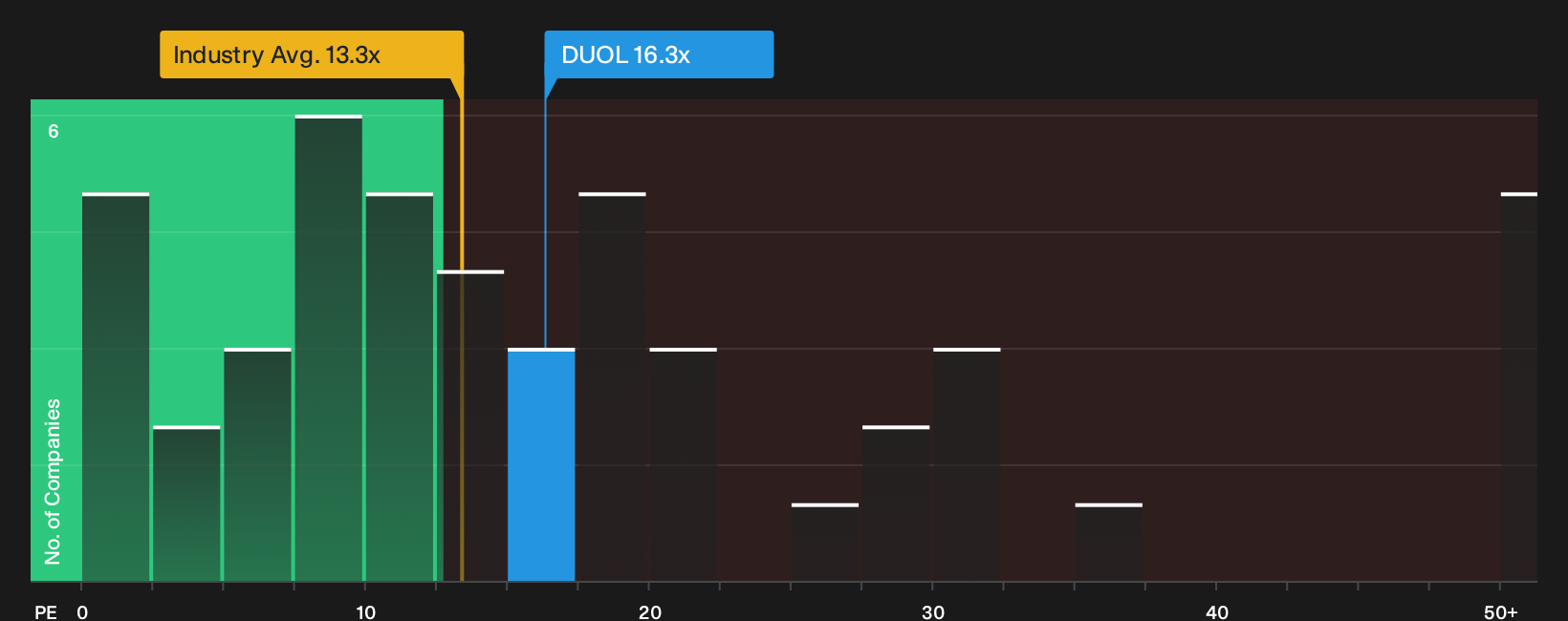
P/E makes sense for Duolingo because earnings are now positive and give you a clean link between what the business makes and what you are paying. On that basis, the stock trades around 16.3x earnings, which is above both the Consumer Services sector average of roughly 13.3x and the peer group on about 12.9x. This indicates that the market is attaching a richer tag to each dollar of Duolingo's profit than to many similar businesses.
The fair multiple implied by the valuation model, which incorporates Duolingo's growth profile, margins, risk and size, comes out lower than the current P/E. That gap points to the shares looking overvalued on this metric, since the going price runs ahead of what that framework would typically support. For anyone considering an entry point, the key question is whether Duolingo's business quality and earnings resilience justify paying more than both sector norms and that modelled reference level. Explore the numbers behind Duolingo's P/E valuation.
The Duolingo Narrative: What Would Justify Today's Price?
Duolingo investors looking for more than a simple P/E comparison can use Simply Wall St Narratives as a bridge from that valuation puzzle to a set of explicit assumptions about how the company’s growth, margins and earnings might evolve relative to today’s share price, housed on the Community page. Each narrative links its figures to a clear view of how Duolingo's expansion, profitability and risk profile could change over time, which you can revisit as new information becomes available.
Community narratives on Duolingo pull in different directions, with one camp seeing a reset as an opportunity and the other focusing on thinner monetization.
Bull case: 47% undervalued
"We often look for 'dislocations', moments where market sentiment diverges from business fundamentals…"
Discover why this Narrative puts Duolingo at 47% undervalued.
Bear case: 7% overvalued
"The numbers and current valuation imply that Duolingo is fairly valued with a bearish skew, with recent stock price weakness already reflecting concerns about slower bookings growth, lower gross margin guidance and the costs of its AI and subject expansion…"
Explore why this Narrative puts Duolingo at 7% overvalued.
One more Duolingo question the valuation cannot answer
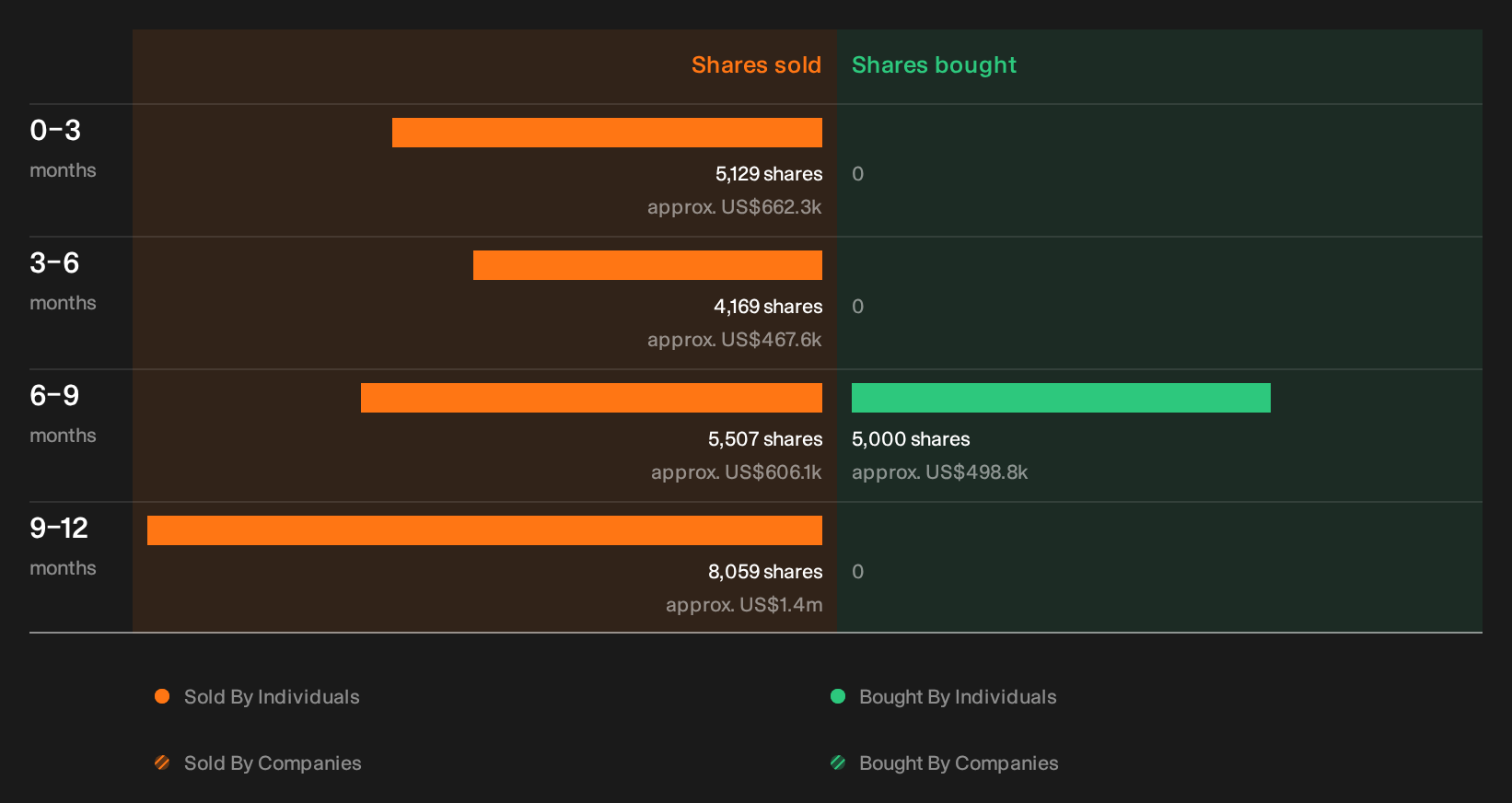
Price tags and earnings multiples only tell part of the Duolingo story, because recent moves by people inside the business can send a very different signal about what happens next. See the recent insider selling flagged for Duolingo.
Have feedback on this article? Concerned about the content? Get in touch with us directly. Alternatively, email editorial-team@simplywallst.com