


3 Great Dividend Stocks To Own In October 2026
Inflation data now points to the possibility of another Federal Reserve rate hike, which keeps borrowing costs elevated and cash returns more appealing. That puts pressure on companies that rely on cheap debt, and it rewards businesses that can simply keep paying shareholders from ongoing cash generation. This article looks at three high-yield dividend payers with yields above 3% and dividend coverage that appears solid based on currently available information.
The three stocks highlighted here offer a compelling starting point if you want exposure to higher-yield dividend payers where payouts look covered and relatively stable. However, if you want the names that matter most, these 8 dividend aristocrats stocks are the strongest companies we've found.
F.N.B (FNB)
Overview: F.N.B is a regional financial services group whose dividend is primarily funded by its Community Banking deposits and lending franchise.
Operations: F.N.B generates about US$1.7b in revenue, largely from Community Banking at US$1.67b, almost entirely within the United States.
Market Cap: US$6.1b
F.N.B matters for a dividend-focused investor because its 3%+ yield leans on everyday banking activity, not one-off windfalls or niche side businesses.
"F.N.B.'s ongoing investment in digital and AI tools, including the Insight 360 platform and call‑center automation expected to be live by the end of 2026, is intended to deepen customer insights and streamline servicing, which could support higher revenue per customer and better net margins."
What really shapes future dividend headroom is how one quiet shift in the mix of funding costs and fee income plays out.
That quiet mix shift is where the story gets interesting, and the full narrative for F.N.B shows how funding costs, fee income and payout ambitions are starting to decouple.

Hershey (HSY)
Overview: Hershey is a global confectionery and snacks company whose well-covered cash dividend leans on recurring North America chocolate and salty snack sales.
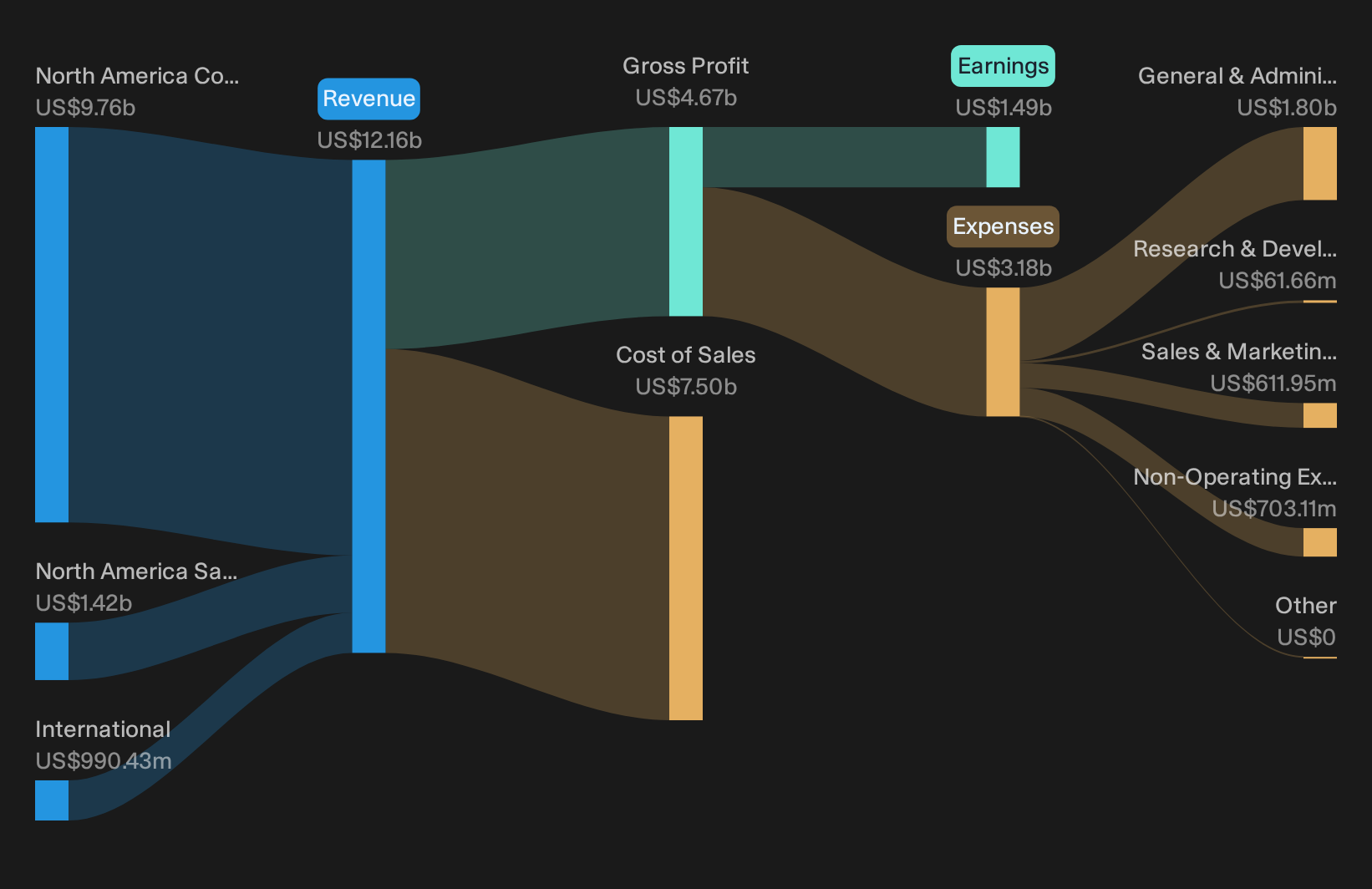
Operations: Hershey generates about US$11.6b in revenue, with roughly US$9.8b from North America Confectionery, US$1.4b from North America Salty Snacks, and US$1.0b from International.
Market Cap: US$34.3b
Hershey fits the Dividend Powerhouses theme because everyday purchases of Reese’s cups, Hershey bars, and SkinnyPop help fund a 3%+ yield that has been consistently paid and backed by ongoing cash generation rather than one-off financial engineering.
"The 2025 cocoa shock, which involved a ~60% GAAP EPS collapse driven largely by non-cash hedge mark-to-market, obscured an underlying cash engine that remained intact."
The real tension for Hershey’s dividend power is how one slow moving shift in input costs and consumer habits shapes future margin headroom.
That slow shift is already reshaping how Hershey’s cash engine works, and the full narrative for Hershey shows where pricing power, cocoa volatility and brand strength might be quietly decoupling.
Bank OZK (OZK)
Overview: Bank OZK is a full service Arkansas based bank that collects deposits and lends to households and businesses across multiple sectors.
Operations: Bank OZK generates about US$1.6b in revenue from Community Banking activities in the United States, primarily through lending and deposit services.
Market Cap: US$5.0b
Bank OZK fits the Dividend Powerhouses theme because its 3%+ yield is tied directly to everyday banking earnings rather than short term windfalls, so dividend coverage depends on how well its loan book and deposit base keep producing steady net interest income.
"The accelerated buildout of the Corporate and Institutional Banking platform, which now spans more than seven lending verticals and over 42 industry niches and is expected to reach a portfolio size similar to RESG by 2027, is set to increase floating rate lending spreads and fee income from roles as administrative agent or joint lead on single lender and small club deals. This supports net interest margin and noninterest revenue."
What happens when one concentrated pocket of credit risk collides with this push toward fee rich corporate banking will matter a lot for dividend headroom.
That collision point is exactly where the full narrative for Bank OZK shows whether Bank OZK’s accelerating corporate push is quietly masking risk or building a stronger dividend engine.

Seeking Alternatives Before Momentum Flies
Fresh ideas move first. By the time every headline catches up, the sharpest opportunities may already have moved. Review these focused lists while they are still timely.
- Look for strong balance sheets before they attract significant institutional and retail flows by scanning the list of solid balance sheet and fundamentals (25 results).
- Follow structural demand in critical materials as electrification and defense spending influence supply needs by checking the 32 best rare earth metal stocks.
- Consider cash-generating miners when gold sentiment shifts and trading activity changes by reviewing the curated 36 elite gold producer stocks.
This article by Simply Wall St is general in nature. We provide commentary based on historical data and analyst forecasts only using an unbiased methodology and our articles are not intended to be financial advice. It does not constitute a recommendation to buy or sell any stock, and does not take account of your objectives, or your financial situation. We aim to bring you long-term focused analysis driven by fundamental data. Note that our analysis may not factor in the latest price-sensitive company announcements or qualitative material. Simply Wall St has no position in any stocks mentioned.
Have feedback on this article? Concerned about the content? Get in touch with us directly. Alternatively, email editorial-team@simplywallst.com