


What BASF Doubters Missed
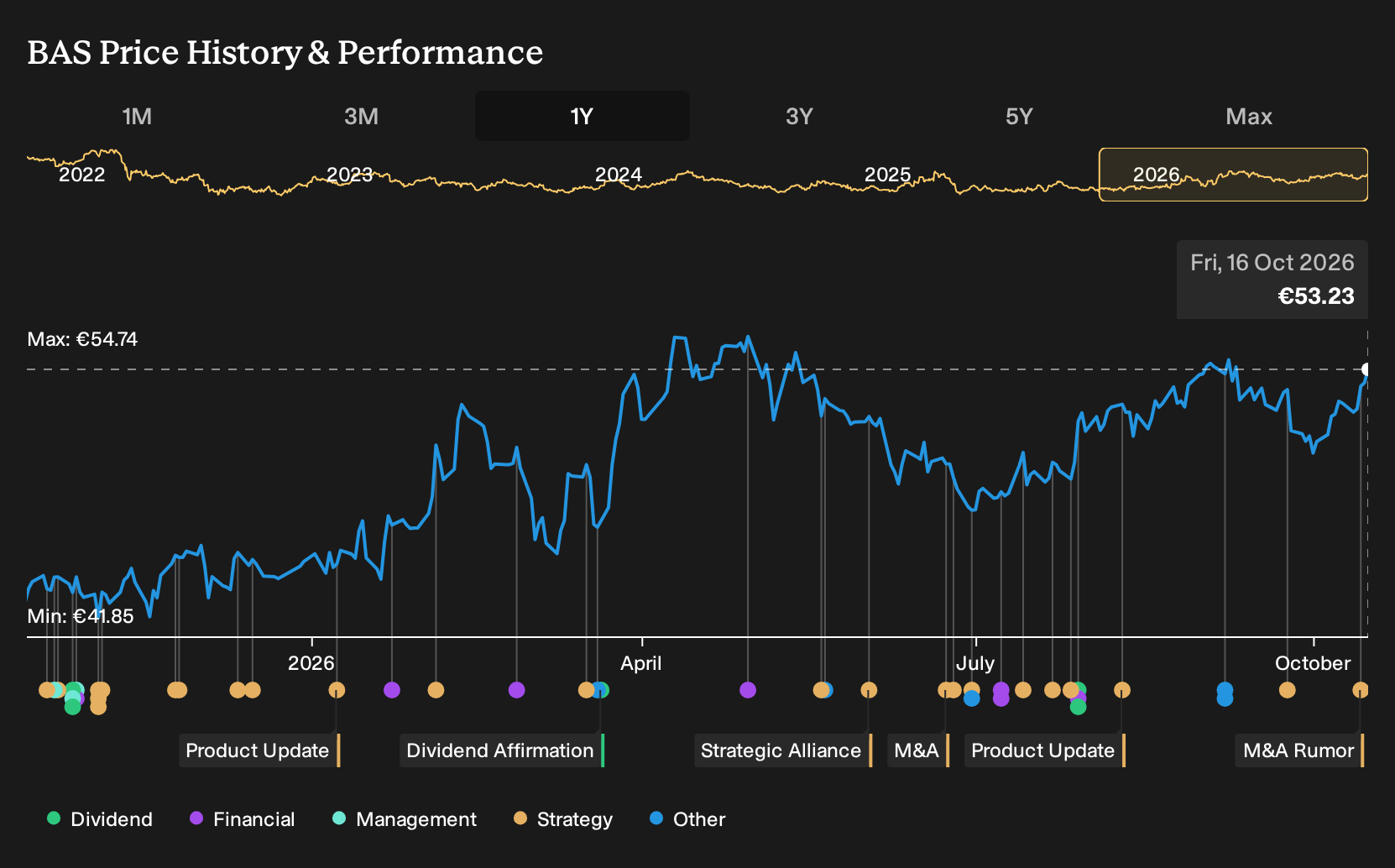
If you had bought BASF on 16 October 2025, knowing only that analysts were split between a portfolio-optimization upside case and a margin-squeeze bear case, how comfortable would that have felt? Investors who held BASF over the past year are up 27.6%, including dividends. With the Agricultural Solutions IPO plan, major China build out and rising regulatory costs now clearer, which of those early concerns or hopes do you think mattered most to that outcome?
If the move has made BASF harder to judge, start where the gap is still open and scan 191 high quality undervalued stocks.
The Two BASF Stories Investors Had To Weigh
The shares cost €43.19 at the start of the period, and BASF holders were effectively choosing between two very different stories about the same group.
The bullish Narrative pointed to a Fair Value of €49.92, the price implied if portfolio optimisation and cash flow plans played out. That view leaned on divesting lower growth coatings activities and preparing an Agricultural Solutions IPO by 2027.
The bearish Narrative worked off a Fair Value of €39, reflecting concern that stricter regulation and decarbonisation spending would raise compliance costs and pressure BASF margins for years.
What The Results And Projects Actually Tested For BASF
BASF put real weight behind the bullish story as the Zhanjiang Verbund site started on schedule and below budget, with a €4b to €5b sales ambition and a profitability goal from 2027. Group revenue rose to €17,206m while net income moved from roughly break even to €579m and a 3.4% net margin. Higher regulatory and decarbonisation spending, including the Limburgerhof Climate Center, kept the cautious case alive, so the evidence cut both ways.
The episode turned on whether heavy capex and compliance costs would sink or support returns. When assessing another industrial group, track how new projects and regulatory spend show up in later net margin figures, not just in the headline capex plan or promises about future efficiency.
What BASF’s Price Now Asks You To Believe
Today BASF trades at €53.23, above where the selected Narrative’s Fair Value sits. That Narrative argues the current level leans heavily on future cash generation rather than today’s headline earnings or deal activity.
A buyer now is effectively assuming that higher EBITDA and portfolio reshaping will turn into strong, repeatable free cash flow. The Narrative asks how that stacks up against recent cash outflows and the reliance on cost cuts and asset sales to repair the balance sheet.
"Despite BASF reporting higher EBITDA before special items and raising its 2026 EBITDA guidance range, free cash flow in Q2 2026 moved to a loss of €189m with working capital build and about €200m of transformation cash outflows, which points to a risk that ongoing cost programs and earnings guidance do not translate into the expected improvement in free cash flow and net debt reduction."
That disagreement has a full argument behind it. → Uncover the lower Fair Value this Narrative argues for
Before The Next Story Makes Headlines
By the time a rally makes headlines, you are reading about returns someone else has already earned. Why not go straight to the source and look for your own contrarian opportunity? These three companies trade below our estimated value.
- Company 1 - 17% below our estimate - sells automated testers that suppliers order as AI server demand strains data centers.
- Company 2 - 23% below our estimate - uses one high-margin mine to fund drilling that could extend surrounding deposits.
- Company 3 - 46% below our estimate - shifts from underwear into sports fashion as online channels attract health focused athletes.
Three companies from the same screener. Open every one of the 203 solid balance sheet companies →
This article by Simply Wall St is general in nature. We provide commentary based on historical data and analyst forecasts only using an unbiased methodology and our articles are not intended to be financial advice. It does not constitute a recommendation to buy or sell any stock, and does not take account of your objectives, or your financial situation. We aim to bring you long-term focused analysis driven by fundamental data. Note that our analysis may not factor in the latest price-sensitive company announcements or qualitative material. Simply Wall St has no position in any stocks mentioned.
Have feedback on this article? Concerned about the content? Get in touch with us directly. Alternatively, email editorial-team@simplywallst.com