


Goldman vs. JPMorgan: Both Raised Their Dividends. Which Bank Is the Better Buy?
When money moves, banks tend to find a way to get paid. That's how they make money.
And yes, interest rates still matter. Consumers are borrowing, investing, and moving money through the financial system, while global M&A activity rose sharply in the first half of 2026, keeping Wall Street busy.
That puts companies like Goldman Sachs (GS) and JPMorgan Chase (JPM) in an interesting position. One is closely tied to the dealmaking machine, while the other has built a much broader banking empire.
For dividend investors, both offer income and financial-sector exposure, but their strengths come from different places.
So with that, let's find out which bank offers the better mix of growth, stability, and dividends today.
Goldman Sachs and JPMorgan: A Look at the Businesses and Stock Performance
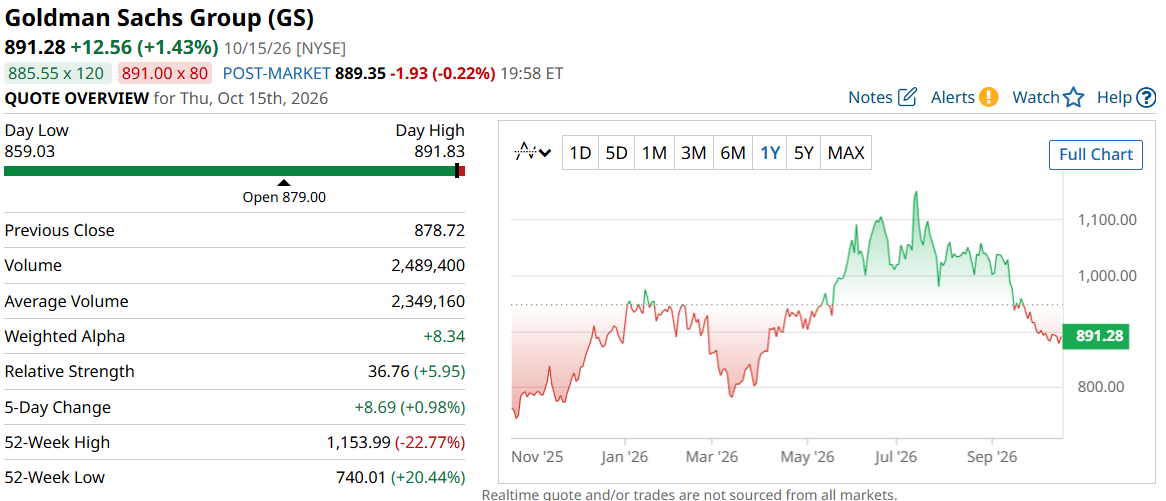
Goldman Sachs is one of Wall Street’s best-known dealmakers. The firm helps companies raise money, advises on major mergers, and trades across global markets, making it a go-to name for big money moves.
That Wall Street pedigree has made Goldman a giant in the industry, with a market cap of about $255 billion. GS stock is also up 1.4% since the start of the year.
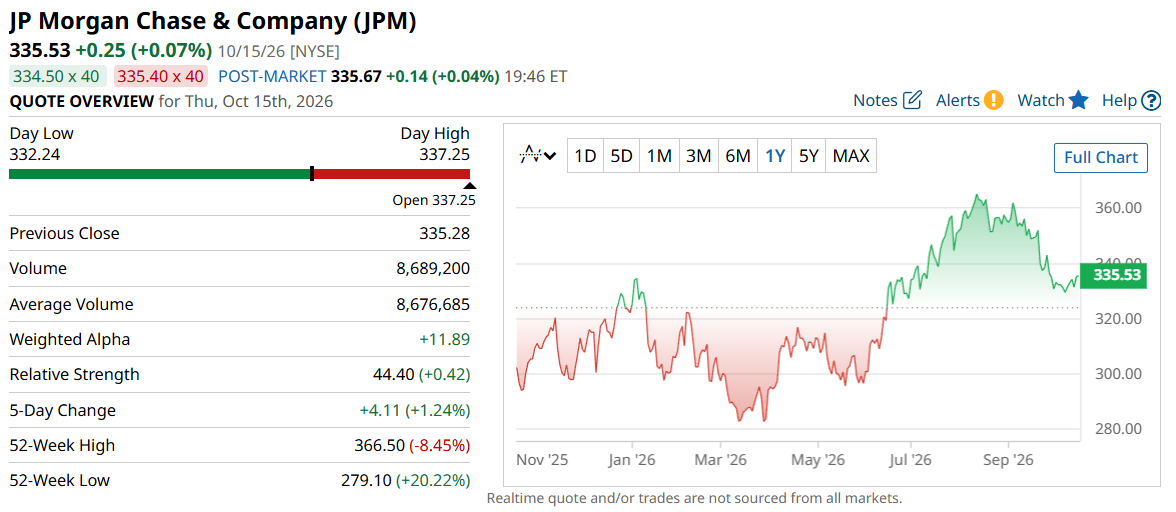
If Goldman is the Wall Street specialist, JPMorgan Chase is the all-around banking powerhouse. It combines investment banking and trading with commercial lending, payments, and wealth management, making it something of a one-stop shop for finance.
JPMorgan's $891 billion market cap is more than triple Goldman Sachs's. On stock performance, JPM is up 4% year-to-date.
But, banking isn't just a game about size. So let's look at how each bank is positioned for the current rate and dealmaking environment.
How Goldman and JPMorgan Are Building Their Next Growth Engines
Banks make money in different ways, and today’s market is giving both Goldman and JPMorgan something to work with.
Goldman is looking to expand beyond dealmaking. For example, its recent agreement to acquire NEOS Investments would bring $30 billion in active income exchange-traded funds (ETFs), expanding its asset management into products that generate stronger recurring investment-management fees.
Meanwhile, JPMorgan is doing what it does best: expand, expand, expand. The firm is integrating artificial intelligence across its operations, particularly through its Commercial & Investment Bank segment, to build an even larger payments footprint.
Case in point: Goldman is just starting to move beyond its edge, while JPMorgan is taking the initiative to stay one step ahead of the competition.
Goldman vs JPMorgan: Which Bank Has the Stronger Financials?
Let's see how these growth initiatives translate to numbers. I used Barchart’s Stock Comparison Tool to compare the two.
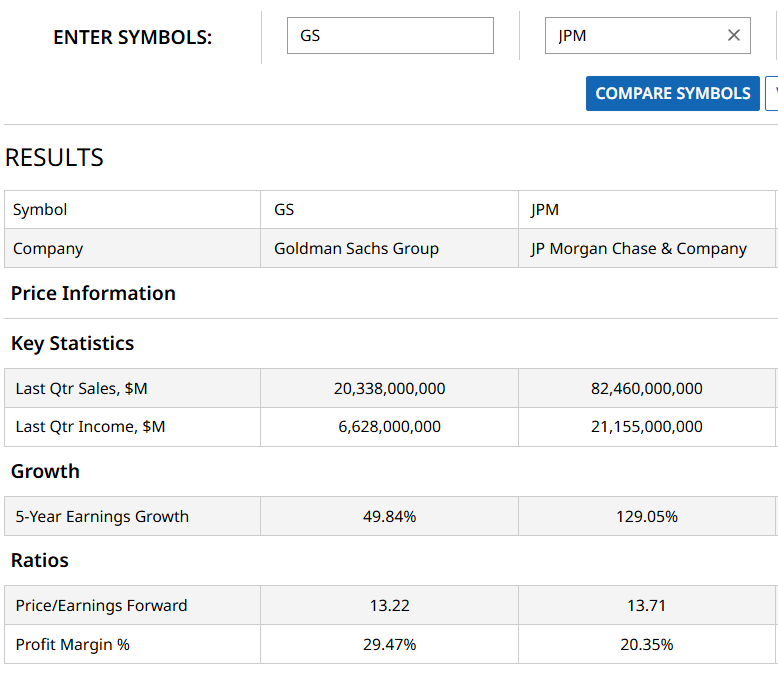
JPMorgan still dominates in size, but Goldman had the stronger year. Goldman’s annual sales rose 8.9% to $58.3 billion, while net income climbed 20.3% to $17.2 billion. JPMorgan’s sales were nearly flat, up 0.5% to $280.3 billion, while net income slipped 2.4% to $57 billion.
However, JPMorgan Chase’s five-year earnings growth outstrips Goldman Sachs’s at 129% vs 50%.
Valuation is where the gap nearly disappears. Goldman trades at about 13x forward earnings, versus nearly 14x for JPMorgan. Both also sit slightly below the broader financial sector’s roughly 15.5x P/E ratio.
So, JPMorgan wins on scale, but that doesn't discount Goldman's faster growth rate in its latest numbers.
GS and JPM Dividend Comparison
Now, this is the most exciting part, especially for income-focused investors.
Goldman Sachs pays a forward annual dividend of $20 a share, translating to a yield of around 2.2%. Its payout ratio is also just 24%, meaning less than a quarter of earnings are being returned to shareholders.
JPMorgan, meanwhile, pays $6.60 per share annually, which translates to a yield of about 2%. And its payout ratio is also a low 25%, putting both banks in nearly the same range.
That keeps this matchup surprisingly close.
With neither bank pulling ahead on dividends, analyst opinions may decide the winner.
Wall Street Consensus: Goldman or JPMorgan
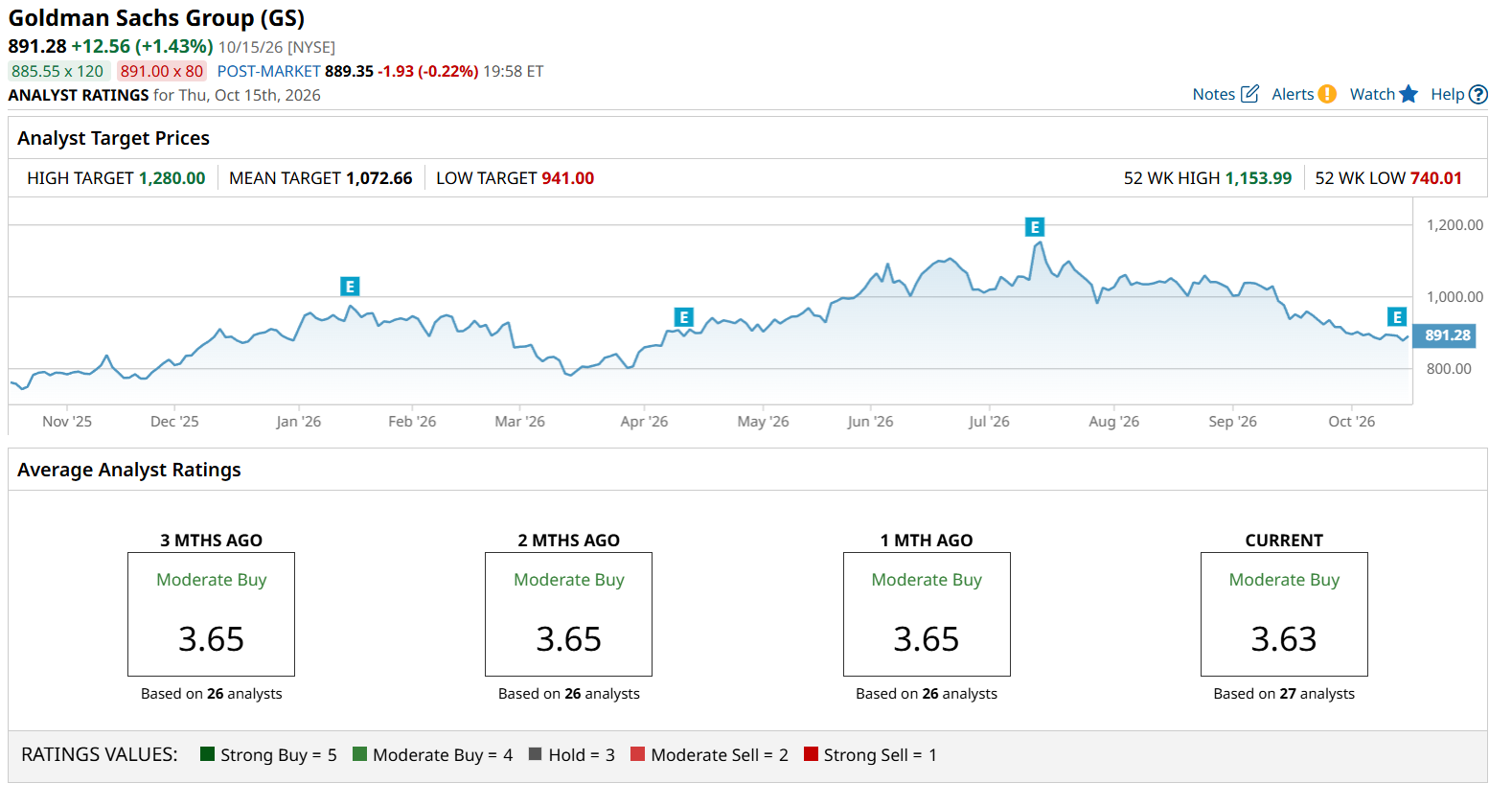
A consensus among 27 analysts rates GS stock a “Moderate Buy”, with high target prices suggesting upside of as much as 44% over the next year.
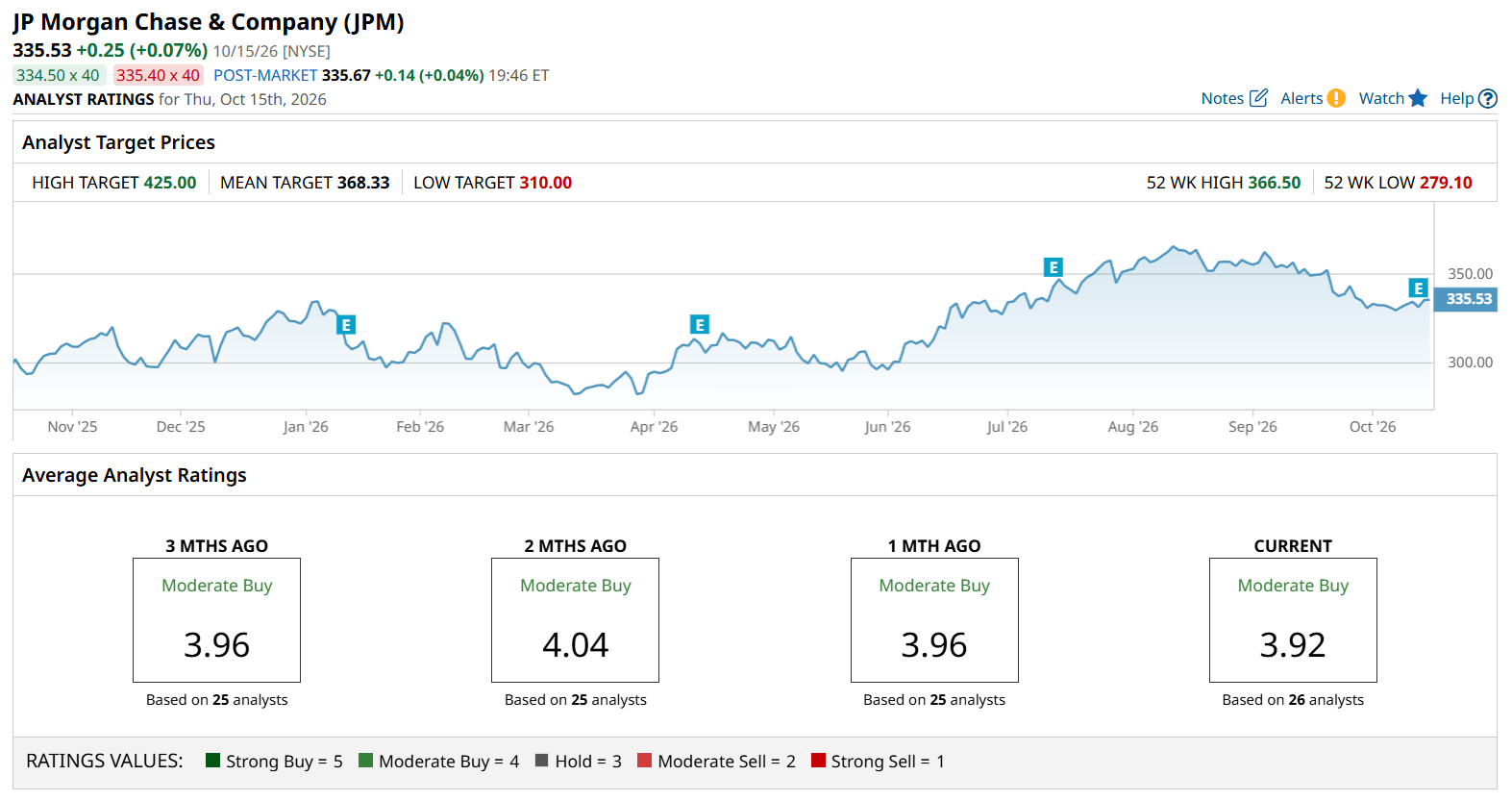
JPM shares a similar rating, with 26 analysts calling it a “Moderate Buy.” However, its high target prices suggest about 27% upside, which is slightly more modest.
Verdict
While this matchup is genuinely close, Goldman leads by only an inch.
That difference comes down to Goldman's stronger growth and current valuation, which deserves some credit considering the scale gap with JPMorgan. JPMorgan is still a solid choice of course, especially given its broader, more diversified business.
But when I put the full picture together, Goldman simply looks a little more attractive today.
On the date of publication, Rick Orford did not have (either directly or indirectly) positions in any of the securities mentioned in this article. All information and data in this article is solely for informational purposes. For more information please view the Barchart Disclosure Policy here.