


The Call Repsol Bulls Got Right Before A 117% Rally
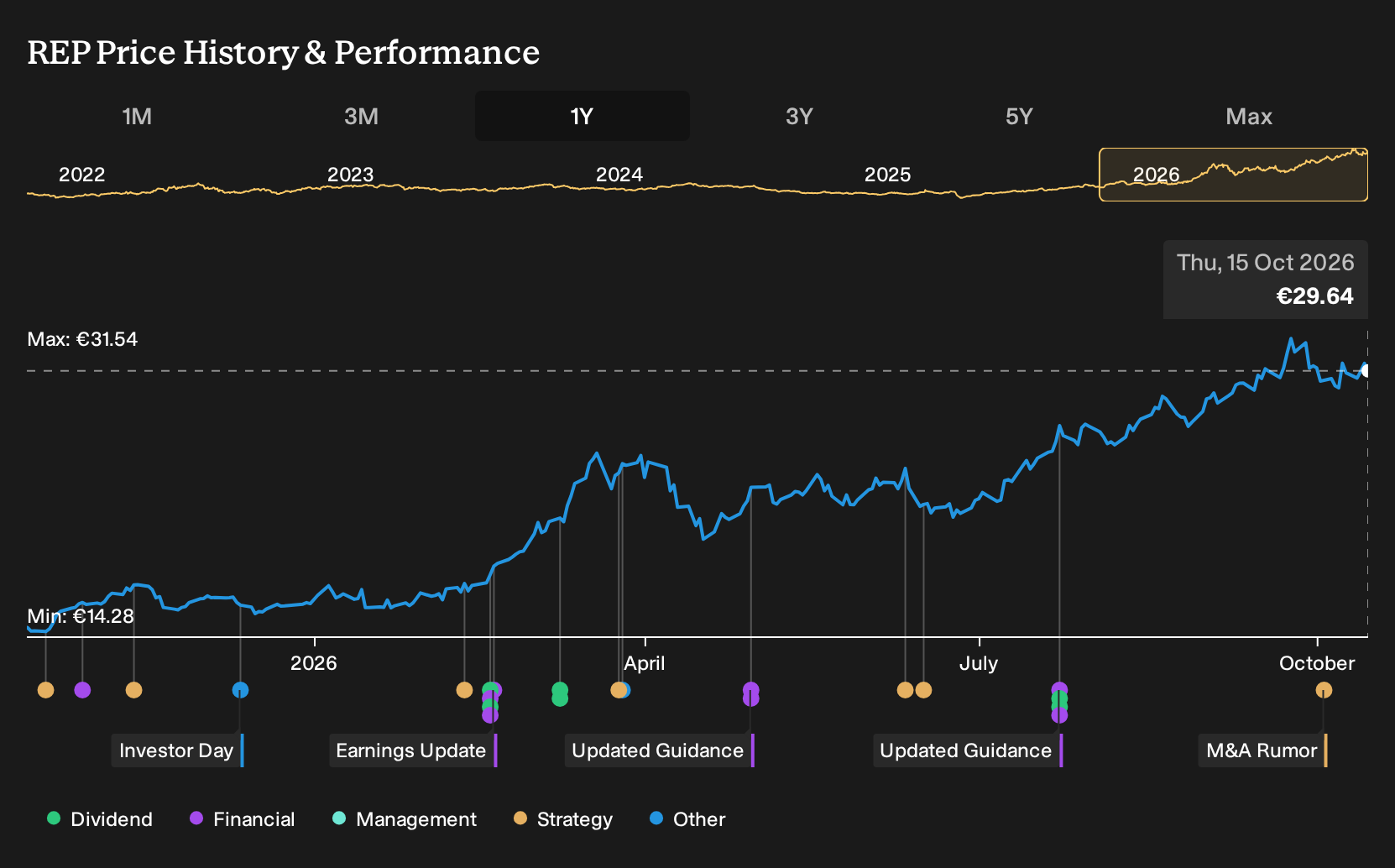
Repsol’s recent headlines focus on regained control of Venezuelan assets, new barrels from Alaska, and a sharp rise in net profit, yet that is not the most startling figure. For Repsol shareholders, the return over the past year was 116.7%, including dividends. If you had been weighing the bullish call for a multi energy champion against warnings of stranded fossil assets back in October 2025, what does this outcome say about how you weighed those risks?
Repsol has already moved. Pinpoint other ways to investigate the theme among 41 power grid technology and infrastructure stocks.
What You Had To Believe About Repsol Back Then
The shares cost €14.52 at the start of the period, and investors in Repsol were pulled between a green-tilted growth story and a policy-driven squeeze on fossil fuels.
The bullish view pointed to a Fair Value of €18, a price implied by forecasts that upstream projects and a fast-growing customer division would support stronger earnings and cash flow. That scenario leaned on production additions in the UK, Alaska and Libya, as well as on higher EBITDA from the customer business arriving earlier than management had planned.
The bearish narrative set Fair Value at €11, again an implied price, arguing that tighter European climate policies and rising ESG pressures could leave hydrocarbon assets at risk. This camp focused on decarbonization, potential stranded assets and a higher cost of capital as core hazards for Repsol’s long term profitability.
What The Evidence Around Repsol Actually Tested
Repsol’s agreement to regain operational control in Venezuela, ramp up production at Alaska’s Pikka project, and report Q2 2026 revenue of €18,330m with net income of €1,250m supported the bullish case that new barrels and integrated assets could lift earnings. A higher net margin of 6.8% versus 1.6% also challenged the more cautious profitability fears.
The lesson is simple. When a story hinges on volume growth and margin repair, it is important to track reported production milestones alongside the net margin line, not just revenue, to see whether the thesis is actually taking hold.
What Repsol’s Run Now Asks You To Believe
With Repsol at €29.64, this Narrative’s Fair Value sits below the current price, which frames today’s discussion as a question about what recent strength already assumes.
The Narrative leans on decarbonization pressure, slower renewables buildout, and capital intensity as constraints. A buyer today effectively assumes Repsol can keep converting hydrocarbons into durable earnings, so how does that square with the risk of stranded assets and margin pressure?
"High capital intensity, continued investment in large-scale oil and gas projects, and a legacy asset base restrict the company's ability to pivot quickly to renewables, heightening the risk of stranded assets and impairment charges, which could considerably pressure net margins and lead to significant write-downs over time."
That disagreement has a full argument behind it. → Uncover the lower Fair Value this Narrative argues for
Where Repsol’s Molecule Travels Next
Repsol reminds you that hydrocarbons still fund the transition story. That is one step. Another sits closer to the pipe.
Gas leaving a field or trunkline rarely arrives at the right pressure. Turbines, liquefaction plants and power units all need tailored compression.
One specialist rents heavy compression fleets, installs them, and keeps them running. Customers pay for horsepower and uptime, not fuel price bets.
As more gas feeds data centers and export plants, that service can start to look less cyclical. Where does that leave simple producers like Repsol in your mental map?
It is written up in full, assumptions and all. → Explore the Narrative that puts this company 53% above its price
This article by Simply Wall St is general in nature. We provide commentary based on historical data and analyst forecasts only using an unbiased methodology and our articles are not intended to be financial advice. It does not constitute a recommendation to buy or sell any stock, and does not take account of your objectives, or your financial situation. We aim to bring you long-term focused analysis driven by fundamental data. Note that our analysis may not factor in the latest price-sensitive company announcements or qualitative material. Simply Wall St has no position in any stocks mentioned.
Have feedback on this article? Concerned about the content? Get in touch with us directly. Alternatively, email editorial-team@simplywallst.com