


Indian Oil Stock And 2 Refiners Facing A Venezuela Crude Reset
Oil markets rarely get a plot twist as big as Venezuelan crude quietly returning to a world that is still watching Brent hover above $100. Fresh barrels, large capex plans and a different sanctions mood in Washington all influence where money might flow across integrated oil and gas producers. This piece explains the backdrop and describes three stocks exposed to this development so you can assess the situation for yourself.
The three stocks that follow are just a sample, and the full screen surfaced 13 more large integrated or refining groups with equally compelling narratives that are not covered here. If you want to identify your own highest conviction ideas from this wider universe, head straight into the Global Integrated Oil & Gas Producers screener to filter and analyze the full set of opportunities.
Hindustan Petroleum (NSEI:HINDPETRO)
Hindustan Petroleum leans heavily toward refining and marketing, which puts it right in the sweet spot of this integrated oil and gas screener. In this space, crude sourcing, heavy oil availability and complex refinery configuration really shape outcomes for shareholders.
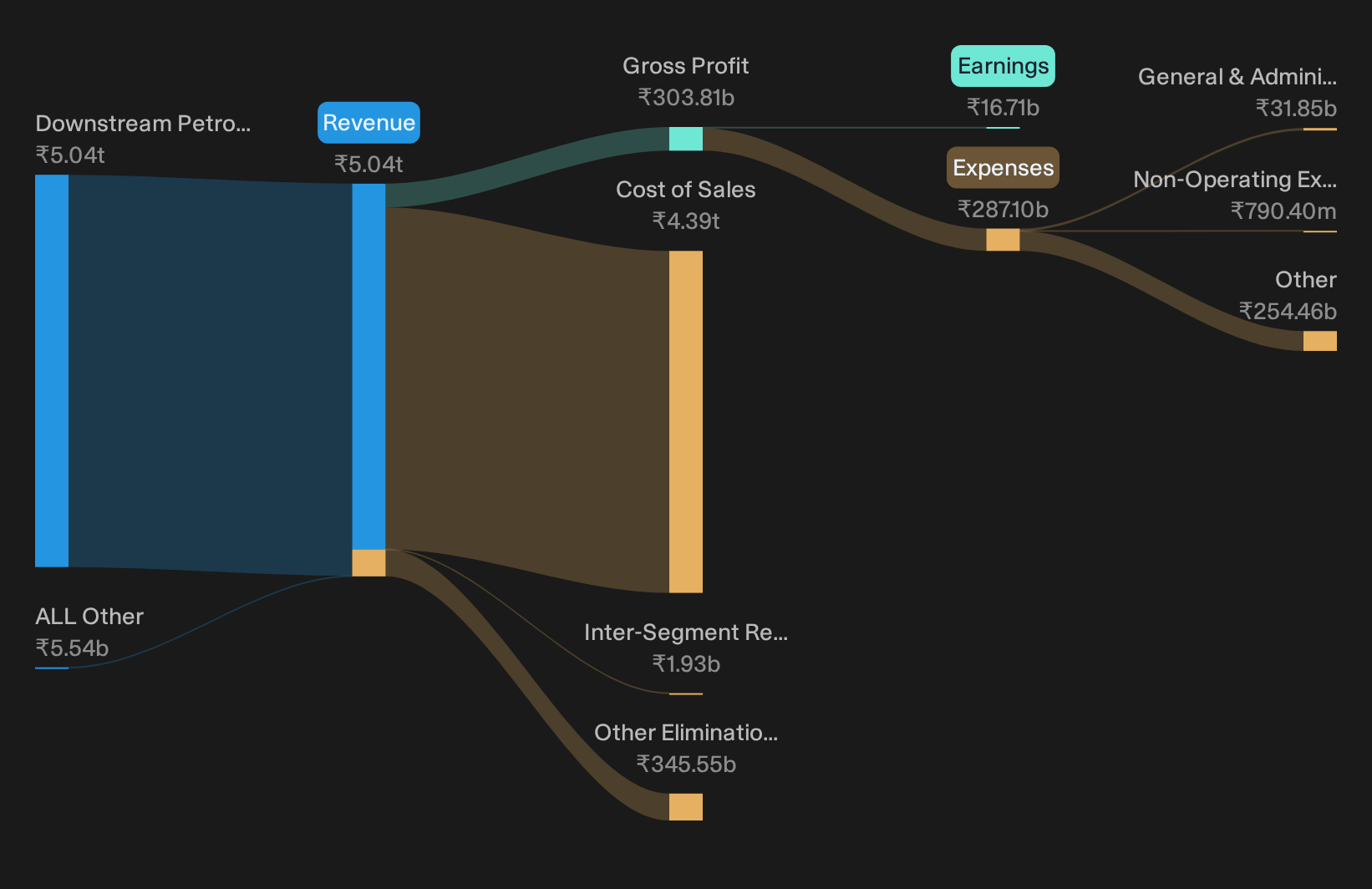
Hindustan Petroleum runs refineries, fuel marketing, gas, petrochemicals and new energy projects, with downstream petroleum contributing about ₹5,035.4b of its roughly ₹5,041.0b business revenue, and the group carries a market cap of about ₹741.5b.
"Aggressive execution of capacity expansion and complex refinery upgrades is now moving into the monetisation phase, with the Vizag residue upgradation facility commissioned and the Rajasthan refinery running at around 60% utilisation and guided to reach full refining capacity in Q3 FY27. This points to higher distillate yields and a larger contribution to Hindustan Petroleum revenue and EBITDA as these assets stabilise."
One possible scenario is that a single pressure on margins eases just as these upgraded complexes begin to show their full earnings power.
As that margin pressure shifts, read the full narrative for Hindustan Petroleum to see how Venezuelan crude, capex timing and policy risk could reshape Hindustan Petroleum’s earnings mix.
Bharat Petroleum (NSEI:BPCL)
Bharat Petroleum is one of the clearest ways to play this global integrated producers theme, with a refining heavy model that lives and dies by crude supply shifts, product spreads and how efficiently it can turn imported barrels into fuels and services for end customers.
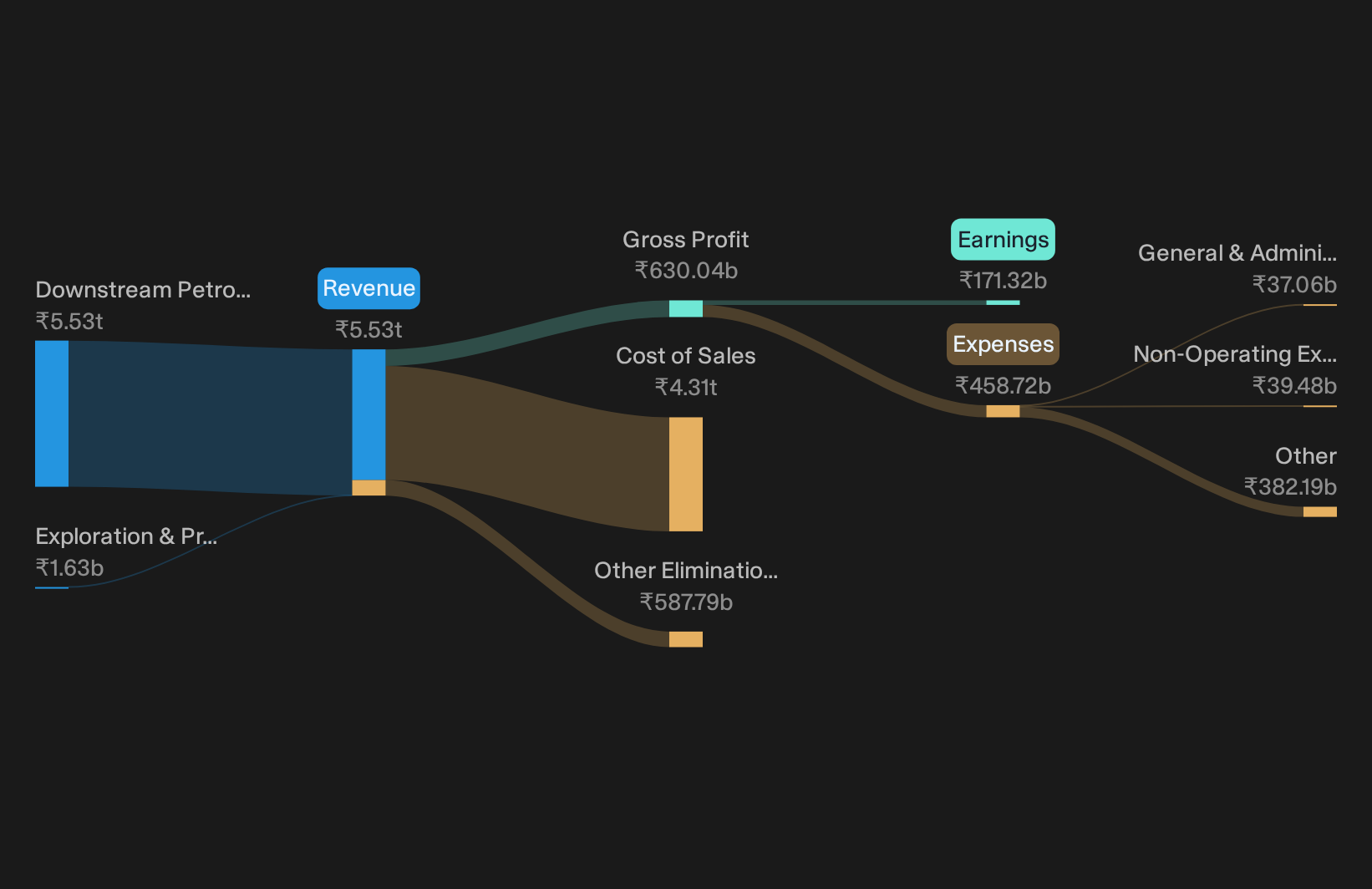
Bharat Petroleum runs refineries and a large fuel marketing network in India and abroad, earning about ₹5,525.7b of its roughly ₹5,525.7b operating revenue from Downstream Petroleum and only around ₹1.6b from Exploration & Production, and carries a market cap near ₹1,274.2b.
"Although Bharat Petroleum is increasing sourcing flexibility with a larger share of spot and Russian crude, structurally higher freight and insurance costs that leave crude landing costs around US$13 to US$15 per barrel above the India basket, compared with US$4 to US$5 previously, could keep unit input costs elevated and compress net margins if regulated marketing prices limit pass through."
What really matters for Bharat Petroleum now is how one unresolved pressure shapes the gap between headline refining strength and the cash that ultimately sticks.
If that gap between reported strength and real cash generation is what you care about, read the full narrative for Bharat Petroleum to see how pricing power, policy and freight costs could be masking where Bharat Petroleum’s earnings profile is really heading.
Indian Oil (NSEI:IOC)
Indian Oil brings the closest thing in this screener to a full scale integrated major, linking crude sourcing, refining, petrochemicals and fuels marketing in one place. This makes its growth plans especially relevant as heavy crude barrels from Venezuela reshape global flows.
"IOC's standalone refining capacity stands at 70.25 MMTPA, with consolidated capacity at 80.75 MMTPA, and by 2030 the number reaches 107.4 MMTPA, a 53% expansion."
What happens to Indian Oil’s earnings power if a shift in crude availability improves complex refinery margins just as that extra capacity comes online?
If that margin shift is what you are watching, read the full narrative for Indian Oil to see how Indian Oil’s capacity build, crude mix and policy risk could be decoupling underneath the surface.

Seeking Alternatives Before The Crowd Moves
Fresh ideas move fast and the best setups rarely stay under the radar for long. Spot potential breakouts and momentum shifts while it matters, then get in early.
- Jump on sturdy income streams by scanning a curated 219 dividend fortresses that aim to keep cash flows flying even when sentiment drops elsewhere.
- Hunt for resilient balance sheets with the hand picked list of solid balance sheet and fundamentals (201 results) that keep financial risk in check while growth plans are still under the radar for now.
- Chase next leg higher potential with a focused 613 high quality undiscovered gems that highlights under followed businesses before momentum traders get caught piling in late.
This article by Simply Wall St is general in nature. We provide commentary based on historical data and analyst forecasts only using an unbiased methodology and our articles are not intended to be financial advice. It does not constitute a recommendation to buy or sell any stock, and does not take account of your objectives, or your financial situation. We aim to bring you long-term focused analysis driven by fundamental data. Note that our analysis may not factor in the latest price-sensitive company announcements or qualitative material. Simply Wall St has no position in any stocks mentioned.
Have feedback on this article? Concerned about the content? Get in touch with us directly. Alternatively, email editorial-team@simplywallst.com