


3 US Life Insurer Stocks Built For Higher For Longer Rates
Higher rates are back, inflation is still above the Fed’s target, and the debate over how far policy tightening goes is turning every move into a market stress test. That kind of backdrop can punish some areas while opening the door for others that collect premiums and reinvest float at higher yields. This article walks through three US life insurers and annuity providers that screens show as exposed to this higher for longer story.
The three stocks highlighted next are just a starting sample, and the full screen surfaced 9 more US life insurers and annuity providers with equally compelling narratives that are not covered here.
If you want to identify potential higher conviction ideas in this space, head into the US Life Insurers and Annuity Providers as Higher-for-Longer Yield Beneficiaries screener to filter and analyze the full set of screened companies.
Primerica (PRI)
Primerica leans into the higher for longer yield theme by selling life insurance and retirement products to middle income households, where higher reinvestment yields can matter directly to both policy pricing and client appetite for dependable income streams.
Primerica focuses on middle income families, earning about US$1.8b from Term Life Insurance, US$1.4b from Investment and Savings Products, and roughly US$200 million from other distributed products, and the stock carries a market value around US$8.5b.
Continued mix shift toward higher fee Investment & Savings Products, with that segment reaching about 42% of consolidated revenues in Q2 2026 and asset based revenues rising faster than underlying client asset values, increases the share of recurring, fee like income and can have a positive effect on consolidated revenue and earnings resilience.
What happens to that resilience will depend heavily on how one unseen pressure on Primerica’s cost base and productivity trend plays out over the next few years.
How that plays out for Primerica hinges on one key shift in the salesforce and compensation model, which is unpacked in the full narrative for Primerica that separates short term noise from longer term opportunity.

Kansas City Life Insurance (KCLI)
Kansas City Life Insurance is a traditional U.S. life insurer tied closely to investment portfolio yields, with about US$326 million from Individual Insurance, US$92 million from Old American final expense products, and US$71 million from Group Insurance, supporting a market value near US$348 million.
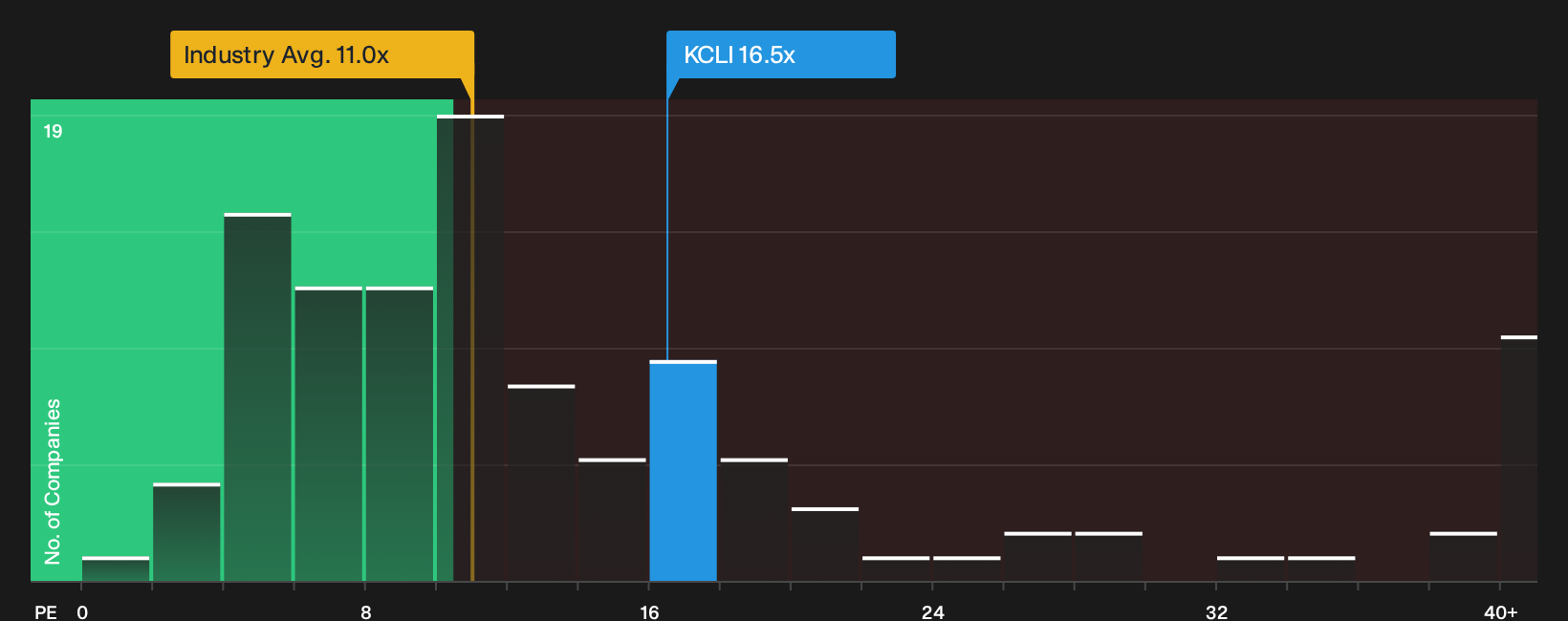
Kansas City Life Insurance is closely aligned with the higher for longer yield theme, with earnings tied to spread income and a business mix focused on life and final expense coverage. Recent profitability, a 2% dividend, and a P/E above life insurance peers keep attention on how the company may perform when funding costs and cash flows move in different directions.
Those cross currents on yield, dividend and P/E are exactly why a closer read of the 2 key rewards and 3 important warning signs (2 are major!) could surface where Kansas City Life Insurance may be decoupling next.
Pekin Life Insurance (PKIN)
Pekin Life Insurance runs a broad insurance platform across life, health, auto, home, and business lines, with all activity tied to U.S. Insurance, Life and Health revenue of about US$72 million and a market value near US$201 million. This links it cleanly to the higher for longer yield theme.
Pekin Life Insurance fits the higher for longer idea because its life and annuity liabilities are long dated, giving the investment book more scope to reset at higher yields while spreads widen. Profitability has recently slipped and the stock is thinly traded, so much depends on what happens when funding costs and reinvestment returns stop moving in step.
When those funding and reinvestment lines finally separate, the Pekin Life Insurance financial health report can highlight where Pekin Life Insurance’s balance sheet pressure might quietly turn into upside.

Seeking Fresh Alternatives Before They Fly
Fresh setups can move from quiet to breakout fast, and once momentum is caught you are chasing. Scan these under the radar picks before the data goes stale and act now.
- Spot cash generative outliers with cleaner balance sheets by running the list of solid balance sheet and fundamentals (25 results) while they are still under the crowd’s radar and pricing has not yet caught up.
- Ride secular automation momentum by tracking operators in the 91 robotics and automation stocks before capital flows crowd in and compress the easy edge from today’s pricing.
- Position around potential yield support by scanning the 8 dividend fortresses while payouts, fundamentals, and entry points still line up for disciplined income focused investors.
This article by Simply Wall St is general in nature. We provide commentary based on historical data and analyst forecasts only using an unbiased methodology and our articles are not intended to be financial advice. It does not constitute a recommendation to buy or sell any stock, and does not take account of your objectives, or your financial situation. We aim to bring you long-term focused analysis driven by fundamental data. Note that our analysis may not factor in the latest price-sensitive company announcements or qualitative material. Simply Wall St has no position in any stocks mentioned.
Have feedback on this article? Concerned about the content? Get in touch with us directly. Alternatively, email editorial-team@simplywallst.com