


Bank of Montreal (TSX:BMO) Following Fresh Funding Moves Is The Undervalued Narrative Still Intact
Why Bank of Montreal stock is in focus after fresh funding moves
Bank of Montreal (TSX:BMO) has stepped up its funding activity, announcing and completing several bond offerings alongside a new commercial virtual card capability with Mastercard that targets corporate payment workflows in Canada and the United States.
The fresh funding activity lands at a time when momentum has cooled in the short term but remains strong over longer horizons. Bank of Montreal’s share price shows a year to date share price return of 27.8% and multi year total shareholder returns well into triple digits, indicating that investors have been rewarded over time even as the recent 30 day share price return declined 4.28% and the 90 day share price return fell 8.78%.
Scan how Bank of Montreal compares with other large lenders that are reshaping funding and payments by reviewing our curated list of list of solid balance sheet and fundamentals (7 results)
After that surge in Bank of Montreal shares and the recent bond deals, the debate is simple: Is most of the easy upside already logged, or does the current valuation still leave meaningful room ahead?
Most Popular Narrative: 9% Undervalued
On the narrative view, Bank of Montreal is pegged at a fair value of about CA$255 per share versus the recent CA$232.10 close. This implies a modest valuation gap supported by a 7.2% discount rate and detailed long term cash flow assumptions.
BMO's continued investment in digital and AI-powered banking platforms, such as the LUMI Assistant and multiple award-winning payment innovations, is improving operational efficiency and customer engagement, which should support increased net margins and persistently positive operating leverage.
See why 95 investors see Bank of Montreal as 9% undervalued.
Result: Fair Value of CA$255 (UNDERVALUED)
Still, sustained credit strain in Canadian consumers and weaker loan and deposit trends in the U.S. could quickly challenge the Bank of Montreal optimism story.
Find out about the key risks to this Bank of Montreal narrative.
Another View: What Bank of Montreal’s P/E Is Telling You
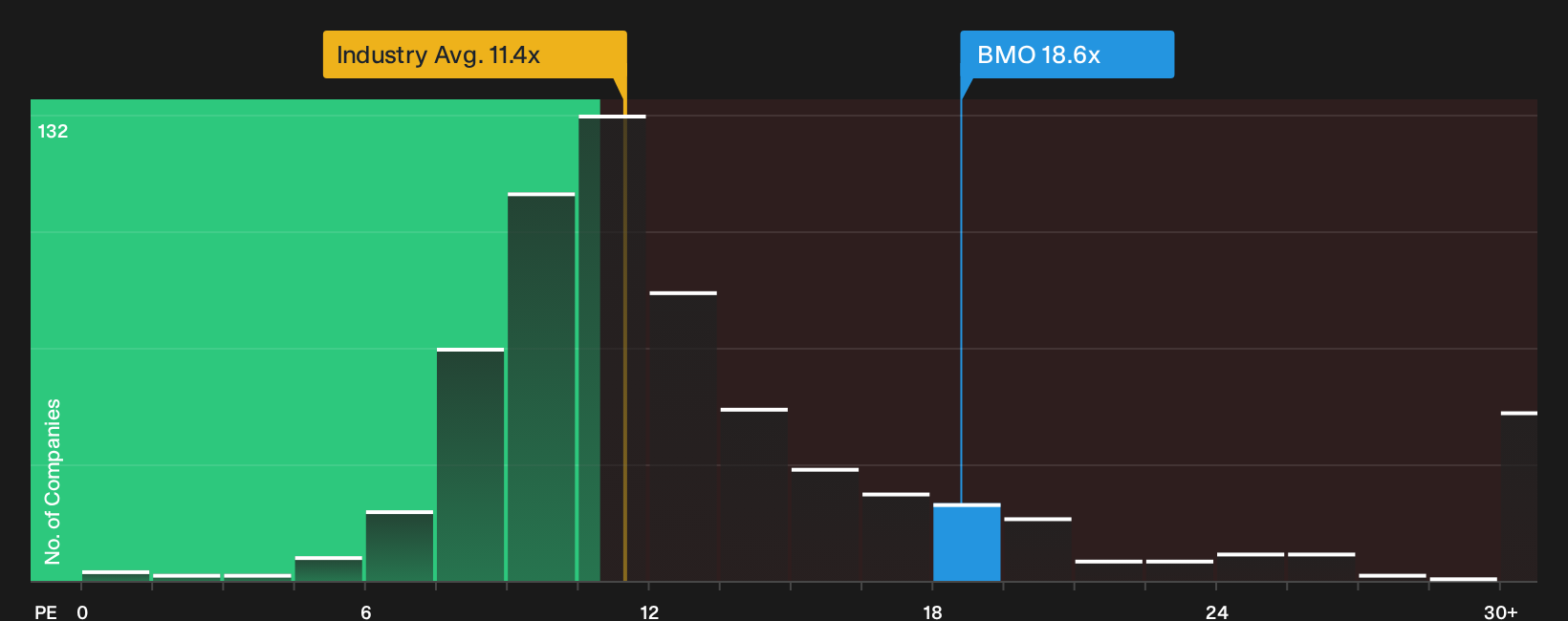
The DCF work paints Bank of Montreal as undervalued, but the simple earnings multiple sends a cooler message. At about 18.6x P/E versus a fair ratio of 18x, BMO trades on a richer tag than both the North American banks average at 11.4x and its peer group at 16x. That gap points to less margin for error if the story stumbles. How comfortable are you paying a premium for a bank that screens cheap on cash flows but expensive on earnings?
For a closer look at how earnings-based pricing lines up with the rest of the sector, and where the fair ratio might pull the stock over time, See what the numbers say about this price — find out in our valuation breakdown.
Next Steps
If this mix of optimism and caution around Bank of Montreal feels familiar, do not sit on the fence. Review the data, stress test the thesis, and weigh the 3 key rewards and 1 important warning sign.
Looking for more ideas beyond Bank of Montreal?
If you are serious about sharpening your next move, do not stop at Bank of Montreal. Let the data surface opportunities you might otherwise overlook.
- Target durable compounding potential by scanning a curated mix of quality businesses that screen as undervalued using our 8 high quality undervalued stocks.
- Strengthen your income stream by hunting for higher yielding payouts with staying power across our hand picked set of 3 dividend fortresses.
- Dial down portfolio stress by focusing on companies that pair financial resilience with clean balance sheets through the 8 resilient stocks with low risk scores.
This article by Simply Wall St is general in nature. We provide commentary based on historical data and analyst forecasts only using an unbiased methodology and our articles are not intended to be financial advice. It does not constitute a recommendation to buy or sell any stock, and does not take account of your objectives, or your financial situation. We aim to bring you long-term focused analysis driven by fundamental data. Note that our analysis may not factor in the latest price-sensitive company announcements or qualitative material. Simply Wall St has no position in any stocks mentioned.
Have feedback on this article? Concerned about the content? Get in touch with us directly. Alternatively, email editorial-team@simplywallst.com