


Eli Lilly (LLY) Reported Broader Biomarker Effects In Phase 3b Psoriasis Trial
- Eli Lilly (NYSE: LLY) reported new exploratory data from the TOGETHER-PsO Phase 3b trial on combined Taltz and Zepbound use in adults with moderate to severe plaque psoriasis and obesity.
- The combination regimen affected a wider range of immunometabolic biomarkers compared with Taltz alone in the Phase 3b dataset.
- Investigators reported greater reductions in inflammatory immune activity with the dual therapy, alongside measures tied to metabolic health.
- The new TOGETHER-PsO findings on combined Taltz and Zepbound treatment only capture part of the investment angle here. Our analysis turns up 1 warning sign for Eli Lilly as well.
For a wider view on how treatments for chronic conditions could shape steadier earnings profiles, explore the set at 31 resilient stocks with low risk scores.
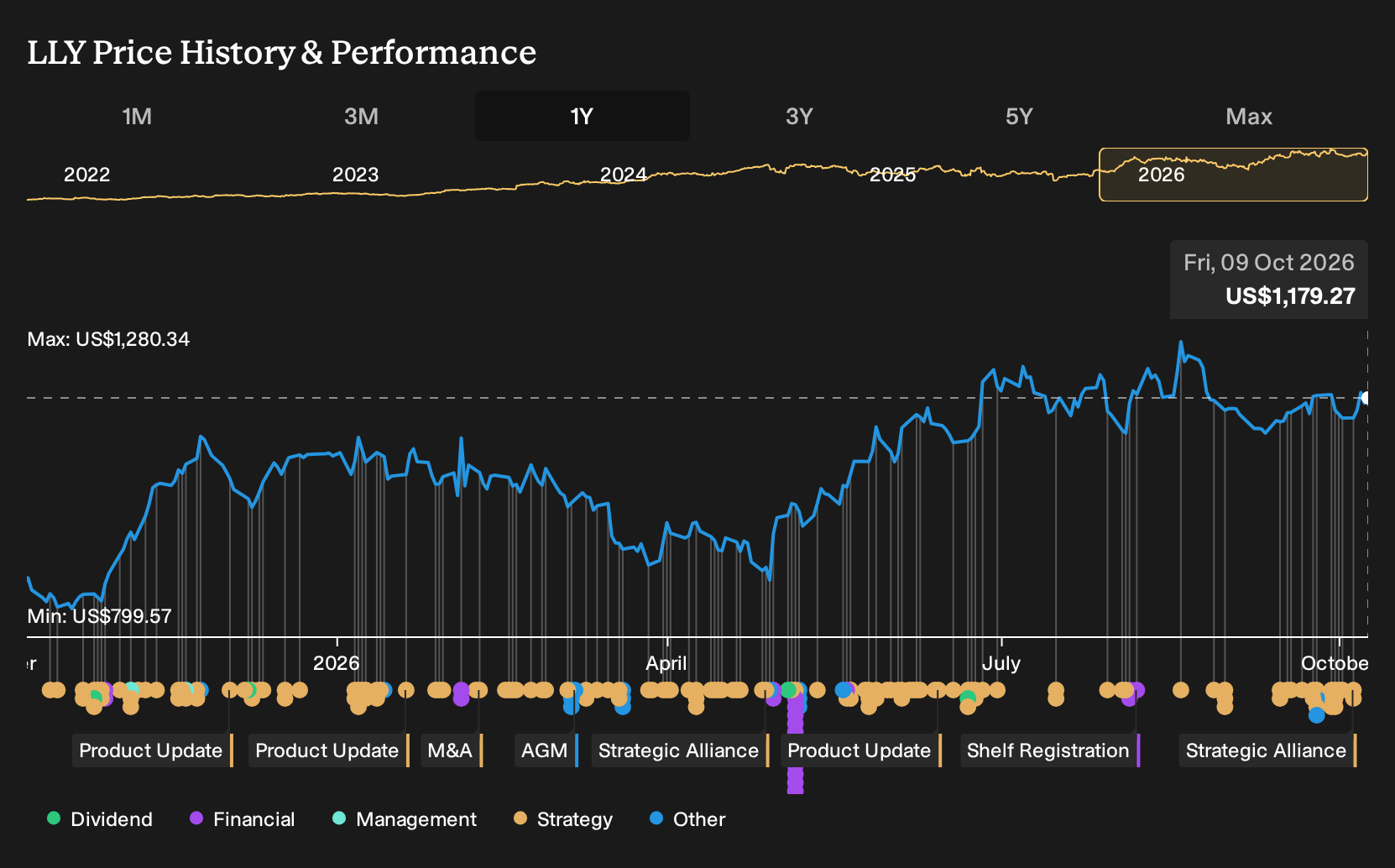
Eli Lilly is a US based pharmaceuticals group with a US$1.1b market cap that develops and sells human treatments across major global markets, so new psoriasis and obesity data plugs straight into a broad immunology and metabolic disease portfolio. The Taltz and Zepbound combination sits within that wider pipeline of chronic condition therapies the business already brings to the clinic.
See which insiders are buying and selling Eli Lilly following this latest news.
Eli Lilly psoriasis and obesity data tests the incretin-first Narrative
The central bet behind Eli Lilly today is that incretin-based obesity and diabetes drugs anchor the story while other franchises slowly carry more of the load. The TOGETHER-PsO biomarker readout leans straight into that idea by tying Zepbound’s metabolic profile to an established immunology asset in psoriasis.
"Ongoing work on high value specialty drugs, including next generation incretin combinations like EloraTZP moving into Phase 3 and non incretin portfolios in oncology, immunology and neuroscience that more than doubled revenue in Q2 2026, is expected to add new sources of revenue growth and support earnings and margin resilience over time...
See how the full story points towards a $1,329 fair value for Eli Lilly.
The new TOGETHER-PsO data directly supports the Narrative catalyst that Eli Lilly’s incretin science extends beyond weight loss into broader cardiometabolic and inflammatory disease biology. A psoriasis and obesity population, where around 61% of patients in the U.S. are overweight or have obesity, gives management a concrete bridge between dermatology, Zepbound and its wider cardiometabolic ambitions.
The same dataset quietly pushes on a different part of the thesis. If Eli Lilly can show immunometabolic benefits from pairing Taltz and Zepbound, investors may expect more combination programs and label-expansion efforts, which increases execution risk and R&D complexity compared with a simpler story focused on Mounjaro and Zepbound volume. It also sharpens comparisons with rivals like Novo Nordisk and Amgen that are building their own multi-indication obesity ecosystems.
The takeaway is that this single trial readout can look like either welcome proof of a broader incretin platform or an extra layer of expectations, depending on which Eli Lilly Narrative an investor chooses to back.
The next check on Eli Lilly is where the long range forecasts actually land
Before acting on headline trial news, buyers often want to see how analysts map the next few years and whether those expectations line up with today’s price. See where analysts expect Eli Lilly to be in a few years.
This article by Simply Wall St is general in nature. We provide commentary based on historical data and analyst forecasts only using an unbiased methodology and our articles are not intended to be financial advice. It does not constitute a recommendation to buy or sell any stock, and does not take account of your objectives, or your financial situation. We aim to bring you long-term focused analysis driven by fundamental data. Note that our analysis may not factor in the latest price-sensitive company announcements or qualitative material. Simply Wall St has no position in any stocks mentioned.
Have feedback on this article? Concerned about the content? Get in touch with us directly. Alternatively, email editorial-team@simplywallst.com