


3 US Homebuilder Stocks Facing A 7% Mortgage Rate Test
Higher 10 year Treasury yields, sticky 7% mortgage rates and talk of a housing freeze are forcing US homebuilder stocks into a new reality. Price cuts, incentives and shifting buyer psychology are reshaping where risk and resilience sit in this corner of the market. This article breaks down how that backdrop connects to three specific homebuilder stocks that are exposed to these forces and explains why their responses deserve a closer look.
The three stocks highlighted below are only a starter set, and the full screen pulls out 17 more US homebuilder and land development companies with equally compelling stories that are not covered here. To go straight to the broader opportunity set, use the US Homebuilder Stocks screener to identify, analyze, and rank the homebuilder ideas that best fit your own risk and return preferences.
PulteGroup (PHM)
Overview: PulteGroup is a pure-play U.S. homebuilder that acquires land, develops communities, and sells single and multi family homes nationwide.
Operations: PulteGroup generates about US$16.4b in revenue, primarily from U.S. homebuilding across Florida (US$4.2b), the Southeast, Midwest, West, Texas, and other regions.
Market Cap: US$21.0b
PulteGroup matters for this homebuilder screen because it is a large, focused builder that can adjust pricing and mortgage incentives in real time. This is exactly where the pressure from 7% mortgages and higher 10 year yields is showing up first.
"PulteGroup is pushing further toward a build to order model, with the share of build to order net new orders rising to 45% in Q2 2026 and finished spec homes trimmed to about 1.3 to 1.4 per community."
What happens to PulteGroup's margins and investor returns if one unseen pressure on those pricing and incentive levers starts to bite harder?
If that pressure point matters to you, read the full narrative for PulteGroup to see whether build to order momentum is masking risk or quietly rebuilding PulteGroup’s edge.

D.R. Horton (DHI)
Overview: D.R. Horton is a large U.S. homebuilder that buys and develops land, then builds and sells primarily affordable residential homes nationwide.
Operations: D.R. Horton generates most of its roughly US$33.4b revenue from regional U.S. homebuilding divisions, supported by Forestar land development, rental, and financial services.
Market Cap: US$37.7b
D.R. Horton matters for this US Homebuilder Stocks screen because it is one of the few builders big enough to set the going price and incentive playbook across a large portion of the new home market, especially for buyers who need affordability to make the math work at 7% mortgages.
"The capital light land approach, with about 570,000 lots controlled and only 22% owned, alongside a higher share of closings on lots developed by Forestar or third parties, is structured to limit balance sheet intensity and support returns on capital and earnings."
What happens to D.R. Horton’s margins and cash generation if one key pressure on those affordability and incentive levers shifts again?
If that pressure is where your thesis starts, read the full narrative for D.R. Horton to see how D.R. Horton’s capital light model could be accelerating or stalling returns.

Lennar (LEN)
Overview: Lennar is a major U.S. homebuilder that designs, builds, and sells single family and multifamily homes, closely tied to new construction affordability and incentives.
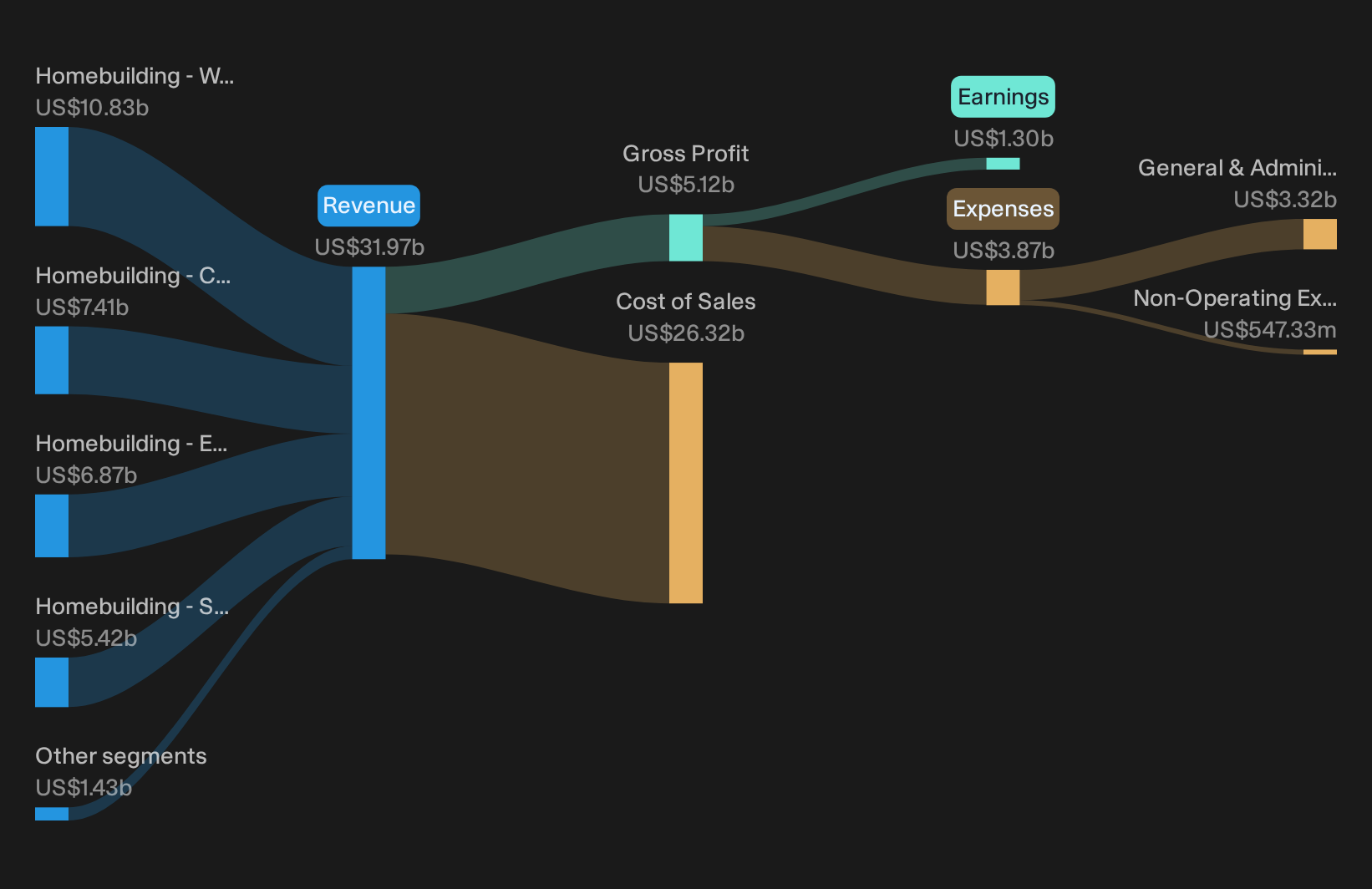
Operations: Lennar generates most of its revenue from U.S. homebuilding, led by the West at about US$10.8b, Central at US$7.4b, and East at US$6.9b.
Market Cap: US$18.2b
Lennar matters for this US Homebuilder Stocks screen because it directly controls new home prices and incentives across key regions, putting it on the front line of how higher mortgage rates reset what buyers can actually afford.
"Lennar's transition to an asset-light, land-light model with just-in-time delivery is expected to generate more predictable volume and growth, reducing the asset base and risk profile while improving cash flow, thus enhancing future revenue and net margin potential."
What happens to Lennar’s pricing power and profitability if a single unseen cost pressure inside that land light model starts to tighten further?
If that unseen cost squeeze is on your mind, read the full narrative for Lennar to see whether Lennar’s asset light model is quietly accelerating or masking its next phase.
Seeking Alternatives Before Momentum Runs
Fresh ideas move first. Markets reprice fast, and the best breakout stories rarely stay under the radar for long. Before that window drops out of reach, consider your options early.
- Identify cash rich defenders while they are still overlooked by scanning the list of solid balance sheet and fundamentals (25 results) and weighing which balance sheets you want backing your capital.
- Explore structural demand in critical materials as you review the 16 top copper producer stocks and determine which producers fit your view on long term infrastructure trends.
- Evaluate dependable income streams while yields remain elevated by assessing the 8 dividend fortresses and shortlisting which payout profiles align with your cash flow goals.
This article by Simply Wall St is general in nature. We provide commentary based on historical data and analyst forecasts only using an unbiased methodology and our articles are not intended to be financial advice. It does not constitute a recommendation to buy or sell any stock, and does not take account of your objectives, or your financial situation. We aim to bring you long-term focused analysis driven by fundamental data. Note that our analysis may not factor in the latest price-sensitive company announcements or qualitative material. Simply Wall St has no position in any stocks mentioned.
Have feedback on this article? Concerned about the content? Get in touch with us directly. Alternatively, email editorial-team@simplywallst.com