


How Investors May Respond To QBE Insurance Group (ASX:QBE) Two Year Recovery Gap
- QBE Insurance Group commissioned research showing that small business numbers in disaster hit regions continue to fall for at least two years after major events, beyond the point when most insurance claims are typically settled.
- The study suggests that standard business interruption indemnity periods may not match real recovery timelines. This raises questions about whether QBE’s product design and catastrophe coverage terms fully reflect long term post disaster pressures on insured clients.
- We will now look at how this longer recovery window for disaster hit small businesses could influence QBE Insurance Group's investment narrative.
QBE Insurance Group Investment Narrative Recap
To own QBE Insurance Group, you need to be comfortable with a global insurer that leans heavily on underwriting discipline, catastrophe modelling and expense control to support returns. The key near term swing factor is how pricing holds up against claims inflation and large loss volatility. The new research on long small business recovery periods does not appear to change that immediate earnings driver.
The biggest current risk remains pressure on underwriting margins if premium rate momentum softens while catastrophe and large loss costs stay elevated. The study on extended post disaster strain could nudge expectations around product design and reinsurance use, but any earnings impact from adjusting business interruption cover looks more medium term than immediate.
The research itself is the most relevant recent announcement for this topic. QBE Insurance Group has put numbers around a problem many regional operators feel intuitively, that disasters keep hurting small enterprises long after claim cheques are paid. For you as a shareholder, the interest is in how that evidence might filter into pricing, wordings and capital allocation over time.
If QBE ultimately stretches indemnity periods or develops new coverages for longer recoveries, the business might take on a different mix of risk and potential premium. That could interact with existing catalysts such as ongoing digital upgrades, expense work and catastrophe budgeting. It also intersects with core risks like large loss volatility and rate adequacy, because writing longer tail obligations tests how well QBE prices and reinsures those commitments.
QBE Insurance Group’s current analyst narrative points to revenues of $21.8 billion and earnings of $2.2 billion by 2029, implying 3.9% yearly top line growth and earnings that are unchanged from today’s $2.2 billion level.
Uncover how QBE Insurance Group's fair value indicates a 3% potential downside to its current price, a premium that may not be sustainable.
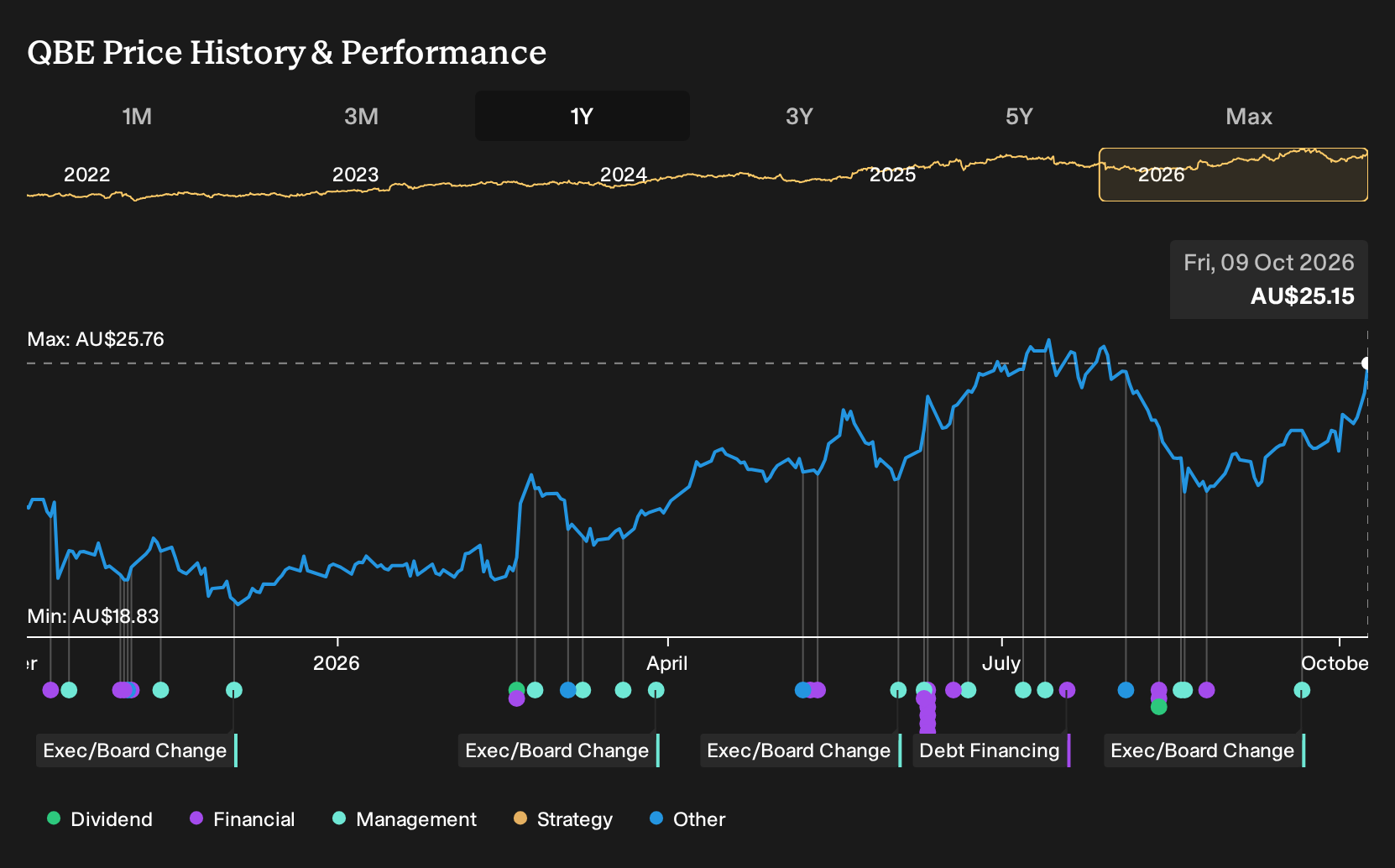
Exploring Other Perspectives
You see a very different story if you focus on QBE Insurance Group’s push into clean energy and data center insurance. The most optimistic analysts were already pencilling in about $23.1b of revenue and $2.3b of earnings by 2029. This fresh disaster research could easily affect those assumptions, so explore multiple viewpoints.
Explore 5 other QBE Insurance Group fair value estimates, including one that suggests there could be as much as 100% upside from the current price!
Decide For Yourself
Don't just follow the ticker, dig into the data and build a conviction that's truly your own.
- A great starting point for your QBE Insurance Group research is our analysis highlighting 2 key rewards and 1 important warning sign that could impact your investment decision.
- See our latest analysis for QBE Insurance Group. The report includes a comprehensive fundamental analysis summarized in a single visual, the Snowflake, making it easy to evaluate QBE Insurance Group's overall financial health at a glance.
Looking for more QBE Insurance Group style ideas?
Once you have a view on QBE Insurance Group, it helps to line it up against other insurers and financial stocks that fit your risk and income preferences. The Simply Wall St Screener lets you filter for balance sheet strength, yield, valuation and more so you can build a watchlist that actually matches your playbook.
- If capital protection is your first priority, focus on companies with robust finances using our list of solid balance sheet and fundamentals (12 results).
- For investors who want income to do more of the heavy lifting, zero in on reliable payers through our 6 dividend fortresses.
- To fish in ponds the market may be overlooking, broaden your research with our 15 high quality undiscovered gems.
This article by Simply Wall St is general in nature. We provide commentary based on historical data and analyst forecasts only using an unbiased methodology and our articles are not intended to be financial advice. It does not constitute a recommendation to buy or sell any stock, and does not take account of your objectives, or your financial situation. We aim to bring you long-term focused analysis driven by fundamental data. Note that our analysis may not factor in the latest price-sensitive company announcements or qualitative material. Simply Wall St has no position in any stocks mentioned.
Have feedback on this article? Concerned about the content? Get in touch with us directly. Alternatively, email editorial-team@simplywallst.com