


Chinasoft International And 2 Asian Penny Stocks To Watch
As Asian markets navigate a landscape marked by fluctuating economic indicators and evolving policy measures, investors are keenly observing opportunities beyond the conventional blue-chip stocks. Penny stocks, though an outdated term, still hold allure for those seeking growth potential in smaller or emerging companies. In this article, we explore three Asian penny stocks that present intriguing possibilities for investors looking to capitalize on financial strength and long-term potential amidst current market dynamics.
Let's dive into some prime choices out of the screener.
Chinasoft International (SEHK:354)
Simply Wall St Financial Health Rating: ★★★★☆☆
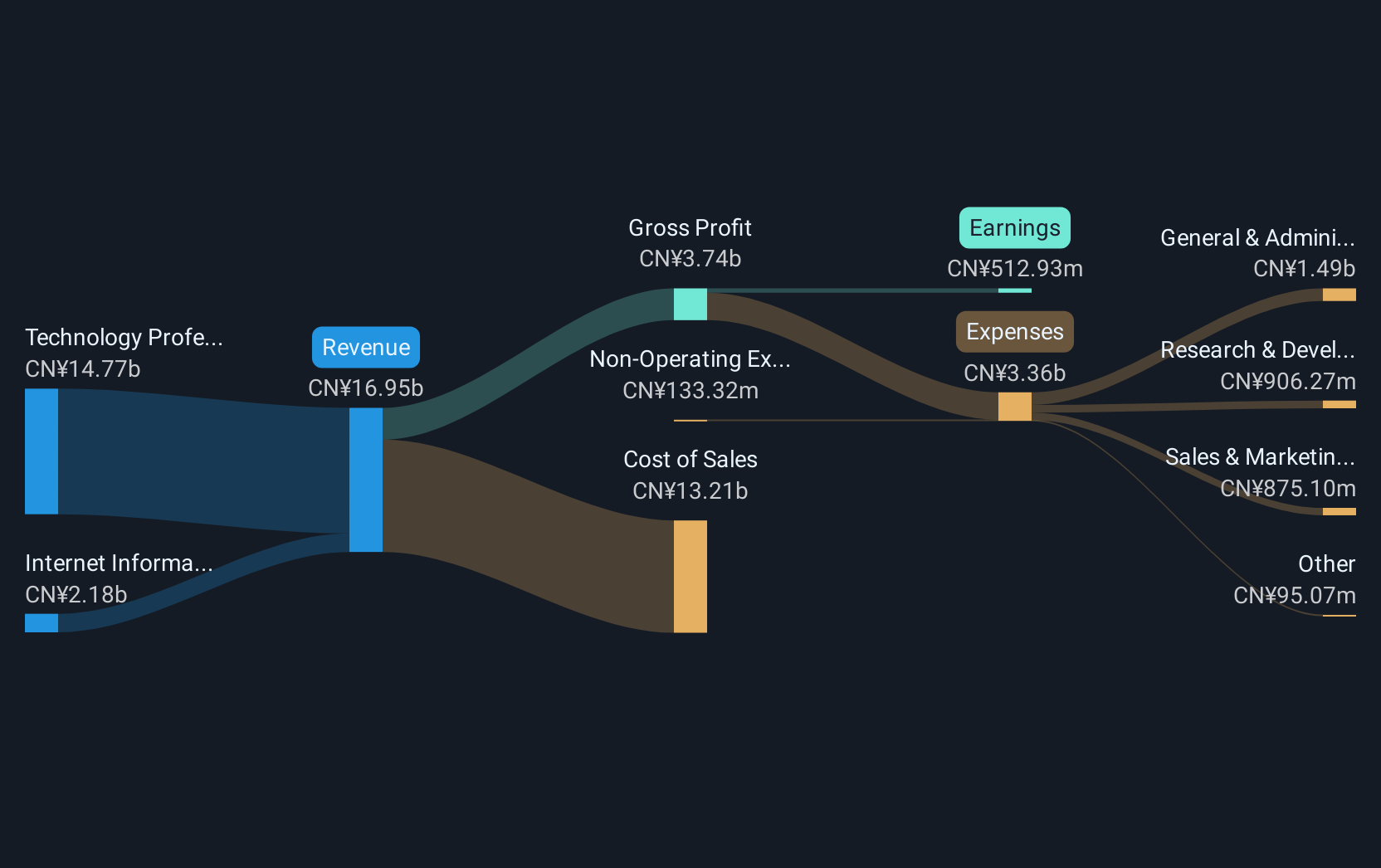
Overview: Chinasoft International Limited, along with its subsidiaries, provides software and IT services across several countries including China, Malaysia, Japan, Saudi Arabia, Singapore, India, and Indonesia; it has a market cap of approximately HK$9.48 billion.
Operations: The company generated CN¥17.47 billion from its Internet Software & Services segment.
Market Cap: HK$9.48B
Chinasoft International has faced challenges with negative earnings growth and declining profits over the past five years. However, its strategic initiatives, such as winning significant bids for projects like the Guangdong Industrial Robot Centre and Xi’an Smart Transportation Project, highlight its efforts to expand in AI and smart technology sectors. The company’s satisfactory net debt to equity ratio suggests manageable financial leverage. Recent partnerships, including a collaboration with Moonshot AI for enterprise-grade solutions, indicate a focus on innovation and market expansion. Despite low profit margins and return on equity, Chinasoft's strategic moves may position it well for future opportunities in tech-driven markets.
- Click to explore a detailed breakdown of our findings in Chinasoft International's financial health report.
- Gain insights into Chinasoft International's future direction by reviewing our growth report.
Hiap Seng Industries (SGX:1L2)
Simply Wall St Financial Health Rating: ★★★★★★
Overview: Hiap Seng Industries Limited is an investment holding company in Singapore that offers mechanical engineering, procurement, construction, plant fabrication and installation, and maintenance services for the oil-and-gas, petrochemical and pharmaceutical industries with a market cap of SGD87.26 million.
Operations: The company generates revenue of SGD24.42 million from its Plant Construction and Maintenance segment.
Market Cap: SGD87.26M
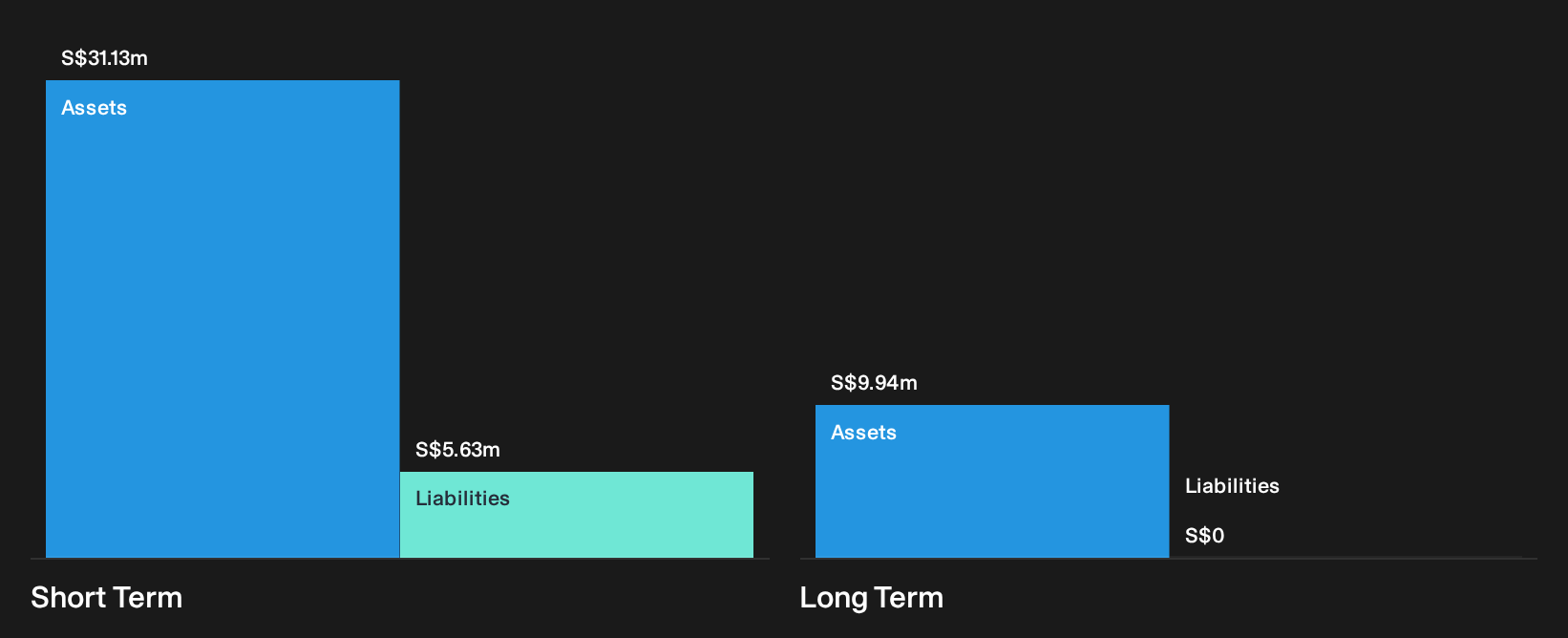
Hiap Seng Industries faces challenges with a volatile share price and low return on equity at 8%. Despite no substantial insider selling recently, the company's dividend yield of 2.22% is not well covered by free cash flows. Profit margins have decreased from last year, but short-term assets comfortably cover liabilities. The company remains debt-free, which reduces financial risk. Recent developments include an extension of leases for its subsidiary's facilities until 2038, indicating operational stability. Although earnings growth has been negative recently, Hiap Seng's past profitability improvements over five years show potential resilience in a competitive market environment.
- Dive into the specifics of Hiap Seng Industries here with our thorough balance sheet health report.
- Gain insights into Hiap Seng Industries' past trends and performance with our report on the company's historical track record.
Valuetronics Holdings (SGX:BN2)
Simply Wall St Financial Health Rating: ★★★★★★
Overview: Valuetronics Holdings Limited is an investment holding company that offers integrated electronics manufacturing services in China and internationally, with a market cap of SGD422.85 million.
Operations: The company's revenue is derived from two main segments: Consumer Electronics, contributing HK$214.18 million, and Industrial and Commercial Electronics, generating HK$1.45 billion.
Market Cap: SGD422.85M
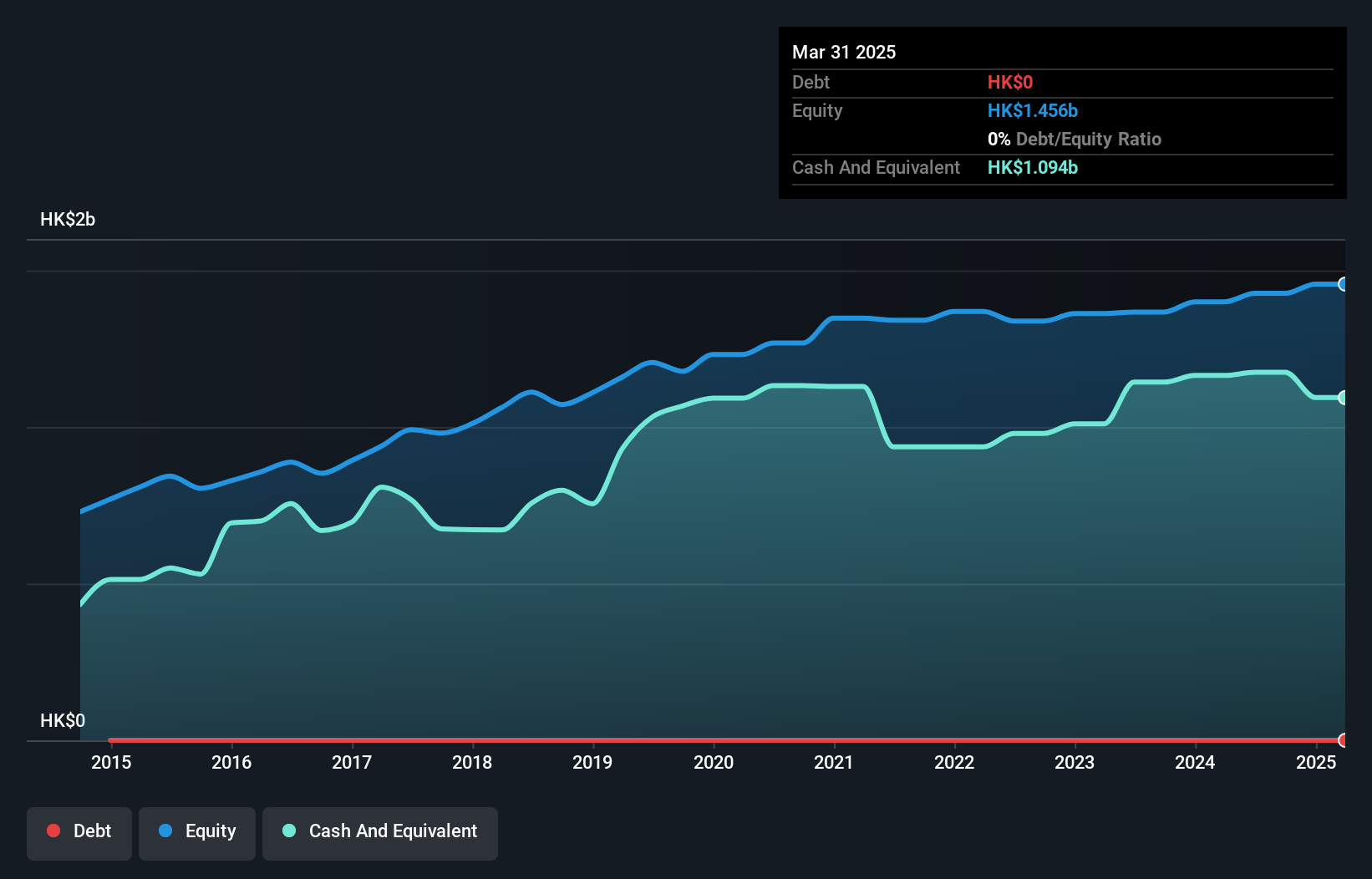
Valuetronics Holdings Limited, with a market cap of SGD422.85 million, benefits from strong financial stability as its short-term assets (HK$1.8 billion) significantly exceed both short-term and long-term liabilities. Despite a seasoned management team and no debt burden, the company faces challenges with negative earnings growth of -31.3% over the past year and lower return on equity at 7.6%. Recent dividend increases reflect shareholder value focus, yet an unstable dividend track record may concern investors seeking consistent income. Earnings are forecast to grow by 14.51% annually, but recent one-off losses have impacted financial results negatively.
- Unlock comprehensive insights into our analysis of Valuetronics Holdings stock in this financial health report.
- Gain insights into Valuetronics Holdings' outlook and expected performance with our report on the company's earnings estimates.
Summing It All Up
- Jump into our full catalog of 1,049 Asian Penny Stocks here.
- Ready For A Different Approach? Diversify your portfolio with solid dividend payers offering reliable income streams to weather potential market turbulence.
This article by Simply Wall St is general in nature. We provide commentary based on historical data and analyst forecasts only using an unbiased methodology and our articles are not intended to be financial advice. It does not constitute a recommendation to buy or sell any stock, and does not take account of your objectives, or your financial situation. We aim to bring you long-term focused analysis driven by fundamental data. Note that our analysis may not factor in the latest price-sensitive company announcements or qualitative material. Simply Wall St has no position in any stocks mentioned.
Have feedback on this article? Concerned about the content? Get in touch with us directly. Alternatively, email editorial-team@simplywallst.com