


What A 47% Fall Did To The Bata India Thesis
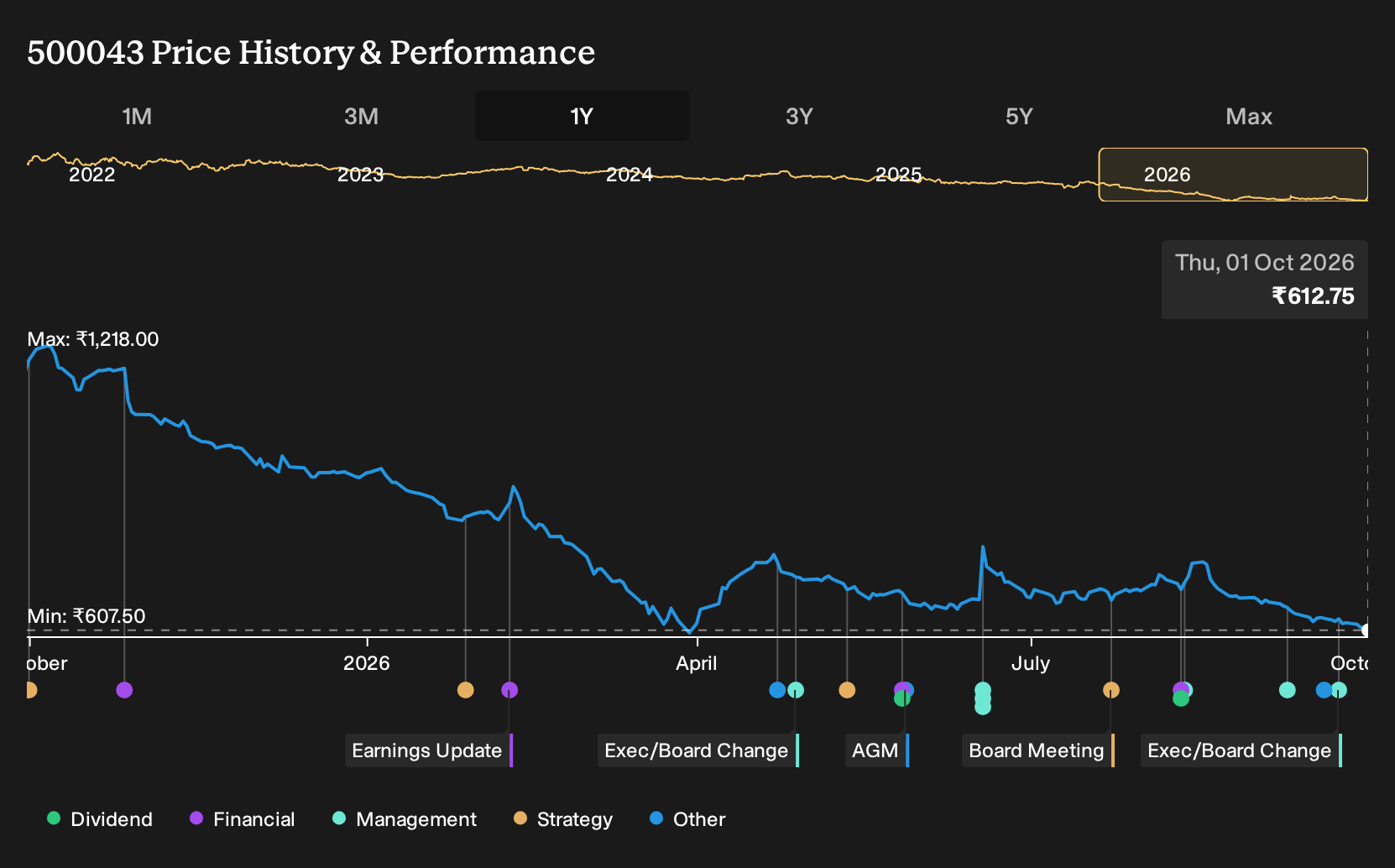
If you had looked at Bata India on 1 October 2025 and decided to sit it out, skipping both the bullish and cautious analyst cases on offer, the outcome may look very different to you today. For Bata India shareholders, the loss over the past year was 47.0%, including dividends. With fresh Q1 2027 numbers now showing higher revenue and profit than Q1 2026, which expectation or risk on record back then would you focus on to explain that gap?
The easy part of this move is behind Bata India. Zero in on 192 high quality undervalued stocks for companies trading below our estimates.
The Two Stories Investors Were Balancing On Bata India
The shares cost ₹1,188 at the start of the period, and anyone looking at Bata India then had to decide which story felt more convincing.
The bullish camp put Fair Value at ₹1,394, a price implied by assumptions that revenue would compound at 9.2% and profit margin would reach 10.0%, as lean store formats, brands like Floatz and Power, and a growing franchise mix reshaped earnings.
The more cautious view saw Fair Value at ₹1,099, based on revenue growth of 7.8% and margin at 9.3%, while warning that weak demand, brand fatigue, and slow digital execution could weigh on future profitability.
What The Results Changed For Bata India
For Bata India, the cleanest signal came from the Q1 2027 figures. Revenue moved from ₹9,418.54m in Q1 2026 to ₹9,789.47m, while net income rose from ₹519.99m to ₹639.84m and margin improved from 5.5% to 6.5%. That progress supported the optimistic view on earnings power, although the margin remained well below the 9.3% to 10.0% targets in both cases.
The main lesson is about pacing. When you see a thesis built on margin expansion, track the reported net margin each year against the path implied by the original forecast and treat any gap as a live question rather than a settled story.
What You Would Be Paying For In Bata India Today
Bata India now trades at ₹613, with this Narrative placing its Fair Value above that level based on its own assessment rather than a settled fact. The focus has shifted to whether lean formats, stronger brands, and digital channels can translate recent margin progress into something more durable.
You would be judging whether a faster rollout of higher productivity stores and better selling brands, supported by franchise partners and the app, can outweigh competitive and cost pressures. The question is whether that mix makes the share price fall look like an entry opportunity rather than a warning sign.
"While analyst consensus expects Zero-Based Merchandising (ZBM) to deliver incremental revenue per square foot and net margin improvement, the pace of scaling ZBM to core, high-turnover stores is accelerating faster than anticipated, potentially allowing Bata to exceed analyst expectations for ROIC and drive a step-function increase in margins and earnings as more of the store network transitions to lean, high-efficiency formats."
One Narrative disagrees with today's price. → See where this Narrative says Bata India should trade
Where Bata India's Story Rhymes
Bata India leans on better stores, sharper product choices and cleaner inventories. You can look one step sideways.
Another sportswear giant is working on a similar problem. It is trying to refresh performance lines and trim older franchises that drag.
That business is also pushing tighter control of promotions and digital channels. The aim is healthier margins rather than just more volume.
Brand campaigns around major events, plus focused spending in key cities, support that reset. If those efforts stick, the role of performance products could matter more than any single season.
It is written up in full, assumptions and all. → Explore the Narrative that puts this company 35% above its price
This article by Simply Wall St is general in nature. We provide commentary based on historical data and analyst forecasts only using an unbiased methodology and our articles are not intended to be financial advice. It does not constitute a recommendation to buy or sell any stock, and does not take account of your objectives, or your financial situation. We aim to bring you long-term focused analysis driven by fundamental data. Note that our analysis may not factor in the latest price-sensitive company announcements or qualitative material. Simply Wall St has no position in any stocks mentioned.
Have feedback on this article? Concerned about the content? Get in touch with us directly. Alternatively, email editorial-team@simplywallst.com