


Does AI Server Growth Change The Bull Case For Dell (DELL)?
- Dell Technologies recently launched the XPS Googlebook, a 13 inch Snapdragon X Elite laptop built for Gemini Intelligence and Android integration, and introduced two AI ready Pro Rugged laptops aimed at workers in harsher field conditions.
- The combination of Gemini focused client devices and rugged AI capable PCs points to Dell Technologies pushing AI workloads deeper into both premium consumer use and mission critical industrial environments.
- This article examines how Dell Technologies' investment narrative around AI infrastructure and client devices is influenced by the Gemini focused XPS Googlebook.
Dell Technologies Investment Narrative Recap
For Dell Technologies, the core thesis is that AI-centric infrastructure and client devices can offset pressure in more commoditized PCs and traditional servers. The crucial near-term swing factor is how efficiently the very large AI server backlog converts into shipped systems and cash flow. The XPS Googlebook and Pro Rugged launches do not materially change that core catalyst, but they help demonstrate execution in AI-capable endpoints.
The biggest near-term risk remains in margins and supply. AI servers currently carry mid single-digit operating margins, and component constraints across GPUs, memory and networking hardware could delay backlog conversion. If that persists or overlaps with ongoing PC pricing pressure, sustaining improvement in group-level profitability could become more difficult.
The launch of the XPS Googlebook appears most relevant in this context because it links Dell Technologies' AI infrastructure strategy to the client side where Gemini Intelligence runs locally. This connects the PC segment to the same AI theme associated with the US$95b AI backlog and the US$74b full-year AI server revenue outlook, which is important for how durable that broader narrative appears.
Operationally, the XPS Googlebook will test whether AI-focused notebooks can help refresh part of the more than 400m-unit aged PC base while supporting some pricing power in a crowded category. Execution risk remains if hardware commoditization accelerates or rivals push similar devices aggressively. However, stronger adoption would support the view that Dell Technologies can extend AI workloads from the data center to the end user, rather than relying solely on servers and storage.
What The Gemini Focused PC Means For Dell Technologies' Targets
Dell Technologies' narrative projects US$265.3b revenue and US$20.5b earnings by 2029. That path assumes 20.6% yearly revenue growth and an earnings increase of about US$9.1b from US$11.4b today.
Uncover why Dell Technologies' fair value indicates a 3% potential upside to its current price, which could narrow quickly.
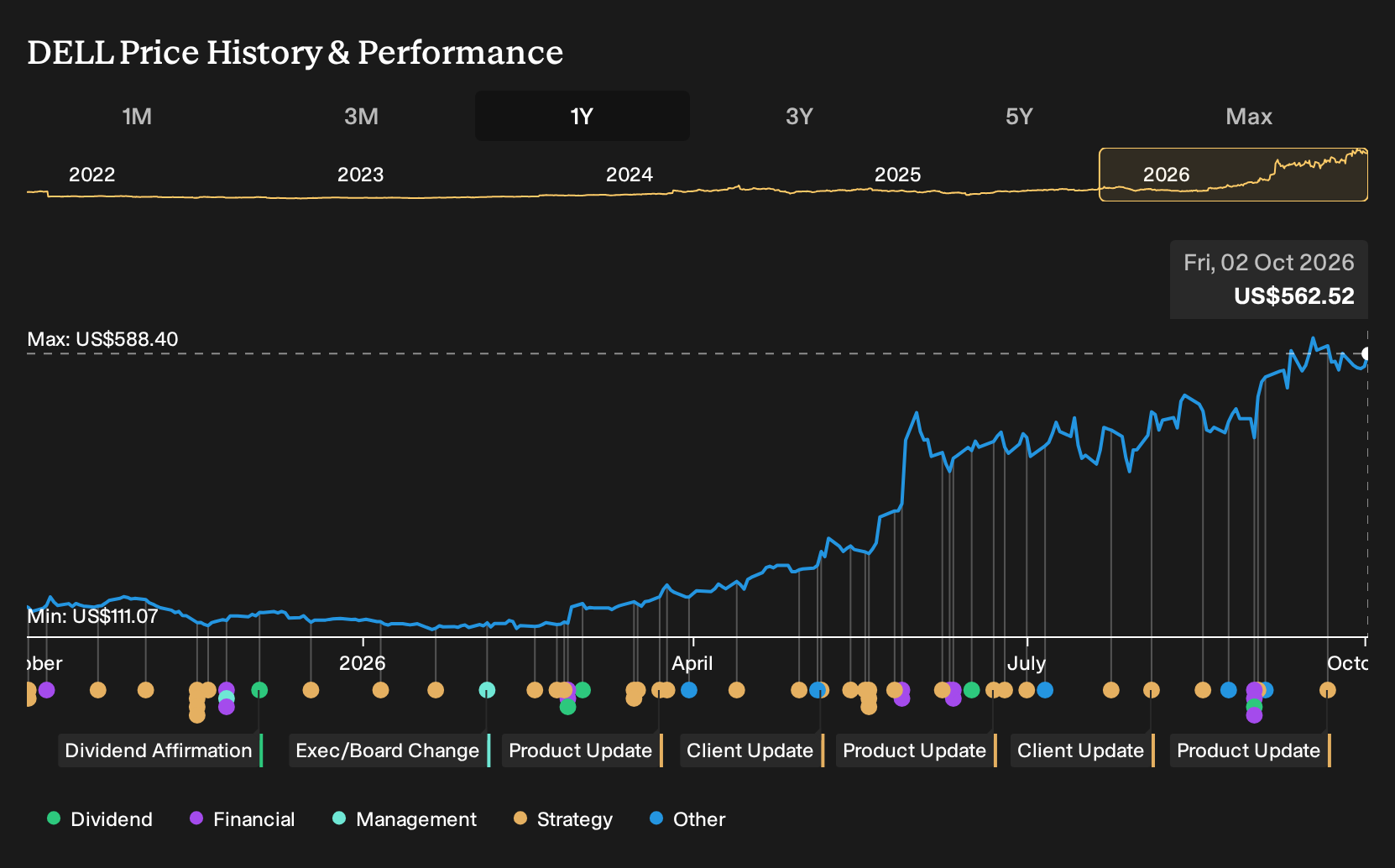
Exploring Other Perspectives
One alternate view puts less weight on the XPS Googlebook launch and more on the risk that cloud providers keep shifting workloads away from Dell Technologies hardware. Those bearish analysts were pencilling in revenue of about US$215.6b and earnings of US$16.4b by 2029, so their story is materially more cautious. Their work came before these announcements, so opinions may evolve.
Explore 4 other Dell Technologies fair value estimates, including one that suggests as much as 15% downside from the current price.
Form Your Own Verdict
Disagree with existing narratives? Extraordinary investment returns rarely come from following the herd, so go with your instincts.
- A great starting point for your Dell Technologies research is our analysis highlighting 3 key rewards and 3 important warning signs that could impact your investment decision.
- See our latest analysis for Dell Technologies. The report includes a comprehensive fundamental analysis summarized in a single visual, the Snowflake, which makes it easy to evaluate Dell Technologies' overall financial health at a glance.
Looking For More Investment Ideas Beyond Dell Technologies?
If the Dell Technologies story has sharpened your thinking on AI, hardware and risk, it can help to widen the lens and compare it with other businesses that share some of the same themes but with very different balance sheets, dividend profiles or pricing.
- Prefer dependable cash generation and strong finances over excitement? Start with a list of solid balance sheet and fundamentals (25 results) to help keep financial risk in check while still leaving room for upside.
- If downside protection matters most, focus on a 31 resilient stocks with low risk scores that screens well on stability so sharp drawdowns are less likely to dominate your returns.
- Looking for underfollowed stories before they hit the mainstream? Use a 19 high quality undiscovered gems with solid fundamentals that the broader market may not be paying full attention to yet.
This article by Simply Wall St is general in nature. We provide commentary based on historical data and analyst forecasts only using an unbiased methodology and our articles are not intended to be financial advice. It does not constitute a recommendation to buy or sell any stock, and does not take account of your objectives, or your financial situation. We aim to bring you long-term focused analysis driven by fundamental data. Note that our analysis may not factor in the latest price-sensitive company announcements or qualitative material. Simply Wall St has no position in any stocks mentioned.
Have feedback on this article? Concerned about the content? Get in touch with us directly. Alternatively, email editorial-team@simplywallst.com