


How NetApp Partnership At Supermicro Has Changed Its Investment Story
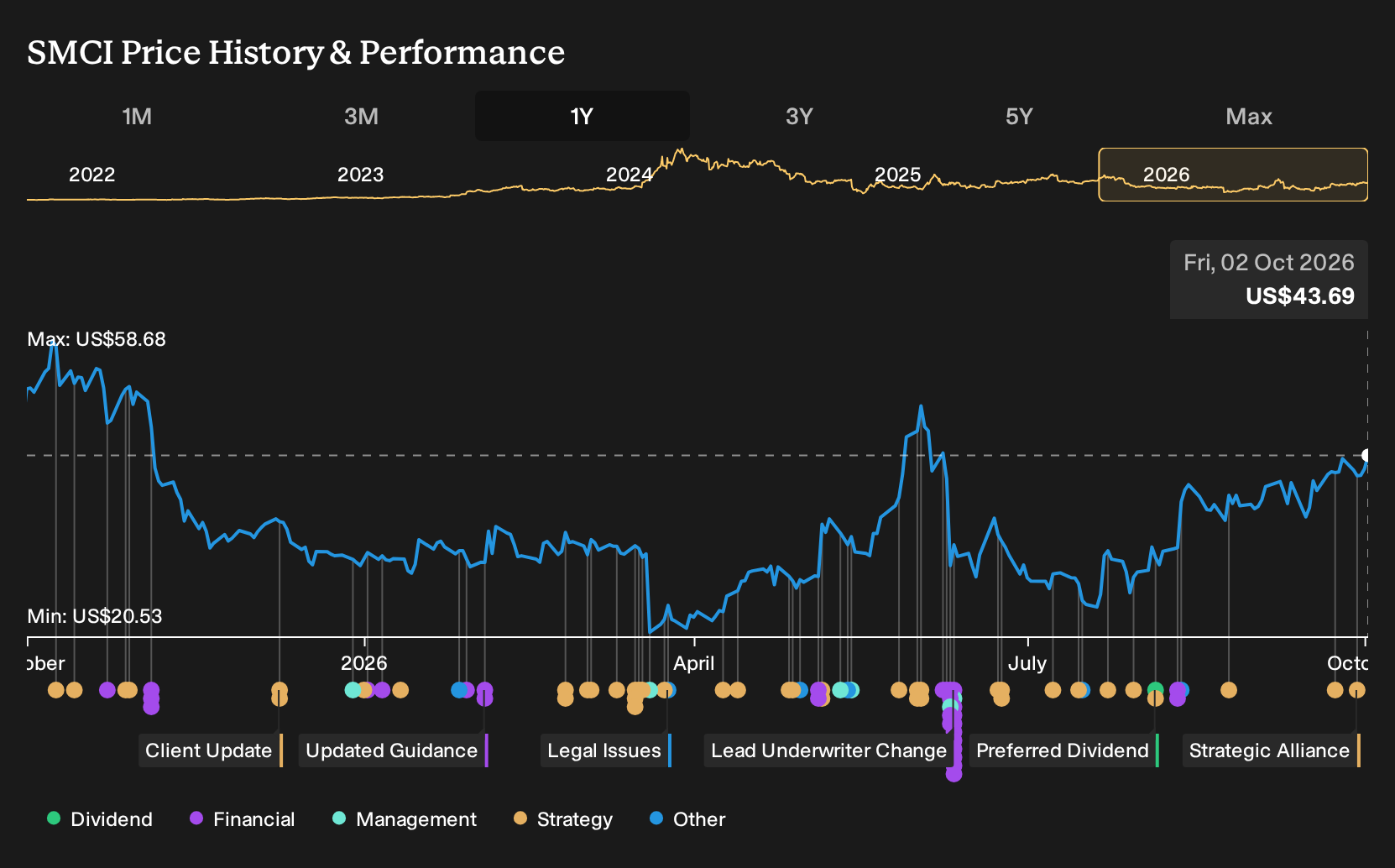
- In late September 2026, NetApp announced a collaboration with Super Micro Computer to deliver jointly validated AI infrastructure that combines Supermicro’s AI-optimized compute, rack-scale systems, and liquid cooling with NetApp’s unified data management and cyber resilience platform.
- The alliance points to Super Micro Computer leaning further into full-stack, data-center-scale AI solutions, where integrated hardware, storage, and lifecycle management can influence margins, complexity, and long-term customer relationships.
- We will now see how this deeper NetApp partnership around validated AI infrastructure could reshape Super Micro Computer’s investment narrative.
Scan other AI infrastructure opportunities by reviewing the hand-picked 90 AI infrastructure stocks, which echo Super Micro Computer’s push into full-stack data center solutions.
Super Micro Computer Investment Narrative Recap
To own Super Micro Computer, you need to believe the business can keep turning AI demand into full-rack and full-data-center projects, not just individual servers. The NetApp partnership supports that idea by pairing compute with data management. The near term swing factor still appears to be deal mix and pricing, given how sensitive non GAAP gross margin has been.
The biggest operational risk remains execution on very large, concentrated orders while carrying a heavy working capital load. This collaboration strengthens the story around more software and services content, but it does not directly address the 149 day cash conversion cycle or the exposure to a handful of multibillion dollar buyers.
The NetApp collaboration is the clearest recent proof point that Super Micro Computer is focused on full stack AI infrastructure. Jointly validated systems for AI factories, enterprises, neoclouds, and sovereign AI projects align with the Data Center Building Block Solution narrative and with the goal of selling complete AI environments, not just hardware.
Where this can matter for catalysts is in mix and margin quality. Packaged AI factories with NetApp’s data platform and tools can support more recurring software and services revenue, along with management tooling around NetApp AIPod with Supermicro. Execution risk shifts toward delivering complex, co engineered deployments at scale while keeping gross margin above the roughly 10% guidance level and avoiding additional stretch in inventory days.
How the NetApp Partnership Lines Up With Analyst Expectations
Super Micro Computer's narrative projects US$91.7b revenue and US$3.4b earnings by 2029. This assumes 32.9% yearly revenue growth and an earnings increase of about US$1.2b from US$2.2b today.
Analysts are effectively treating the NetApp style full stack build as the baseline, not a stretch case. The consensus assumes Super Micro Computer can compound top line at 32.9% a year for the next few years, while profit margins step down from 5.6% to 3.7% as the model leans into large AI projects that carry heavy hardware content and complex delivery requirements.
On the earnings side, the shift from US$2.2b today to US$3.4b by 2029 already factors in a world where integrated racks, software layers, and services bundles like NetApp AIPod with Supermicro are a routine part of large deals. The spread between the most bullish US$4.2b and the most cautious US$2.9b highlights the extent of the debate about how far this AI infrastructure cycle can support profitability once early pricing and mix benefits cool down.
Valuation work also leans on this AI infrastructure roadmap. For the current analyst target of US$42.38 to hold, Super Micro Computer would need to reach US$91.7b of revenue and US$3.4b of earnings in 2029 and trade on a P/E of 13.1x, compared with 12.3x today and a higher multiple for the broader US tech peer group. That setup suggests investors are already paying for substantial execution on full rack deployments and large, long term AI buildouts rather than simply buying a cyclical server supplier.
Share issuance is part of this picture. Forecast growth in the share count of 7.0% per year over the next 3 years means any incremental value created by partnerships like NetApp likely needs to outrun both margin pressure and dilution for per share metrics to hold up. In practice this raises the bar on how productive large customer wins and joint AI systems must be if the focus is on earnings per share rather than just aggregate profit dollars.
Uncover why Super Micro Computer's fair value indicates a 3% potential downside to its current price, a premium that may not hold.
Exploring Other Perspectives
You might read the NetApp news and focus on upside, but the lowest Super Micro Computer analysts lean hard into inventory risk. They were modeling US$80.2b of revenue and US$2.9b of earnings by 2029 before this update, and their US$21.58 target shows how sharply opinions can differ. Use this partnership as a cue to explore both stories.
Explore 10 other Super Micro Computer fair value estimates, including one that suggests as much as 44% downside from the current price.
Form Your Own Verdict
Don't just follow the ticker. Dig into the data and build a conviction that's truly your own.
- A great starting point for your Super Micro Computer research is our analysis highlighting 4 key rewards and 2 important warning signs that could impact your investment decision.
- See our latest analysis for Super Micro Computer. The report includes a comprehensive fundamental analysis summarized in a single visual, the Snowflake, making it easy to evaluate Super Micro Computer's overall financial health at a glance.
Looking For More Investment Ideas Beyond Super Micro Computer?
Once you have a view on Super Micro Computer, it can help to compare it with a few very different opportunities and stress test your thesis against other business models and risk profiles.
- If you want potential upside with tighter risk controls, scan a 31 resilient stocks with low risk scores that focus on resilience and more defensive characteristics.
- For investors who care most about balance sheet strength and fundamental quality, start with a list of solid balance sheet and fundamentals (26 results) that filters for sturdier financial footing.
- If you are hunting for something less crowded by attention, review a 19 high quality undiscovered gems that highlight underfollowed companies with stronger fundamentals.
This article by Simply Wall St is general in nature. We provide commentary based on historical data and analyst forecasts only using an unbiased methodology and our articles are not intended to be financial advice. It does not constitute a recommendation to buy or sell any stock, and does not take account of your objectives, or your financial situation. We aim to bring you long-term focused analysis driven by fundamental data. Note that our analysis may not factor in the latest price-sensitive company announcements or qualitative material. Simply Wall St has no position in any stocks mentioned.
Have feedback on this article? Concerned about the content? Get in touch with us directly. Alternatively, email editorial-team@simplywallst.com