


Luxury Stocks Holding Up As Rate Hikes Split The US Consumer
Fed rate hikes are quietly splitting the consumer economy into two tracks. Affluent households sitting on equity gains and higher yields still have spending power, while stressed buyers are leaning on “buy now, pay later” just to cover basics. That gap creates a rare window for investors who focus on where premium demand can still hold up. This article walks through three stocks exposed to this news backdrop that may merit a closer look.
The three stocks below are only a starter set from this idea, and the full screen surfaced 7 more U.S. high-end consumer and luxury aligned companies with equally compelling narratives that are not covered in this article. To identify and analyze your own highest conviction angles on this theme, head straight to the U.S. High-End Consumer and Luxury Goods Stocks screener.
Crocs (CROX)
Overview: Crocs is a casual lifestyle footwear company that sells branded clogs, sandals, sneakers and accessories to consumers worldwide, appealing to comfort focused, higher income shoppers within the premium consumer theme.
Operations: Crocs generates about US$3.4b from the Crocs brand and US$700 million from Heydude, with international markets contributing a significant share.
Market Cap: US$5.6b
For this high end consumer screen, Crocs matters because it blends mass appeal with a label affluent buyers still treat as a fun, recognizable premium comfort pick.
"The company's accelerating direct-to-consumer (DTC) strategy, including expanding owned retail and digital channels, experimenting with new retail concepts, and scaling global social commerce, is enabling Crocs to maintain higher pricing, reduce reliance on promotional activity, and capture higher-margin sales."
What investors really need to watch is how one less visible pressure ultimately shapes Crocs pricing power and long term margin resilience.
That quiet margin question is exactly where Crocs gets interesting, and the full narrative for Crocs shows how pricing power, brand heat and execution could still be pulling in different directions.

Steven Madden (SHOO)
Overview: Steven Madden designs and sells fashion-focused footwear, accessories, and apparel for trend-driven, often higher-income consumers across wholesale and direct channels.
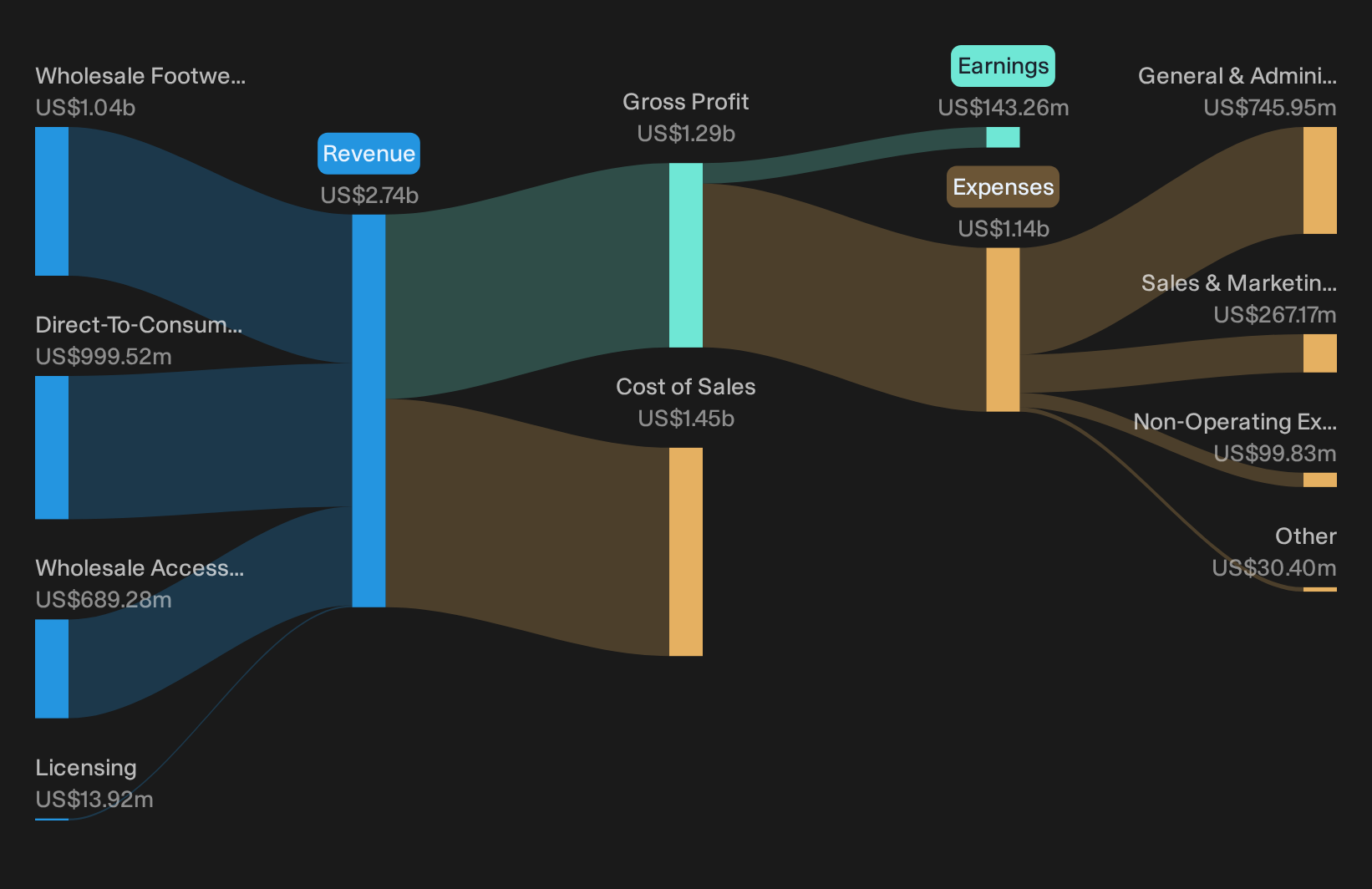
Operations: Steven Madden generates about US$1.0b from wholesale footwear, US$1.0b from direct-to-consumer, US$689 million from wholesale accessories/apparel, and US$14 million from licensing, with US$1.7b from the United States and US$1.0b from international markets.
Market Cap: US$3.3b
Steven Madden matters for this high-end consumer screen because its mix of aspirational brands, global reach, and discretionary pricing sits squarely in the part of the market where affluent and trend-led shoppers may still have room to spend, even as rate hikes pressure more budget conscious buyers.
"Strong double-digit digital growth, especially in the U.S. for both Steve Madden and newly acquired Kurt Geiger, alongside increased marketing focus on Gen Z/millennial consumers and expanded e-commerce investments, should enable faster revenue acceleration and higher margin mix as direct-to-consumer channels continue to outpace wholesale."
What really deserves attention now is how one unresolved pressure on sourcing costs and tariffs ultimately feeds through to those higher margin ambitions.
That sourcing squeeze is exactly where the full narrative for Steven Madden shows whether Steven Madden’s digital acceleration is masking risk or setting up a stronger next phase.
Ralph Lauren (RL)
Overview: Ralph Lauren is a global premium lifestyle group selling luxury apparel, accessories, home goods, fragrances and hospitality experiences to affluent consumers.
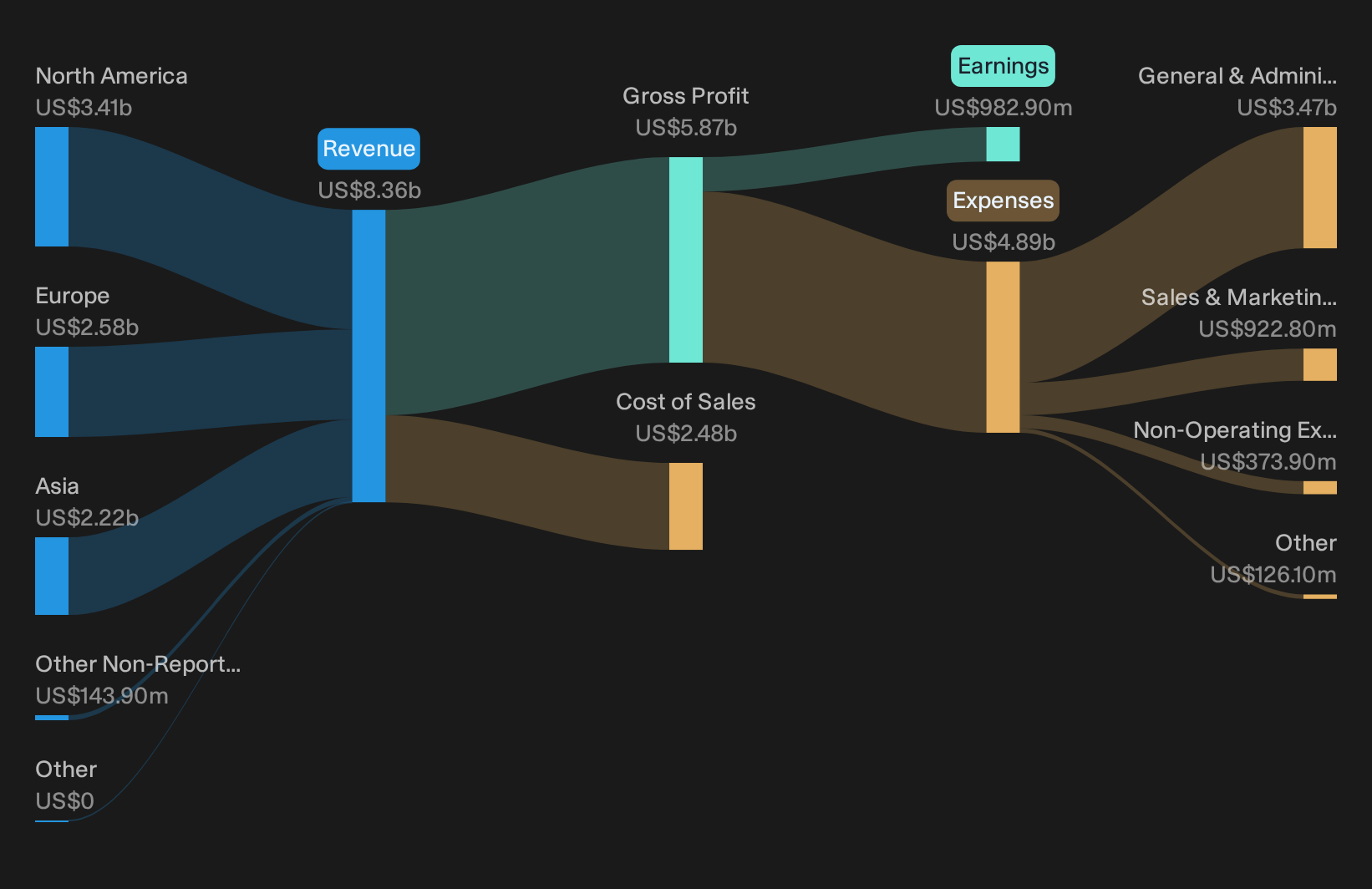
Operations: Ralph Lauren generates about US$3.4b from North America, US$2.6b from Europe, US$2.2b from Asia and US$144 million from other segments.
Market Cap: US$21.2b
Ralph Lauren is almost purpose built for this high end consumer theme, since the label leans on affluent shoppers who are still spending even as rate hikes squeeze more value focused households.
"Although Ralph Lauren reports higher AUR and gross margin, the exposure to bad-debt risk from being a major unsecured creditor to Harvey Nichols' administration in the U.K. luxury channel raises the possibility of lost wholesale revenue and weaker collection outcomes, which could pressure regional sales and earnings if similar counterparties falter."
What really deserves attention now is how one less visible strain on wholesale partners ultimately shapes Ralph Lauren’s pricing power and margin profile.
That wholesale strain is exactly why the full narrative for Ralph Lauren walks through how Ralph Lauren’s brand strength, channel mix and pricing could be quietly decoupling from those risks.
Seeking Fresh Alternatives Before They Fly
Markets move fast and the most interesting stories rarely stay under the radar for long. Spot fresh momentum and potential breakouts before the crowd, then act now.
- Target cash rich balance sheets by scanning a curated list of solid balance sheet and fundamentals (25 results) that filters for businesses built to stay resilient while conditions keep shifting.
- Hunt for early movers in intelligent automation with the hand picked 90 robotics and automation stocks that focuses on companies wiring software and machines into real world productivity.
- Track potential yield plus staying power through a focused 7 dividend fortresses designed for investors who want income while share prices keep dropping or recovering.
This article by Simply Wall St is general in nature. We provide commentary based on historical data and analyst forecasts only using an unbiased methodology and our articles are not intended to be financial advice. It does not constitute a recommendation to buy or sell any stock, and does not take account of your objectives, or your financial situation. We aim to bring you long-term focused analysis driven by fundamental data. Note that our analysis may not factor in the latest price-sensitive company announcements or qualitative material. Simply Wall St has no position in any stocks mentioned.
Have feedback on this article? Concerned about the content? Get in touch with us directly. Alternatively, email editorial-team@simplywallst.com