


How Revenue Growth Will Impact Plexus (PLXS) Stock
- Plexus has recently attracted positive attention as a Russell 2000 constituent after reporting solid revenue growth and highlighting stronger demand signals across its aerospace, healthcare, and industrial electronics programs.
- The business is pairing that sales momentum with share repurchases, which together are lifting earnings per share and sharpening its capital allocation profile for investors watching cash discipline.
- We will now look at how Plexus's investment narrative could be influenced by this focus on revenue growth and earnings support.
Scan how Plexus's combination of revenue momentum and buybacks compares with other electronics manufacturers by reviewing our curated list of 90 robotics and automation stocks.
Plexus Investment Narrative Recap
For Plexus, the big picture you need to buy into is a manufacturer that wins complex aerospace, healthcare, and industrial programs and keeps those contracts running efficiently through its global footprint. The recent focus on revenue growth, paired with earnings support from buybacks, feeds into that story by showing customers are still sending work through the Plexus network.
The near term swing factor is how consistently that program pipeline converts to orders without major pushouts in sectors like semicap or aerospace. The main risk is still revenue and margin choppiness if a few large customers pause or shift volumes, especially while new sites and capacity come with startup cost pressure.
With no fresh company announcements tied directly to this latest Russell 2000 attention, the closest operational hook is Plexus highlighting stronger program demand and its ongoing share repurchase activity. That combination matters because it links current order activity with how management is choosing to deploy surplus cash.
For you as an investor, the key question is whether those buybacks and capital returns stay supported by future free cash flow if sector demand gets more uneven. Execution on new program ramps, especially in healthcare and aerospace or defense, and how that interacts with cost inflation, will likely matter more to the story than any near term index driven spotlight.
What Plexus' Analyst Forecasts Are Telling You
Plexus' current analyst setup sketches out a path where revenues reach $6.6b and earnings come in at $323.9m by 2029, based on an assumed 13.0% yearly revenue growth rate and an increase from earnings today of $185.4m. This implies an earnings uplift of about $138.5m.
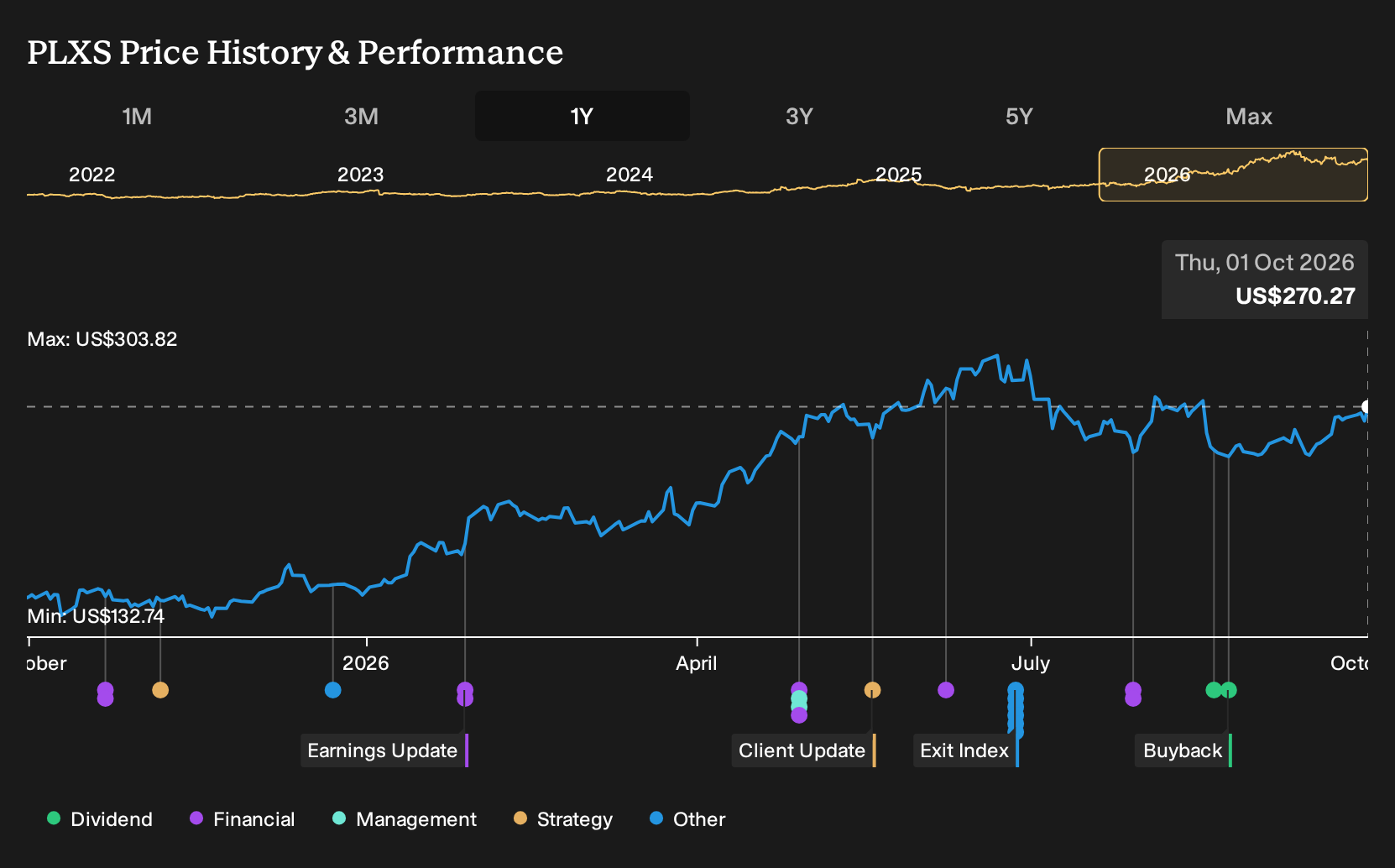
Uncover why Plexus' fair value indicates a 13% potential upside to its current price that could close faster than you expect.
Exploring Other Perspectives
One alternate Plexus angle leans hard into automation and AI as the real earnings swing factor. The most optimistic analysts were already penciling in about $6.9b of revenue and $338.0m of earnings by 2029 before this Russell 2000 spotlight. You can treat those upbeat assumptions as one reference point and compare them with more cautious views that might gain weight once the new information filters into fresh models.
Explore another Plexus fair value estimate, including one that suggests potential upside of as much as 13% from the current price.
Decide For Yourself
Disagree with existing narratives? Extraordinary investment returns rarely come from following the herd, so consider your own research and judgment.
- A great starting point for your Plexus research is our analysis highlighting 2 key rewards that could impact your investment decision.
- See our latest analysis for Plexus. The report includes a comprehensive fundamental analysis summarized in a single visual, the Snowflake, making it easy to evaluate Plexus' overall financial health at a glance.
Looking For More Investment Ideas Beyond Plexus?
If Plexus has sharpened your focus on quality and execution, it can be useful to line it up against other opportunities that fit clear, rules based filters. The Simply Wall St Screener lets you scan the market quickly, then spend your time where the numbers already match what you care about.
- If capital preservation sits high on your list, start with a group of companies that screen as more resilient by reviewing 31 resilient stocks with low risk scores.
- Income focused investors looking for stronger payouts can zero in on businesses with higher yields by checking out 7 dividend fortresses.
- For readers hunting for under the radar opportunities with solid fundamentals, it can be useful to comb through 19 high quality undiscovered gems.
This article by Simply Wall St is general in nature. We provide commentary based on historical data and analyst forecasts only using an unbiased methodology and our articles are not intended to be financial advice. It does not constitute a recommendation to buy or sell any stock, and does not take account of your objectives, or your financial situation. We aim to bring you long-term focused analysis driven by fundamental data. Note that our analysis may not factor in the latest price-sensitive company announcements or qualitative material. Simply Wall St has no position in any stocks mentioned.
Have feedback on this article? Concerned about the content? Get in touch with us directly. Alternatively, email editorial-team@simplywallst.com