


3 US Bank Stocks Investors Are Watching As Higher Rates Reshape Earnings
Markets are suddenly treating higher-for-longer rates as more than just talk, with the 10-year Treasury touching around 5.24% and Fed officials openly debating extra hikes. That kind of backdrop can punish some corners of the market while quietly improving the economics for others. This article explains how that tension plays out and profiles 3 stocks from the screener that could be directly exposed to this rate shock story.
The three stocks covered below are just a sample. The full screen surfaced 38 more US banks, insurers, and asset managers with equally grounded interest rate stories that are not covered in this article. To identify and analyze your own higher rate beneficiaries, head straight into the US Financials Leveraged to Higher Interest Rates screener.
First Merchants (FRME)
First Merchants is a regional bank holding company whose commercial and consumer lending, deposits, cards, and wealth services are all tied to interest income. It generates about US$642 million from community banking and has a market value around US$2.5b.
First Merchants fits this higher-rate screen because its business is heavily tied to loan and deposit pricing, with earnings closely linked to net interest income. The bank reported net interest income of US$158.94 million in Q2 2026, while profits have been under pressure. The key issue for investors is how results might change if the spread between what it earns on loans and what it pays on funding shifts again.
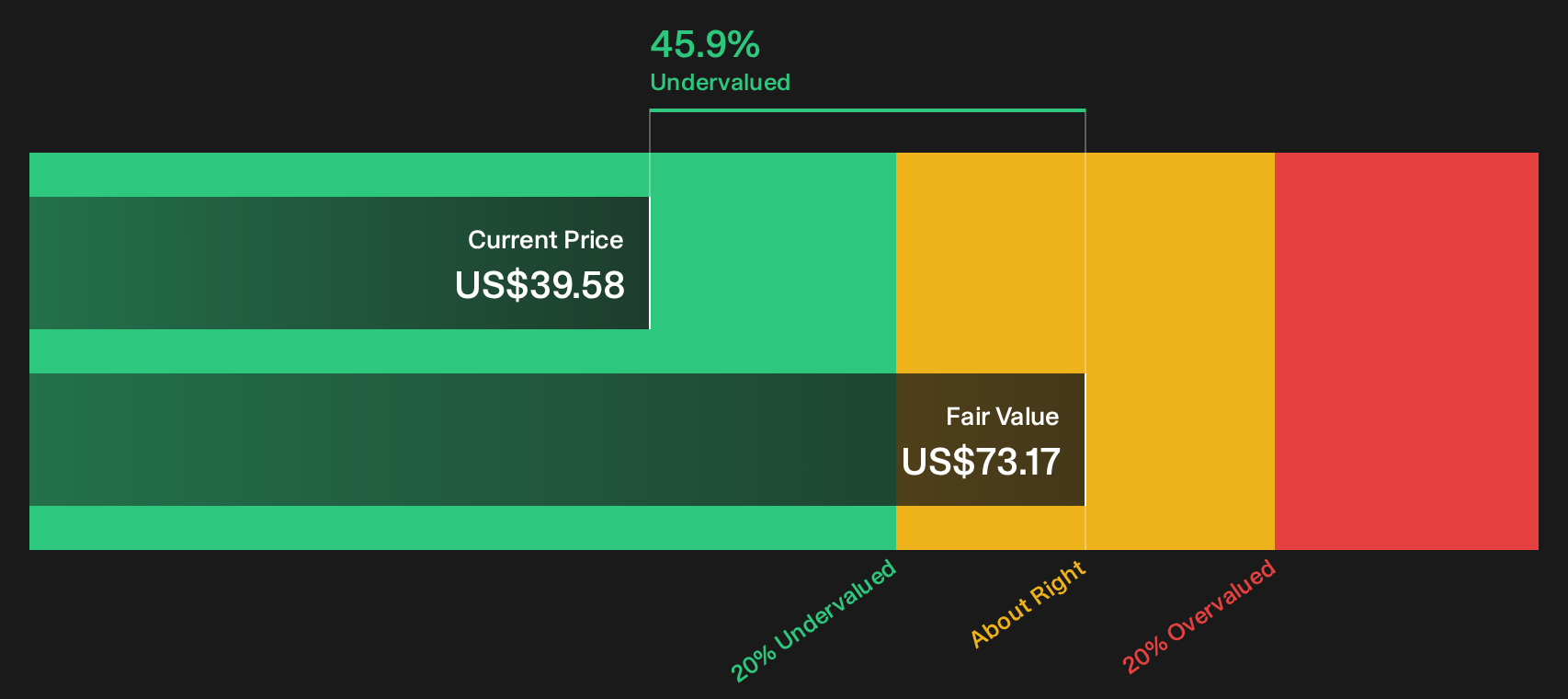
That margin question is exactly what sits behind the DCF valuation analysis for First Merchants and could show whether First Merchants’ current pricing fully reflects its rate sensitivity.
Hope Bancorp (HOPE)
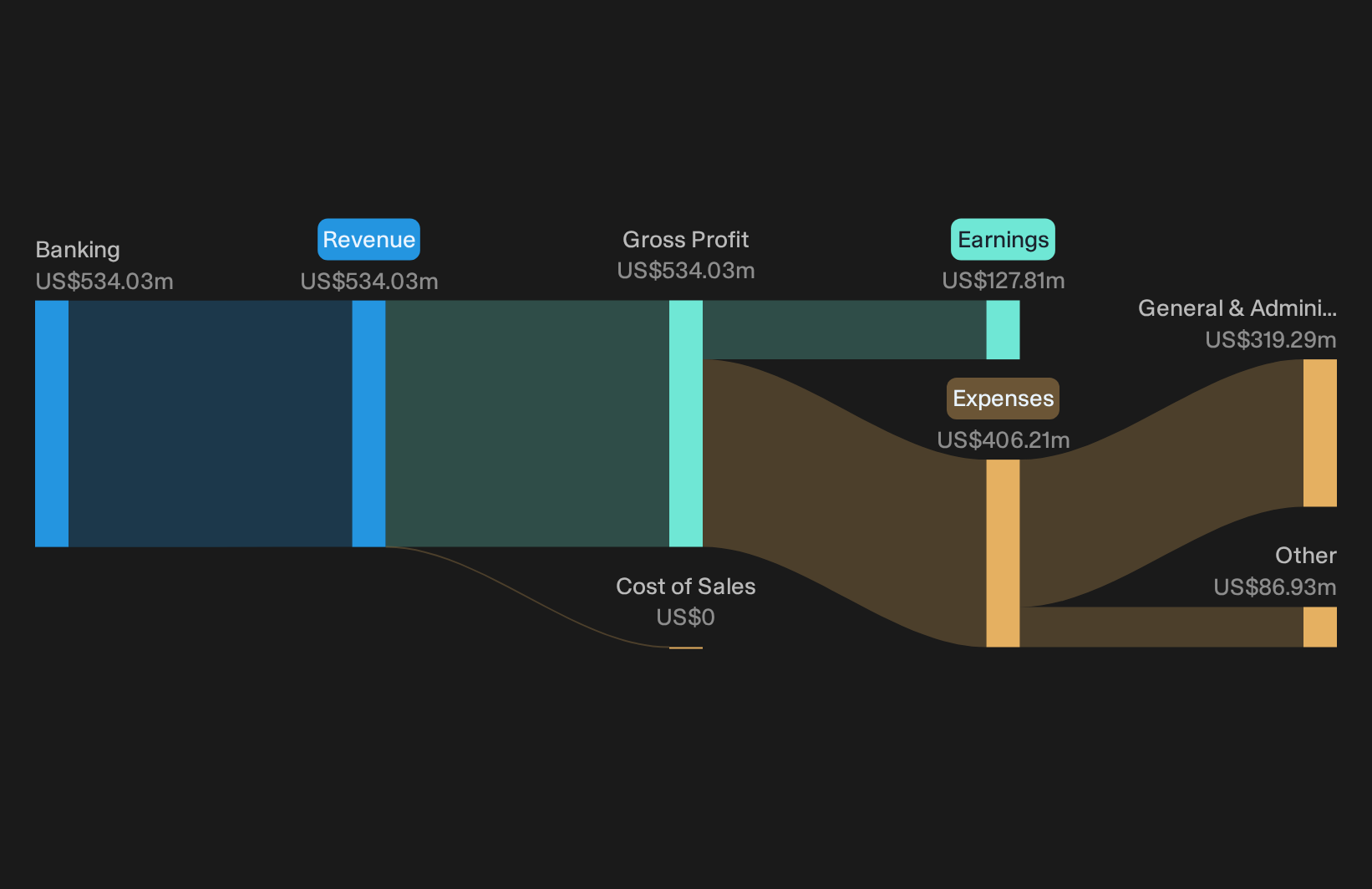
Hope Bancorp is firmly tied to the higher rate story, with a traditional US retail and commercial banking franchise generating about US$534 million from banking services and a market value near US$1.7b.
For investors focused on financials that can turn higher-for-longer yields into earnings power, Hope Bancorp is a textbook example of a deposit funded lender whose income engine is closely wired to the level and shape of interest rates.
"Reduced exposure to higher-cost brokered deposits, an inflow of low-cost deposits from the Territorial acquisition, and the repositioning of the securities portfolio into higher-yielding assets are expected to improve net interest margin and drive higher net interest income."
What happens to that story depends on how one unresolved pressure around future loan growth and pricing plays out against this higher rate backdrop.
That unresolved pressure is exactly where investor attention is headed, and the full narrative for Hope Bancorp shows how Hope Bancorp’s rate sensitivity could be accelerating or quietly stalling under the surface.
Midland States Bancorp (MSBI)
Midland States Bancorp is a US regional financial holding company for Midland States Bank, rooted in Effingham, Illinois, with interest income front and center in the higher rate story. It generated about US$265 million from Banking and US$33 million from Wealth Management, and the stock carries a market value near US$667 million.
Midland States Bancorp sits squarely in the higher-for-longer trade, with net interest income from loans and deposits driving results while the Fed talks about tighter policy and the 10 year Treasury hovers near multi decade highs. More earnings now come from this rate backdrop. However, everything investors hope for still depends on how pressure on funding costs and loan pricing evolves from here.
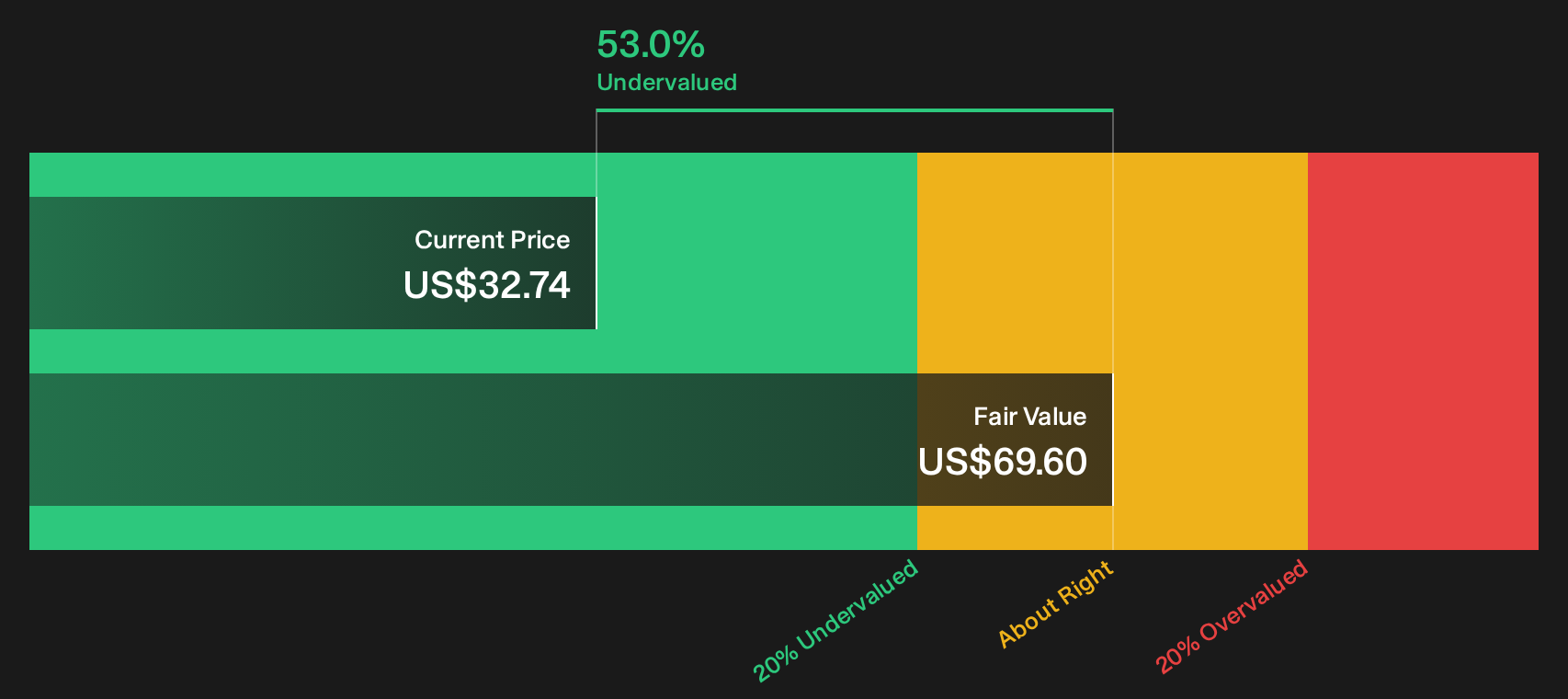
That funding and loan pricing balance is exactly what the DCF valuation analysis for Midland States Bancorp unpacks, so you can see where Midland States Bancorp’s rate exposure may be quietly mispriced.
Seeking Alternatives Before The Crowd?
Fresh opportunities can move quickly when momentum builds, breakouts form, and prices start climbing. Instead of watching from the sidelines while it still matters, focus on getting in early with a disciplined process.
- Target dependable income streams by scanning a curated group of high-yield payers through the 7 dividend fortresses while yields remain attractive and before more investors turn their attention to them.
- Track real-world adoption stories by reviewing 18 cryptocurrency and blockchain stocks that may be quietly building traction while valuations remain less widely followed, before sentiment potentially shifts and momentum changes.
- Identify emerging automation themes by examining 90 robotics and automation stocks relevant to demand in warehouses, factories, and healthcare while market expectations are still evolving.
This article by Simply Wall St is general in nature. We provide commentary based on historical data and analyst forecasts only using an unbiased methodology and our articles are not intended to be financial advice. It does not constitute a recommendation to buy or sell any stock, and does not take account of your objectives, or your financial situation. We aim to bring you long-term focused analysis driven by fundamental data. Note that our analysis may not factor in the latest price-sensitive company announcements or qualitative material. Simply Wall St has no position in any stocks mentioned.
Have feedback on this article? Concerned about the content? Get in touch with us directly. Alternatively, email editorial-team@simplywallst.com