


Will Myasthenia Gravis Data Change UCB (ENXTBR:UCB) Stock Narrative
- UCB recently presented extensive real-world and clinical data on its generalized myasthenia gravis portfolio at the AANEM Congress and MGFA Scientific Session in Orlando, including updates on zilucoplan, rozanolixizumab, and early Phase 1b results for the investigational T cell engager cizutamig.
- The focus on minimal symptom expression as a treatment goal, along with data on social risk factors affecting black patients with generalized myasthenia gravis, highlights how UCB is positioning its neurology franchise around both clinical outcomes and unmet needs in underserved patient groups.
- This review considers how UCB's investment narrative may be influenced by new minimal symptom expression data across its myasthenia gravis treatment portfolio.
Scan beyond UCB's neurology focus and explore other potential breakout opportunities in healthcare by reviewing our curated list of 617 high quality undiscovered gems before you move on.
UCB Investment Narrative Recap
To own UCB, you need to believe its neurology and immunology focus can offset pricing pressure on mature brands and rising rebate demands, especially in the U.S. BIMZELX, RYSTIGGO and ZILBRYSQ sit at the center of that story, with real-world myasthenia gravis data now feeding into how durable those newer franchises might be.
In the near term, the key swing factor is execution on launches and market access in major geographies. The biggest risk remains structural price erosion and looming biosimilar pressure on older assets like CIMZIA. The Orlando data readouts by themselves do not appear to change that risk or the immediate earnings setup.
The most relevant recent update is UCB’s capital markets call held on 28 September 2026. That forum ties the myasthenia gravis data back to the broader pipeline, capital allocation and medium term financial objectives. This matters if you are tracking how much of future earnings might depend on neurology launches and life cycle extensions.
For investors, the interest is whether management clearly connects outcomes like minimal symptom expression and cizutamig’s early safety profile with upcoming regulatory milestones and potential indication expansions. Any shift in spending plans, pricing assumptions or portfolio mix signalled on that call could influence how you weigh the upside from new rare disease therapies against the well flagged risks of pricing pressure and patent expiry.
What The UCB Consensus Numbers Are Really Asking You To Believe
UCB's narrative projects revenue of €10.7 billion and earnings of €2.8 billion by 2029. That profile is built on analysts pencilling in 11.3% yearly revenue growth and an earnings increase of about €1.2 billion from €1.6 billion today.
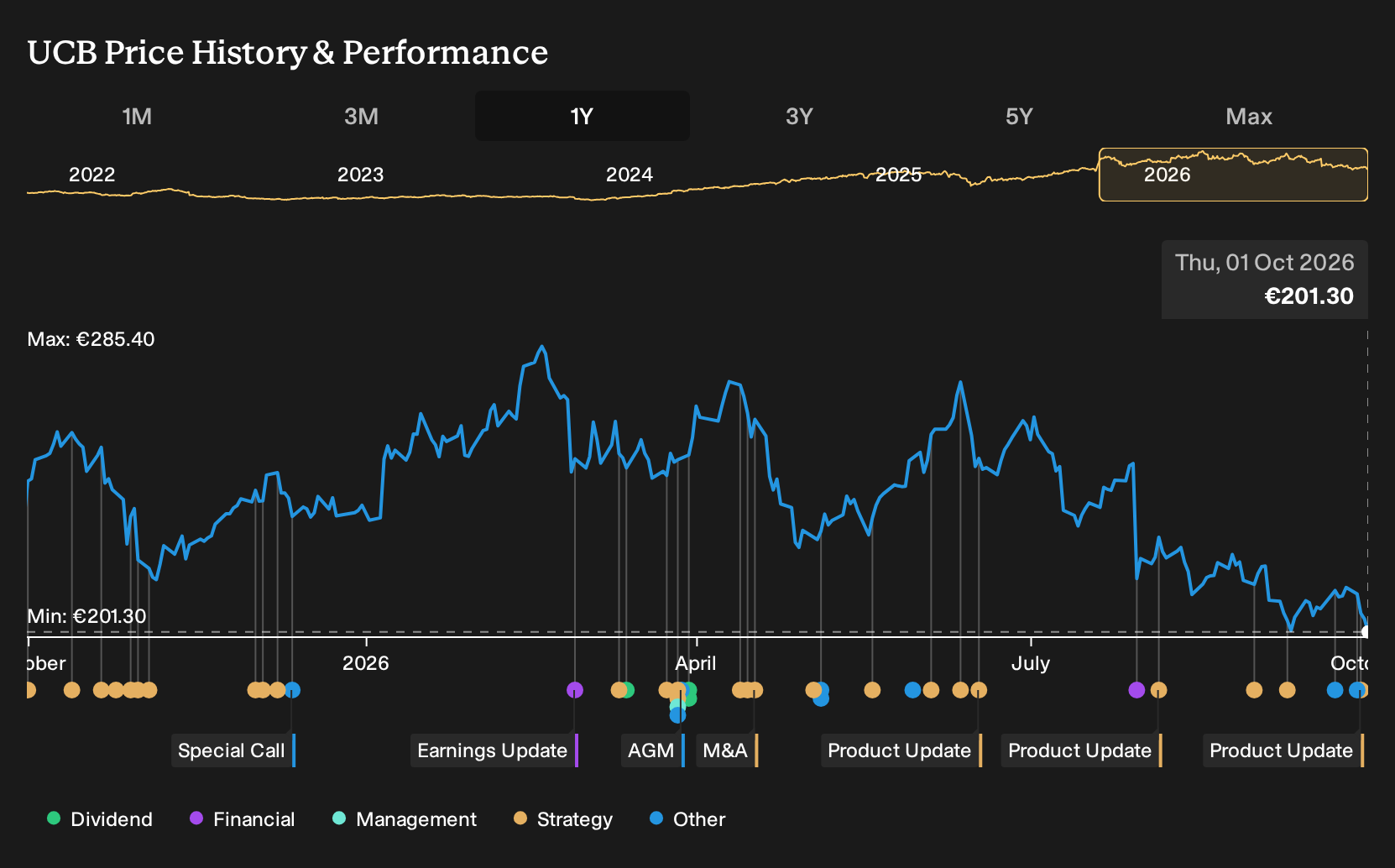
Uncover why UCB's fair value indicates a 43% potential upside to its current price, which could narrow quickly.
Exploring Other Perspectives
The alternate, more optimistic narrative on UCB focuses on faster neurology uptake. Those bullish analysts were already pencilling in €11.5b of revenue and €3.6b of earnings by 2029, versus consensus at €10.7b and €2.8b. After the Orlando myasthenia gravis data, you might see those growth assumptions challenged or reinforced, so it helps to explore both camps.
Explore 4 other UCB fair value estimates, including one that suggests as much as 188% upside from the current price!
Reach Your Own Conclusion
Don't just follow the ticker; dig into the data and build a conviction that's truly your own.
- A great starting point for your UCB research is our analysis highlighting 5 key rewards and 1 important warning sign that could impact your investment decision.
- See our latest analysis for UCB. The report includes a comprehensive fundamental analysis summarized in a single visual, the Snowflake, making it easy to evaluate UCB's overall financial health at a glance.
Looking For More Investment Ideas Beyond UCB?
Once you have a view on UCB, it helps to widen the lens and compare it with other opportunities that fit different risk and income profiles. The Simply Wall St Screener lets you do that quickly by filtering for specific traits that matter to your approach, whether that is value, resilience, or balance sheet strength.
If you want to pressure test your UCB thesis against what else is out there, these screeners are a useful next step.
- For investors hunting for mispriced quality, start by scanning a focused set of potential value opportunities through our 190 high quality undervalued stocks.
- If capital preservation sits near the top of your priority list, compare UCB with companies that screen well on resilience using the 224 resilient stocks with low risk scores.
- When you care most about financial robustness, line UCB up against businesses that show stronger debt and liquidity profiles with the list of solid balance sheet and fundamentals (207 results).
This article by Simply Wall St is general in nature. We provide commentary based on historical data and analyst forecasts only using an unbiased methodology and our articles are not intended to be financial advice. It does not constitute a recommendation to buy or sell any stock, and does not take account of your objectives, or your financial situation. We aim to bring you long-term focused analysis driven by fundamental data. Note that our analysis may not factor in the latest price-sensitive company announcements or qualitative material. Simply Wall St has no position in any stocks mentioned.
Have feedback on this article? Concerned about the content? Get in touch with us directly. Alternatively, email editorial-team@simplywallst.com