


This Lesser-Known Stock Eyes a $1.4 Billion Cut in Historic Apple Verdict
In June, the world's biggest legal finance firm was still reeling from a courtroom loss its CEO called "outrageous." By August, cash was flowing again. Now a single jury has put one of the world's most famous companies at the center of Burford's (BUR) story.
The twist? Burford is the one telling everyone to slow down.
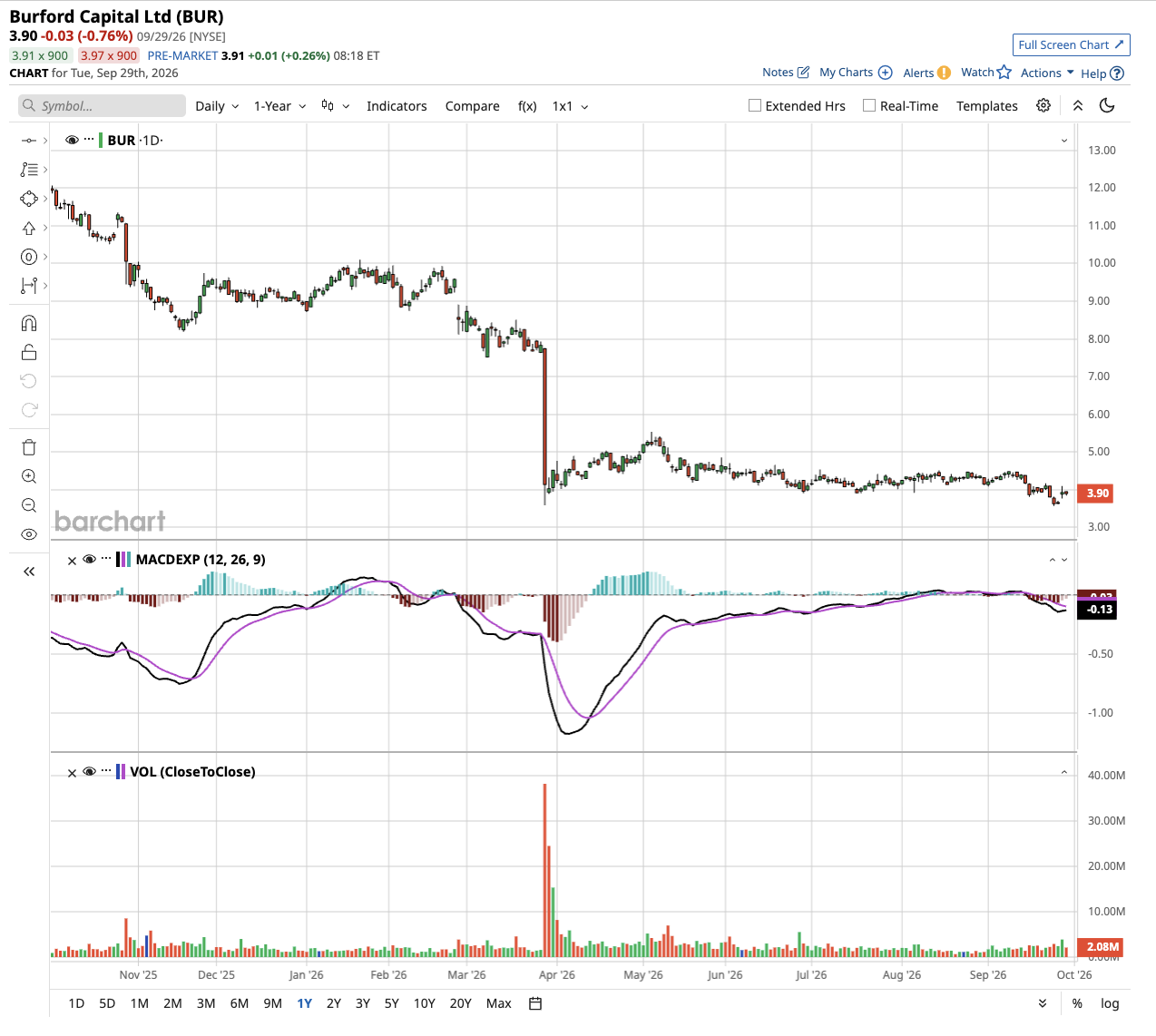
Burford Stock's Rough Start to Summer
Burford's business is simple to describe. It pays the legal bills for companies and law firms, then takes a share of any win. CEO Chris Bogart explained the appeal on a June 18 retail shareholder call. Big law firms keep raising their prices every year. Moreover, some single claims now cost as much as $50 million to pursue. Companies would rather spend that money on growth or AI than on lawsuits. Then came YPF.
Burford had backed a massive case tied to Argentina and the oil company YPF, which won a judgment of more than $16 billion. In 2026, the Second Circuit appeals court ruled the case did not belong in U.S. courts.
"I think that the decision was outrageous. I think it was unjustified," Bogart told shareholders.
The stock declined significantly, following the decision. Bogart said traders who had bought shares as a bet on Argentina left "in one fell swoop." Burford also signaled it would likely stop paying its dividend and use that money to lower debt instead.
By the August 6 second-quarter earnings call, the tone had shifted. Burford brought in $94 million from realizations, which is cash from cases that wrap up, compared to $62 million in the year-ago period. Total cash received in the quarter stood at $157 million, a five-quarter high. The balance sheet looked steady, too:
- $733 million in cash and marketable securities
- Only $400 million of debt due in the next four years or so
- A total portfolio worth about $4.1 billion
"We could theoretically just turn around and pay that off tomorrow if we chose to do that," Bogart said of the near-term debt.
He also flagged fresh wins, including an arbitration award against Cameroon worth about $200 million to Burford if paid, and a U.S. jury verdict worth close to $100 million.
Burford Stock and the $5.7 Billion Apple Verdict
After the market closed on Friday, Sept. 25, a jury in Taction Technology, Inc. v. Apple Inc. awarded $5.7 billion in damages to the plaintiff. Burford has a financial stake in the case.
If Apple (AAPL) paid that amount as is, Burford's share would be $1.4 billion, according to a company statement. That money would be split roughly equally between Burford's balance sheet and its investment funds.
Here's what those numbers mean:
- Burford's cut is about one quarter of the total verdict.
- The balance sheet's half, roughly $700 million, is close to Burford's entire cash pile at the end of June.
- The full $1.4 billion equals about a third of Burford's whole portfolio.
The verdict has been publicly reported as one of the largest patent verdicts in U.S. history. Burford said it spoke up only because of existing media coverage.
AAPL Stock Owners: Apple Can Still Fight Back
For Apple, the case is far from over.
Burford expects Apple to file a motion for judgment as a matter of law. In simple terms, Apple would ask the trial judge to throw out the jury's verdict entirely.
After that, big patent awards face tough review from the U.S. Court of Appeals for the Federal Circuit. Burford noted that very few large patent verdicts make it through that process untouched. It also warned the process will take considerable time.
Why Burford Investors Should Stay Patient
This is where Burford's summer comes full circle. A company that watched a $16 billion win disappear on appeal knows a verdict isn't a check. Burford said that the verdict is not a final judgment or cash in hand, as it could recover far less than $1.4 billion.
The parties could also settle for much less than the jury awarded. Fees, expenses, and taxes would further reduce what Burford keeps. On the August call, he said it's "relatively uncommon" for cases with a jury win to go all the way through appeals and asset seizures.
"What's more common is that, that act, that event will cause a recalibration of the other side's position and that will drive an economic outcome," he said. History supports that view. Bogart said in June that defendants end up paying in around 90% of the cases Burford funds.
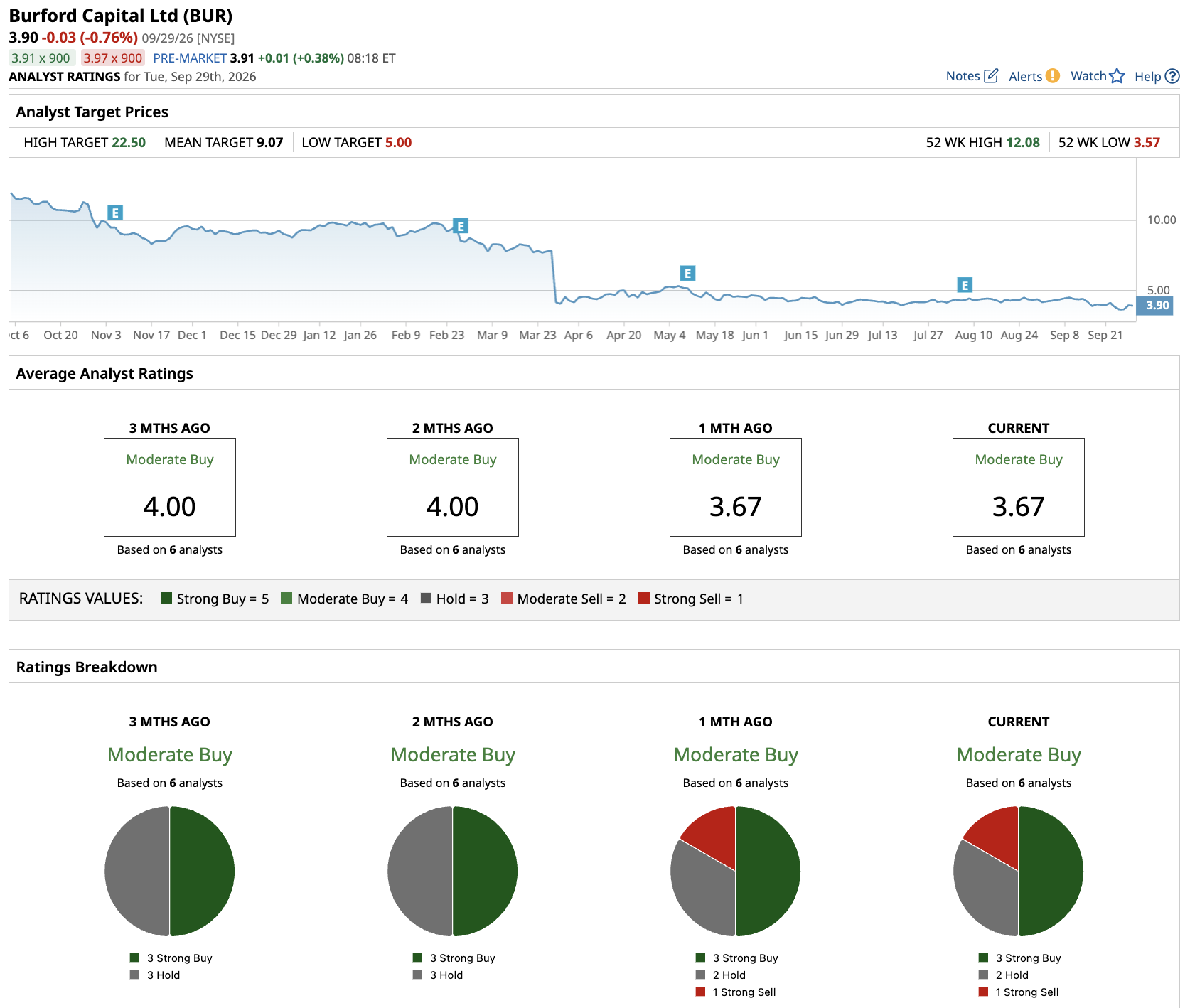
Out of the six analysts covering BUR stock, three recommend “Strong Buy,” two recommend “Hold,” and one recommends “Strong Sell.” The average BUR stock price target is $9.07, significantly above the current price of $3.90.
On the date of publication, Aditya Raghunath did not have (either directly or indirectly) positions in any of the securities mentioned in this article. All information and data in this article is solely for informational purposes. For more information please view the Barchart Disclosure Policy here.