


3 Nuclear Stocks Investors Are Watching As U.S. Reactor Spending Builds
Global energy policy is quietly being rewritten and U.S. nuclear power developers are suddenly closer to the center of that story. South Korea is talking about pouring up to $200b into U.S. energy projects, while tens of billions in planned gas and nuclear capacity could reshape which companies win the next wave of infrastructure spending. This article walks through three stocks from our screener that appear positively exposed to this news and explains what that might mean for your portfolio decisions.
The three stocks highlighted below are just a starting sample, since the full screen surfaced 33 more companies with equally detailed nuclear narratives that are not covered in this article.
If you want to identify and analyze your own highest conviction ideas in this corner of the market, head straight into the U.S. Nuclear Power Developers and Technology Suppliers screener
BHI (KOSDAQ:A083650)
Overview: BHI develops and supplies power plant and nuclear equipment worldwide, with a focus on reactor and balance of plant components.
Operations: BHI generates about ₩1,046,609 million from machinery and industrial equipment, with roughly ₩795,782 million abroad and ₩250,827 million in South Korea.
Market Cap: ₩1.9 trillion
BHI sits directly in the nuclear equipment supply chain, producing components that could be relevant as the U.S. considers large new reactors and Korean firms look to supply more hardware. Investors watching this theme may see potential for upside if project orders gain traction, although much depends on how one unseen pressure shapes future profitability on these complex builds.
That profit pressure is the crux here, so review the 3 key rewards and 2 important warning signs to see where BHI’s upside could be capped or accelerating.

Perma-Fix Environmental Services (PESI)
Overview: Perma-Fix Environmental Services provides nuclear waste treatment, decontamination, and radiological services that support the full lifecycle of U.S. nuclear facilities.
Operations: Perma-Fix Environmental Services generates about US$40.7 million from Treatment and US$16.5 million from Services, with US$52.9 million in the United States.
Market Cap: US$333 million
Perma-Fix Environmental Services matters in this nuclear-focused screen because it earns its keep cleaning up the complex waste streams large reactors leave behind.
"Multi decade federal commitments to nuclear waste cleanup at Hanford and other DOE sites, alongside Perma-Fix Northwest’s designation as the commercial pathway for DFLAW secondary waste, create a long visibility, high volume revenue stream that can steadily expand earnings and cash flow as throughput ramps toward DOE design capacity."
What ultimately happens if a single assumption about how quickly that work scales up turns out to be too cautious or too aggressive?
If that scaling risk is what you are focused on, read the full narrative for Perma-Fix Environmental Services to see how Perma-Fix Environmental Services could turn throughput swings into accelerating value.

Doosan Enerbility (KOSE:A034020)
Overview: Doosan Enerbility is a global energy equipment group supplying large power plant hardware and small modular reactor solutions across multiple regions.
Operations: The group generates about ₩9.2b from Doosan Bobcat and ₩8.3b from Doosan Energy, with smaller contributions from fuel cells and other segments.
Market Cap: ₩52.2 trillion
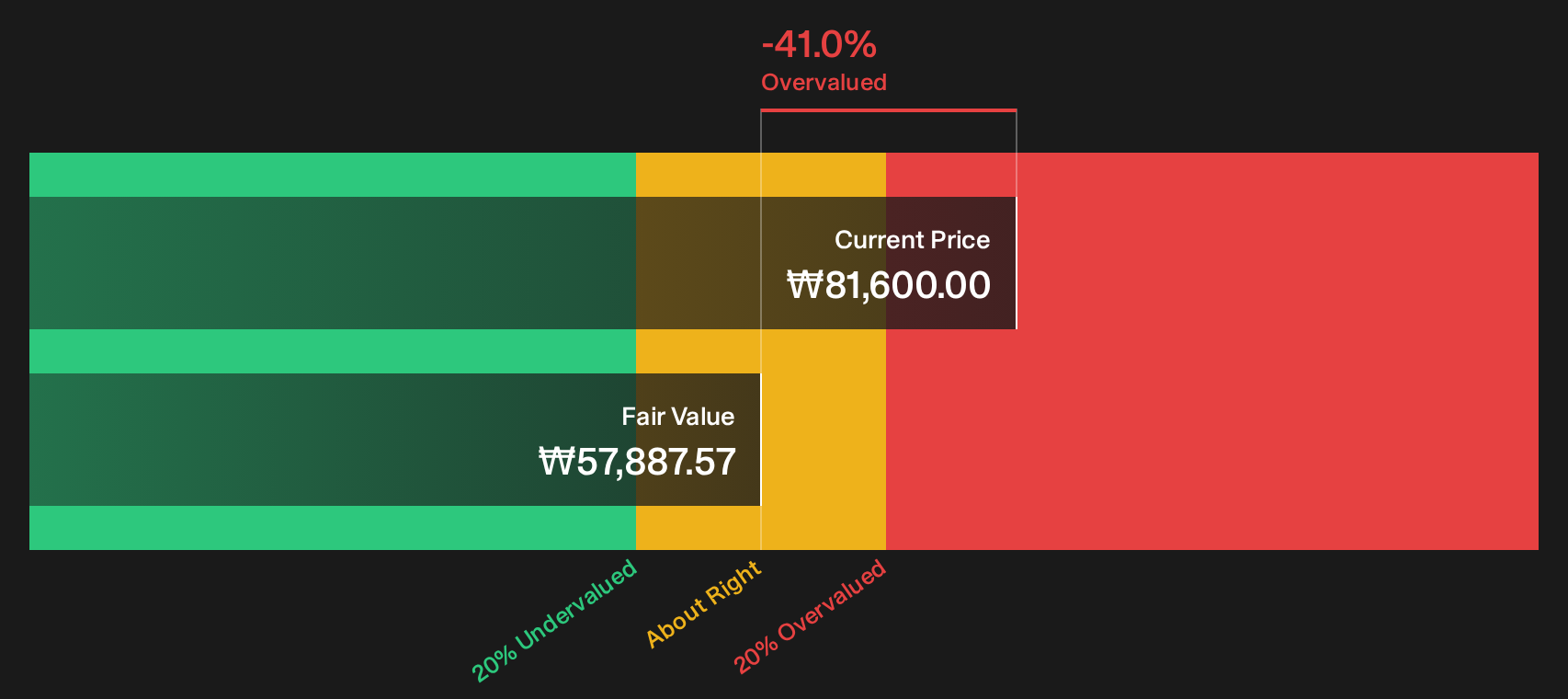
Doosan Enerbility provides exposure to heavy nuclear and power generation equipment at a moment when roughly $120b in planned U.S. reactors could shape long-term procurement. The stock is associated with positive earnings expectations and mixed valuation signals. For nuclear-focused investors, the key consideration is how any future project pipeline may relate to that pricing.
That pricing question is exactly what the DCF valuation analysis for Doosan Enerbility helps unpack, showing where expectations might be lagging potential contracts.
Seeking Fresh Alternatives Beyond Nuclear?
Fresh ideas move first. Slow money gets caught chasing momentum while early research is already flying to the next breakout. Scan these curated lists before the crowd and review them now.
- Track steady cash generators with pricing power and robust balance sheets by following a curated list of solid balance sheet and fundamentals (205 results) while that quality premium still appears to be under the radar.
- Follow structural demand for critical materials by scanning a hand picked pool in the 17 top copper producer stocks before momentum traders react and prices move further.
- Review a filtered group of high yield payers in the 157 dividend fortresses while payouts remain high and valuations have not yet re rated.
This article by Simply Wall St is general in nature. We provide commentary based on historical data and analyst forecasts only using an unbiased methodology and our articles are not intended to be financial advice. It does not constitute a recommendation to buy or sell any stock, and does not take account of your objectives, or your financial situation. We aim to bring you long-term focused analysis driven by fundamental data. Note that our analysis may not factor in the latest price-sensitive company announcements or qualitative material. Simply Wall St has no position in any stocks mentioned.
Have feedback on this article? Concerned about the content? Get in touch with us directly. Alternatively, email editorial-team@simplywallst.com