


737 Deal Might Change The Case For Investing In FTAI Aviation (FTAI)
- FTAI Aviation recently acquired 27 Boeing 737-700 aircraft from WestJet, including 17 on lease via its 2026 SPV and 10 off-lease jets to supply CFM56-7B engines and modules for its Aerospace Products and Maintenance, Repair and Exchange operations.
- PT Garuda Maintenance Facility Aero Asia Tbk and FTAI Aviation deepened their engine and APU maintenance partnership in Asia-Pacific, which could influence how the business balances capital-light engine access, shop capacity planning, and long-term exposure to legacy CFM56 platforms.
- We will now examine how FTAI Aviation's large 737-700 acquisition shapes the existing investment narrative around engine-heavy recurring revenue.
Scan beyond FTAI Aviation and compare its engine focused model with a curated group of 39 power grid technology and infrastructure stocks.
FTAI Aviation Investment Narrative Recap
To own FTAI Aviation, you need to believe in a long runway for mid life engines and the firm’s ability to turn that into repeat maintenance and exchange revenue. The WestJet 737 700 deal expands access to CFM56 7B engines and feedstock, which ties directly to that thesis. The near term swing factor still looks like execution on engine turn times and utilisation of its Aerospace Products network rather than headline deal volume.
The biggest risk remains concentration in legacy CFM56 and V2500 platforms, especially given the debt load and high non cash earnings flagged by analysts. If airline shop visits slow or the SCI capital light structure hits friction, the added aircraft alone may not offset pressure on returns or balance sheet flexibility in the next couple of years.
The refreshed partnership with PT Garuda Maintenance Facility in Asia Pacific is tightly linked to this aircraft acquisition. More 737NG assets and CFM56 7B engines only matter if FTAI Aviation can push them efficiently through MRO channels. Guaranteed capacity for FTAI over five years gives the business a defined outlet for those engines, which can help planning around module swaps and MRE program growth.
That agreement also exposes investors to execution risk on cross border operations and on GMF’s own ability to ramp deeper capabilities, including future LEAP work. If shop throughput or material access does not match expectations, engine heavy revenue could face bottlenecks. On the other hand, successful scaling at GMF would support the current catalyst narrative around higher utilisation, recurring fees and operating leverage from a more integrated engine platform.
FTAI Aviation's narrative projects US$9.0b revenue and US$2.4b earnings by 2029. This assumes revenue growth of 42.3% per year and an earnings increase of roughly US$1.9b from US$477.6m today.
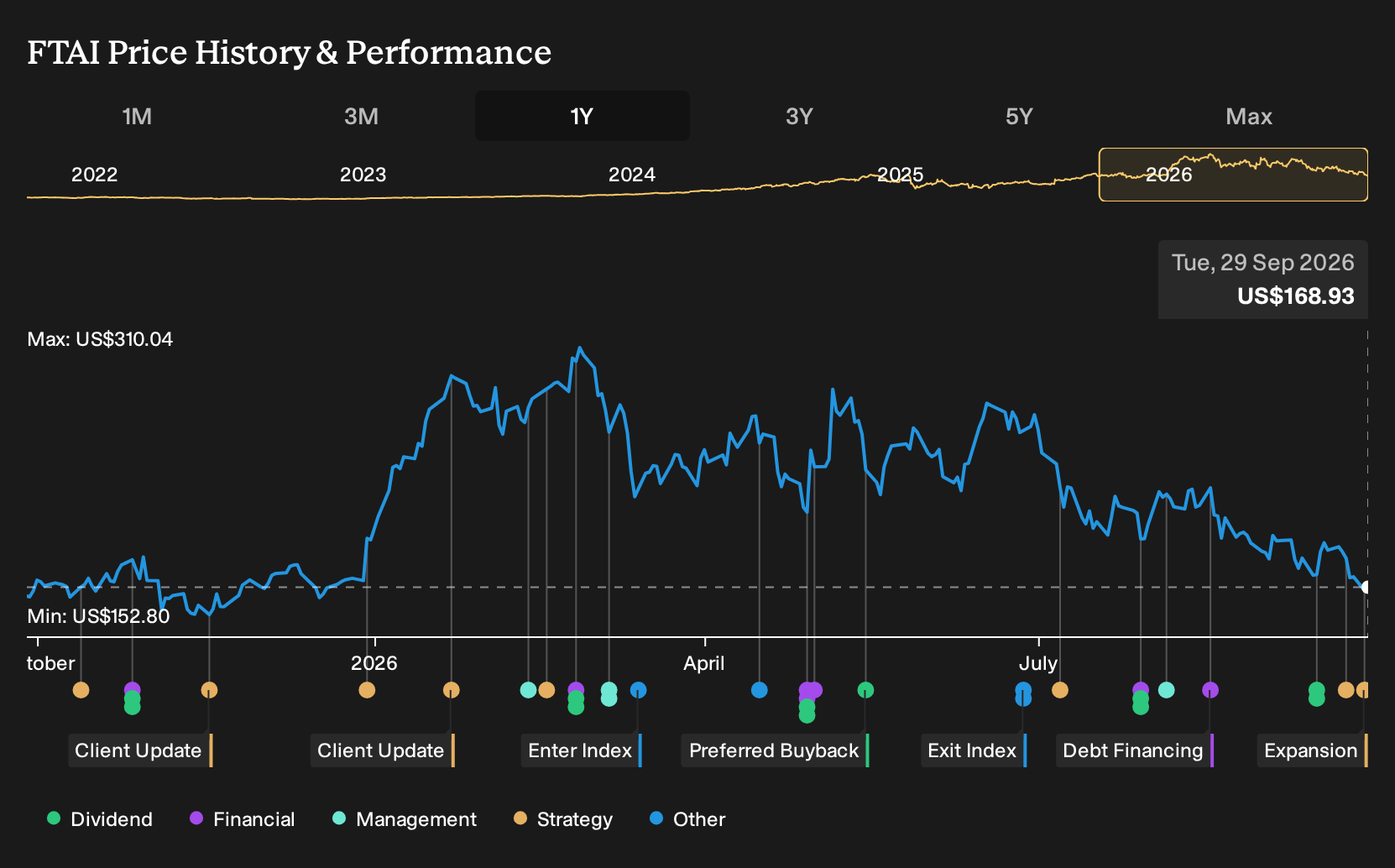
Uncover why FTAI Aviation's fair value indicates a 118% potential upside to its current price that could narrow quickly.
Exploring Other Perspectives
The lowest analysts focus on concentration risk. They worry that heavy CFM56 exposure at FTAI Aviation could age badly if airlines lean faster into next generation engines. Their pre news models pointed to about US$5.8b revenue and US$1.5b earnings by 2029, well below consensus. This shows how sharply opinions can diverge and may still shift after this deal.
Explore 4 other FTAI Aviation fair value estimates, including one that suggests it could be worth just $225.05!
Decide For Yourself
Disagree with existing narratives? Extraordinary investment returns rarely come from following the herd, so go with your instincts.
- A great starting point for your FTAI Aviation research is our analysis highlighting 3 key rewards and 2 important warning signs that could impact your investment decision.
- See our latest analysis for FTAI Aviation. The report includes a comprehensive fundamental analysis summarized in a single visual, the Snowflake, making it easy to evaluate FTAI Aviation's overall financial health at a glance.
Looking For More Investment Ideas Beyond FTAI Aviation?
If the FTAI Aviation story has you thinking about portfolio balance and opportunity cost, it can help to line it up against other businesses with very different profiles. The Simply Wall St Screener lets you quickly filter by quality, valuation and risk so you can build a shortlist that actually matches your goals, rather than just chasing the latest headline.
- If you want ideas that combine quality with room to rerate, consider a curated set of 32 high quality undervalued stocks that may warrant a closer look against your return hurdles.
- If capital preservation and steadier profiles appeal to you, start with a 32 resilient stocks with low risk scores that focuses on resilient companies with lower overall risk scores.
- If balance sheet strength is a must have before you even think about future upside, filter your universe using a list of solid balance sheet and fundamentals (25 results) to see which businesses clear a higher bar on debt and liquidity.
This article by Simply Wall St is general in nature. We provide commentary based on historical data and analyst forecasts only using an unbiased methodology and our articles are not intended to be financial advice. It does not constitute a recommendation to buy or sell any stock, and does not take account of your objectives, or your financial situation. We aim to bring you long-term focused analysis driven by fundamental data. Note that our analysis may not factor in the latest price-sensitive company announcements or qualitative material. Simply Wall St has no position in any stocks mentioned.
Have feedback on this article? Concerned about the content? Get in touch with us directly. Alternatively, email editorial-team@simplywallst.com