


3 Life Insurance Stocks That Could Benefit From Higher Bond Yields
Bond markets are selling off, government yields sit near 20‑year highs and inflation worries keep circling. That mix punishes some areas of equities, yet can reshape the return profile for insurers and annuity providers that run huge bond portfolios. To show how that plays out in practice, this article walks through 3 large global life insurance stocks that look especially exposed to the latest rate and macro shocks.
The three life insurers covered below are only a sample, since the wider screen surfaced 15 more large US, European, Japanese and Australian groups with similarly detailed narratives on balance sheet strength, underwriting mix and rate sensitivity that are not covered in this article.
If you want to identify which of these giants best matches your risk tolerance and return goals, head straight into the Global Life Insurers and Annuity Providers screener to filter, analyze and focus on the highest conviction ideas.
Japan Post Insurance (TSE:7181)
Overview: Japan Post Insurance is a major Japanese life insurer that manages large long-term policyholder funds primarily invested in bonds.
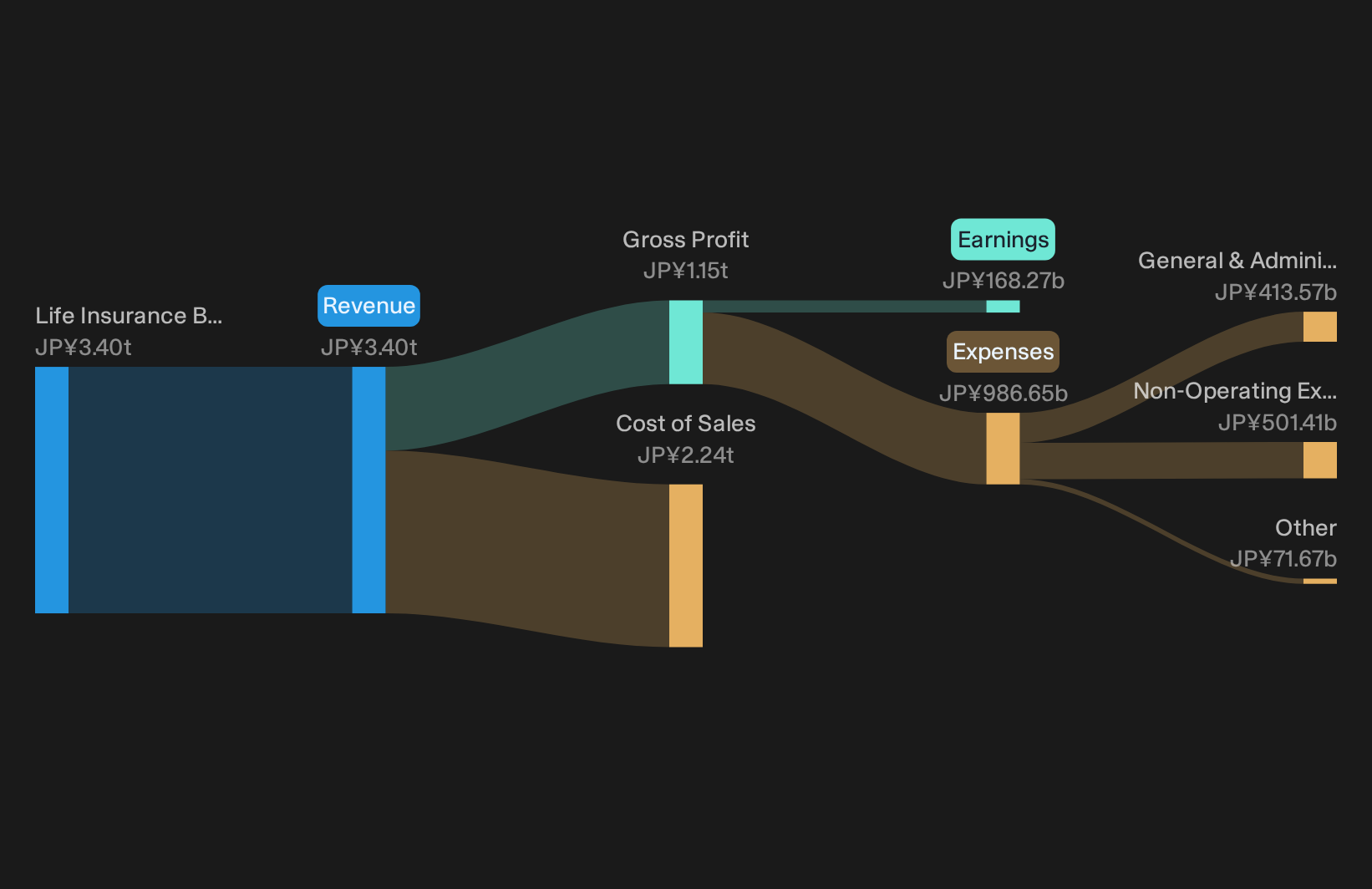
Operations: The group generates about ¥3,399.8b in revenue from its life insurance business in Japan, reflecting a tightly focused domestic franchise.
Market Cap: ¥1,980.95b
Japan Post Insurance fits this screener theme well because its core life policies are backed by a sizeable bond portfolio that can respond directly to higher yields.
"The company is leveraging Japan's aging demographic and robust demand for life and medical insurance by expanding its product lineup, including new policies tailored to customer needs and medical rider enhancements. This is contributing to strong growth in new policy sales and may have a positive impact on topline revenue and future earnings.
What matters now is how one quiet change in its funding mix reshapes the balance between higher investment income and pressure on margins.
That trade off is exactly what the full narrative for Japan Post Insurance unpacks, revealing where higher yields could quietly reshape Japan Post Insurance’s risk and reward profile.
Brighthouse Financial (BHF)
Overview: Brighthouse Financial is a US insurer that focuses on annuities and life policies built on long-duration investment portfolios tied to interest rates.
Operations: Brighthouse Financial generates about US$3.5b from Annuities, US$1.1b from Life, US$1.4b from Run-Off and US$643m from Corporate & Other, all in the United States.
Market Cap: US$3.1b
Brighthouse Financial sits squarely in this life and annuity theme because its long-term liabilities are matched by sizeable bond holdings that react directly to higher long-term yields.
"Ongoing regulatory pressures, including potential changes to capital requirements and tighter fiduciary standards, are likely to increase compliance costs and reduce profitability at a time when industry margins are already under threat from technological disruption and fintech competition, further constraining earnings growth."
What really matters for Brighthouse now is how one unresolved pressure on its long-duration spreads shapes future returns on this rate-sensitive book.
That spread question is exactly what the full narrative for Brighthouse Financial unpacks, showing where Brighthouse Financial’s earnings risk could be masking underpriced upside potential.

MetLife (MET)
Overview: MetLife is a global insurer and retirement provider that uses large, long-term fixed income portfolios to back life, annuity and employee benefit promises worldwide.
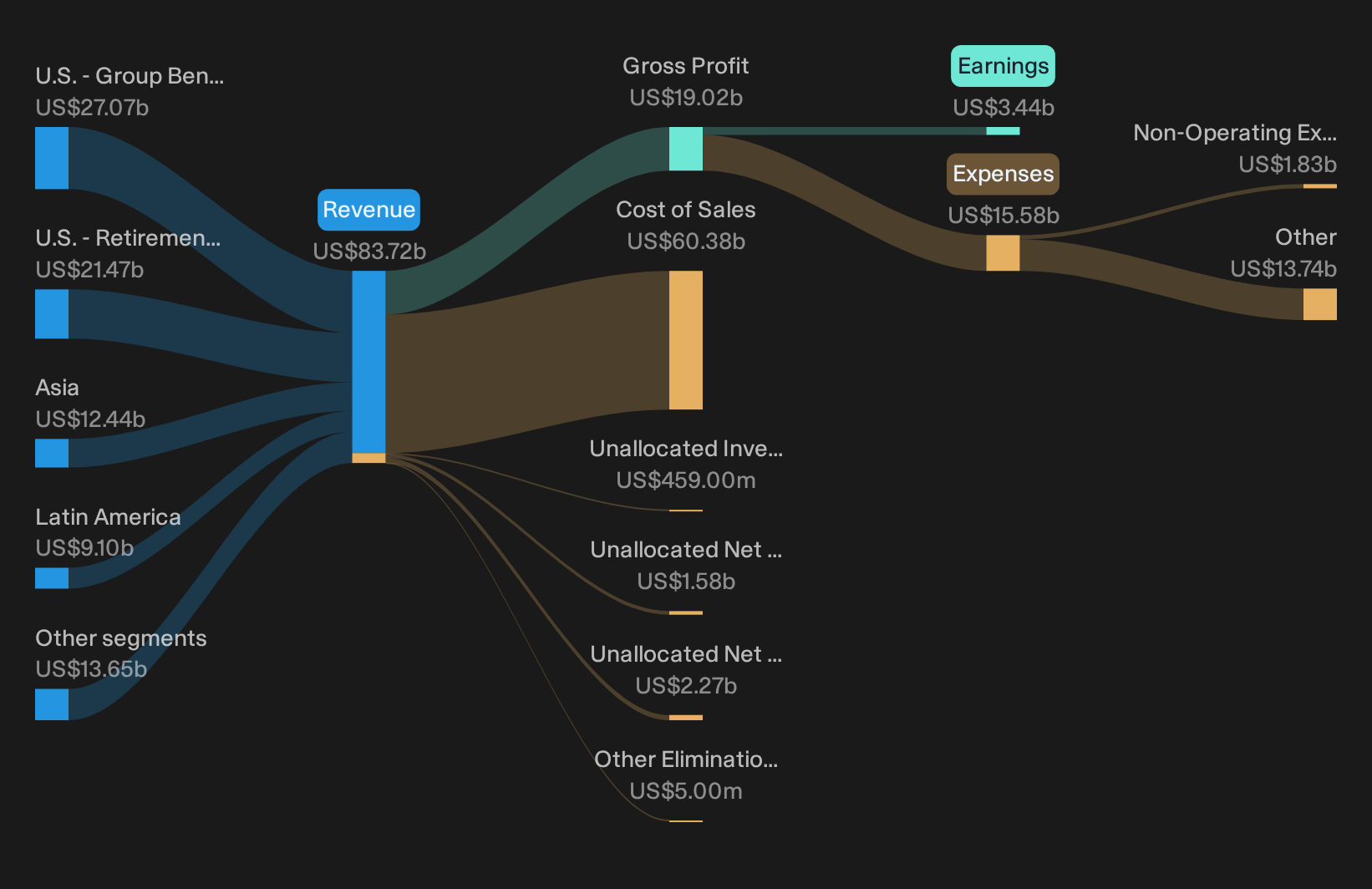
Operations: MetLife generates most of its revenue from U.S. Group Benefits at US$27.1b and Retirement and Income Solutions at US$21.5b, with sizable contributions from Asia and Latin America.
Market Cap: US$62.1b
MetLife sits at the center of this life and annuity screen because its long-duration fixed income book, global benefits franchise and fee-based platforms all pull in the same direction when long-term yields stay higher.
"Ongoing investment in technology and AI, including more than US$3.2b of spend over five years and visible automation in underwriting, claims and RFP processing, points to further unit cost efficiency that can support net margins and earnings quality."
What really decides how much of that rate and technology upside reaches shareholders is a single pressure point inside MetLife’s spread and fee mix.
That pressure point is exactly what the full narrative for MetLife clarifies, separating accelerating spread potential from the risks that could quietly cap MetLife’s upside.
Curious About Seeking Smarter Alternatives?
Fresh ideas move first. Breakout stories, new momentum and under the radar for now stocks often get caught once the crowd arrives. Scan these ideas while it matters and consider your options in a timely way.
- Spot resilient compounders before they start flying by running your portfolio checks through the list of solid balance sheet and fundamentals (22 results).
- Focus on income momentum while yields remain elevated by identifying high payout candidates with the 14 dividend fortresses.
- Explore potential infrastructure opportunities by scanning power and grid rebuild beneficiaries inside the 40 power grid technology and infrastructure stocks.
This article by Simply Wall St is general in nature. We provide commentary based on historical data and analyst forecasts only using an unbiased methodology and our articles are not intended to be financial advice. It does not constitute a recommendation to buy or sell any stock, and does not take account of your objectives, or your financial situation. We aim to bring you long-term focused analysis driven by fundamental data. Note that our analysis may not factor in the latest price-sensitive company announcements or qualitative material. Simply Wall St has no position in any stocks mentioned.
Have feedback on this article? Concerned about the content? Get in touch with us directly. Alternatively, email editorial-team@simplywallst.com