


3 Tanker Stocks Investors May Miss As Sanctions Reshape Shipping Routes
Global trade routes are being redrawn in real time as new US tariffs, sanctions on Russian finance, and tighter rules on shipping and insurance disrupt where and how oil moves. That kind of shock can reshape earnings power for certain tanker stocks faster than most investors react. This article breaks down three Western listed crude and product tanker companies most exposed to the latest sanctions wave and explains how that mix of risk and opportunity could matter for your portfolio.
The stocks highlighted below are just a starter pack, while the full screen pulled out 9 more Western listed crude and product tanker companies with equally interesting risk and reward stories that are not covered here. To identify and analyze the highest conviction tanker opportunities that match your own thesis, go straight to the Western-Listed Crude and Product Tanker Shipping Companies screener.
Stolt-Nielsen (OB:SNI)
Overview: Stolt-Nielsen is a London based liquid logistics group that ships, stores, and distributes bulk chemicals and other specialized liquids worldwide.
Operations: The business generates about $1.6b from Tankers, $718 million from Tank Containers, $318 million from Terminals, and $155 million from Sea Farm operations.
Market Cap: NOK19.2b
Stolt-Nielsen gives you exposure to similar global trade currents as crude and product tanker stocks. However, this occurs through a broader liquid chemicals and specialty cargo network that can react differently when sanctions and tariffs reshape routes.
"Strategic acquisitions like Hassel 4 and LNG carrier Avenir, which together are expected to contribute approximately $50 million annually to EBITDA, are likely to impact earnings growth positively."
What really matters from here is how one quiet shift in route complexity and contract mix filters through to long run margins.
Those shifting trade patterns are exactly what the full narrative for Stolt-Nielsen unpacks in detail, showing where route complexity could be quietly accelerating or masking Stolt-Nielsen's earnings power.

Pyxis Tankers (PXS)
Overview: Pyxis Tankers runs a small fleet of product tankers and dry bulk vessels that haul refined fuels and other liquid cargo tied to seaborne energy trade.
Operations: Pyxis Tankers generates about $23.8 million from its tanker fleet and $18.6 million from its dry bulk fleet, closely linked to fuel trade flows.
Market Cap: $68.6 million
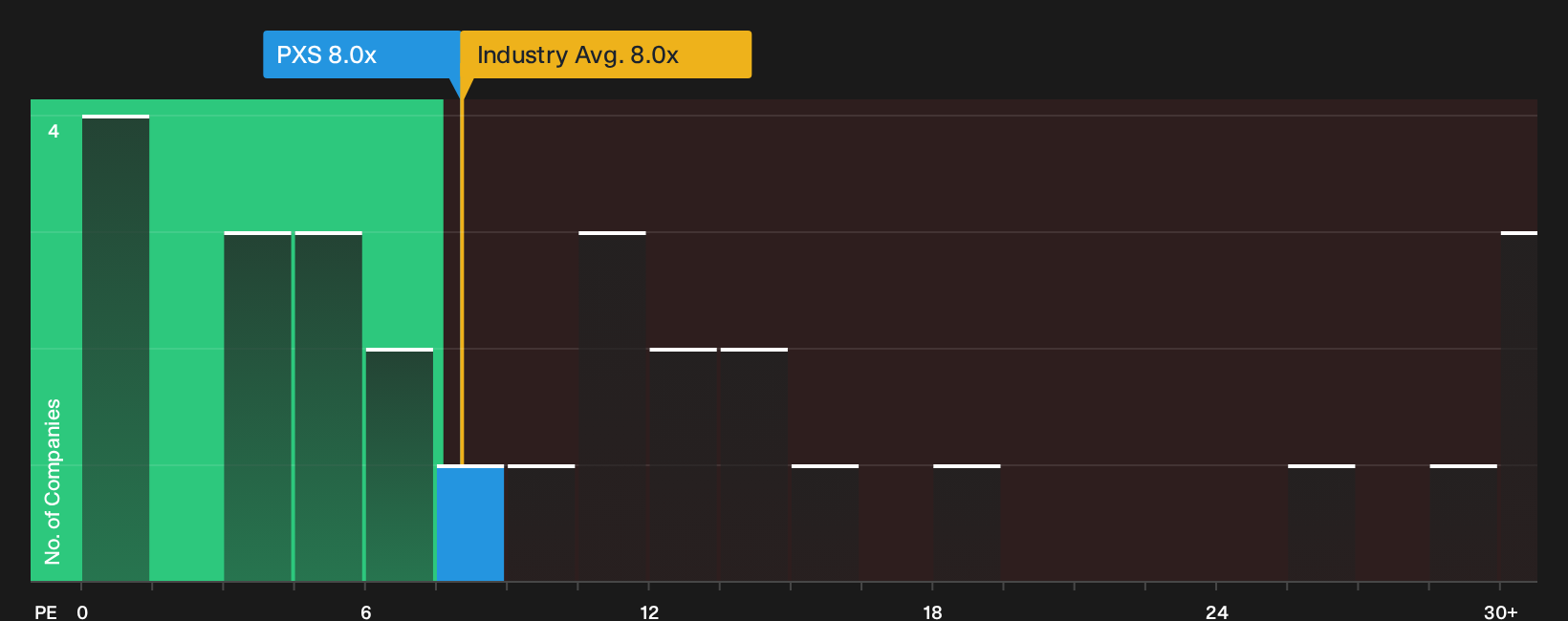
Pyxis Tankers is positioned in the tanker freight segment that some investors monitor, with a product-focused fleet, a recent return to profit, and a P/E below both the wider US market and US shipping averages. A key question for holders is how earnings might respond if pressures related to sanctions-driven trade routes change.
That earnings question is exactly what the analysis report for Pyxis Tankers digs into, showing where Pyxis Tankers could be mispriced if sanctions keep trade flows decoupled.
Klaveness Combination Carriers (OB:KCC)
Overview: Klaveness Combination Carriers operates combination vessels that switch between dry bulk and refined product cargoes, linking energy and commodity trades worldwide.
Operations: The group generates about $155 million from CABU vessels and $124 million from CLEANBU ships, blending dry bulk and product tanker exposure.
Market Cap: NOK5.8 billion
Klaveness Combination Carriers gives you a slightly different angle on this tanker focused screen, since the fleet can swing between wet and dry cargo depending on where seaborne energy and commodity routes are most attractive at any given time.
"Deliveries of three next-generation, eco-efficient CABU vessels in early 2026 are expected to increase capacity (~15% higher cargo intake per ship) and drive higher time charter earnings; modern, energy-efficient vessels will also support competitive positioning ahead of new IMO decarbonization regulations, which may influence revenue growth and margin dynamics."
What happens to Klaveness Combination Carriers' margins if a single key pressure on product tanker demand shifts more sharply than expected.
If that pressure point matters for you, read the full narrative for Klaveness Combination Carriers to see how Klaveness Combination Carriers' route flexibility could be accelerating or masking earnings resilience.

Seeking Alternatives Beyond Tanker Stocks
Fresh ideas move first. Markets reward investors who spot quiet breakout themes, ride early momentum, and exit before the story is fully priced. Before these picks stop flying under the radar, act now.
- Spot cash flow strength before it is widely discussed by scanning the 179 high quality undervalued stocks that filters for quality balance sheets and resilient earnings profiles.
- Ride structural demand in critical materials by reviewing the 17 top copper producer stocks that highlights producers tied to long term electrification and infrastructure build outs.
- Tap into faster growing niches in mining by checking the 10 top silver producer stocks that groups producers with meaningful exposure to both industrial and monetary demand.
This article by Simply Wall St is general in nature. We provide commentary based on historical data and analyst forecasts only using an unbiased methodology and our articles are not intended to be financial advice. It does not constitute a recommendation to buy or sell any stock, and does not take account of your objectives, or your financial situation. We aim to bring you long-term focused analysis driven by fundamental data. Note that our analysis may not factor in the latest price-sensitive company announcements or qualitative material. Simply Wall St has no position in any stocks mentioned.
Have feedback on this article? Concerned about the content? Get in touch with us directly. Alternatively, email editorial-team@simplywallst.com