


What Ryman Healthcare Shares Leaving FTSE All World Index Means For Shareholders
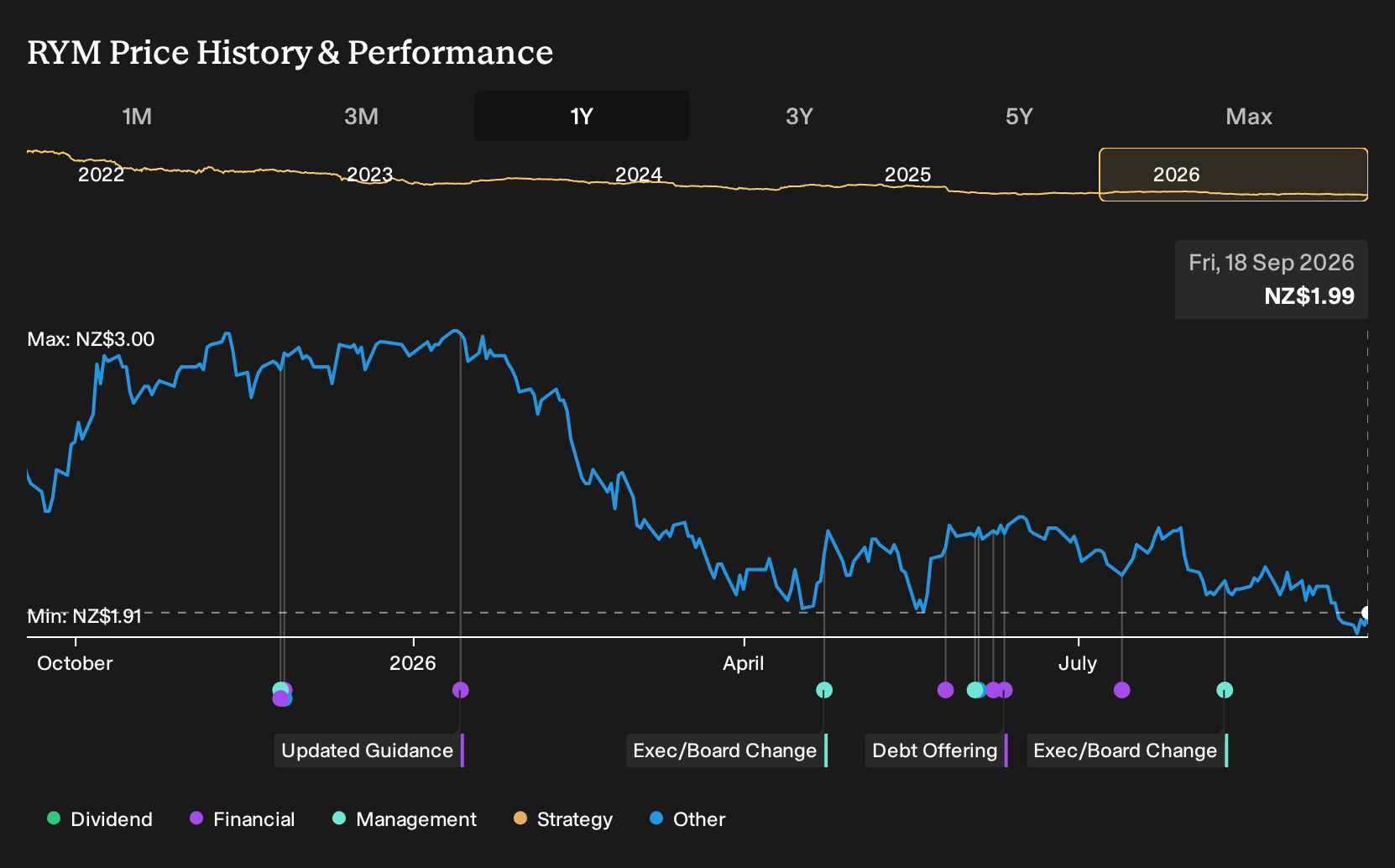
- Ryman Healthcare was removed from the FTSE All-World Index in September 2026, following a constituent review that affected its inclusion in this global equity benchmark.
- This index exit matters for Ryman Healthcare because it can influence demand from index-tracking funds, which affects liquidity and how investors assess the business during its operational reshaping.
- We will now look at how Ryman Healthcare's investment narrative could be affected by its removal from the FTSE All-World Index.
Ryman Healthcare Investment Narrative Recap
To own Ryman Healthcare, you need to believe the reset in leadership, pricing and cost structure can eventually turn a reported net profit before tax loss of $79.8 million into consistently positive earnings. The near term focus is on whether business reorganization and centralised systems keep translating into real efficiency gains without disrupting care quality or village operations.
The FTSE All World exit mainly affects how some index funds trade the stock rather than how villages are built or beds are filled. The operational catalyst remains execution on the pricing overhaul and development pipeline. The main risk stays the same. High debt of $2.56b and higher interest costs keep financial flexibility tight if property market conditions or unit sales soften.
With no fresh regulatory filings around the index change, the relevant reference point is the earlier decision to push a broad business reorganization and cost program targeting $18 million in annualised savings. That reset is what investors are really testing when liquidity or ownership mix shifts after index changes, because fewer passive buyers can expose any disappointment on delivery.
For you as a shareholder, the question is whether the same program that centralises overheads and systems can offset higher finance expenses and a tough property market. If those savings hold and new units and beds continue to be delivered, then the important driver of sentiment is likely to be execution on margins and cash flow rather than the FTSE All World removal itself.
Ryman Healthcare's current revenue outlook points to NZ$1.1b in revenue and NZ$672.2 million in earnings by 2029, based on analyst projections. This path assumes revenue growth of 8.1% per year and an earnings swing of about NZ$843.5 million from a current loss of NZ$171.3 million to the 2029 consensus figure.
Uncover how Ryman Healthcare's fair value indicates a 51% potential upside to its current price before renewed confidence in Ryman Healthcare closes that gap.
Exploring Other Perspectives
One alternate view on Ryman Healthcare focuses heavily on interest rate risk. That group sees prolonged higher borrowing costs as the central threat and had already pencilled in earnings of NZ$776.4 million on about NZ$1.0b of revenue by 2029, yet still set a lower NZ$2.68 target. These forecasts predate the index removal, so you may want to reassess where you sit on that spectrum.
Explore 5 other Ryman Healthcare fair value estimates, including one that suggests it could be worth just NZ$1.97.
The Verdict Is Yours
Disagree with existing narratives? Extraordinary investment returns rarely come from following the herd, so go with your instincts.
- A great starting point for your Ryman Healthcare research is our analysis highlighting 2 key rewards that could impact your investment decision.
- See our latest analysis for Ryman Healthcare. The report includes a comprehensive fundamental analysis summarized in a single visual, the Snowflake, making it easy to evaluate Ryman Healthcare's overall financial health at a glance.
Looking for more investment ideas beyond Ryman Healthcare?
If the Ryman Healthcare story has sharpened your thinking, you can use that same lens on a broader watchlist. The Simply Wall St Screener can help you quickly sort through opportunities that fit your preferences on value, income, or balance sheet strength.
- If you want potential mispricings with quality fundamentals, start with a 179 high quality undervalued stocks that combine solid cash generation with disciplined financial profiles.
- If resilience matters most to you, check companies with strong finances using a list of solid balance sheet and fundamentals (198 results) to see which businesses keep leverage and risk in check.
- If you prefer ideas that are not yet crowded, scan a 614 high quality undiscovered gems that pair robust metrics with relatively low investor attention.
This article by Simply Wall St is general in nature. We provide commentary based on historical data and analyst forecasts only using an unbiased methodology and our articles are not intended to be financial advice. It does not constitute a recommendation to buy or sell any stock, and does not take account of your objectives, or your financial situation. We aim to bring you long-term focused analysis driven by fundamental data. Note that our analysis may not factor in the latest price-sensitive company announcements or qualitative material. Simply Wall St has no position in any stocks mentioned.
Have feedback on this article? Concerned about the content? Get in touch with us directly. Alternatively, email editorial-team@simplywallst.com