


3 AI Infrastructure Stocks Investors Are Watching After Nvidia Policy Signals
AI chips and data centers are suddenly at the center of US politics, with Nvidia and Jensen Huang shaping the conversation on regulation, safety and China access. That kind of policy spotlight can shift how capital flows into AI infrastructure very quickly. This article breaks down three stocks exposed to that news story so you can evaluate how the changing rulebook might affect your own portfolio plan.
The stocks covered below are just a sample, and the full screen surfaced 43 more U.S.-listed AI semiconductor and data center infrastructure companies with equally compelling narratives that are not discussed in this article. To identify and analyze the ideas that best fit your own conviction level, head straight to the U.S.-listed AI Semiconductor & Data Center Infrastructure Stocks screener.
Analog Devices (ADI)
Overview: Analog Devices designs and sells analog and mixed signal chips that handle power, sensing, and signal processing in AI servers, data centers, vehicles, factories, and connected devices worldwide.
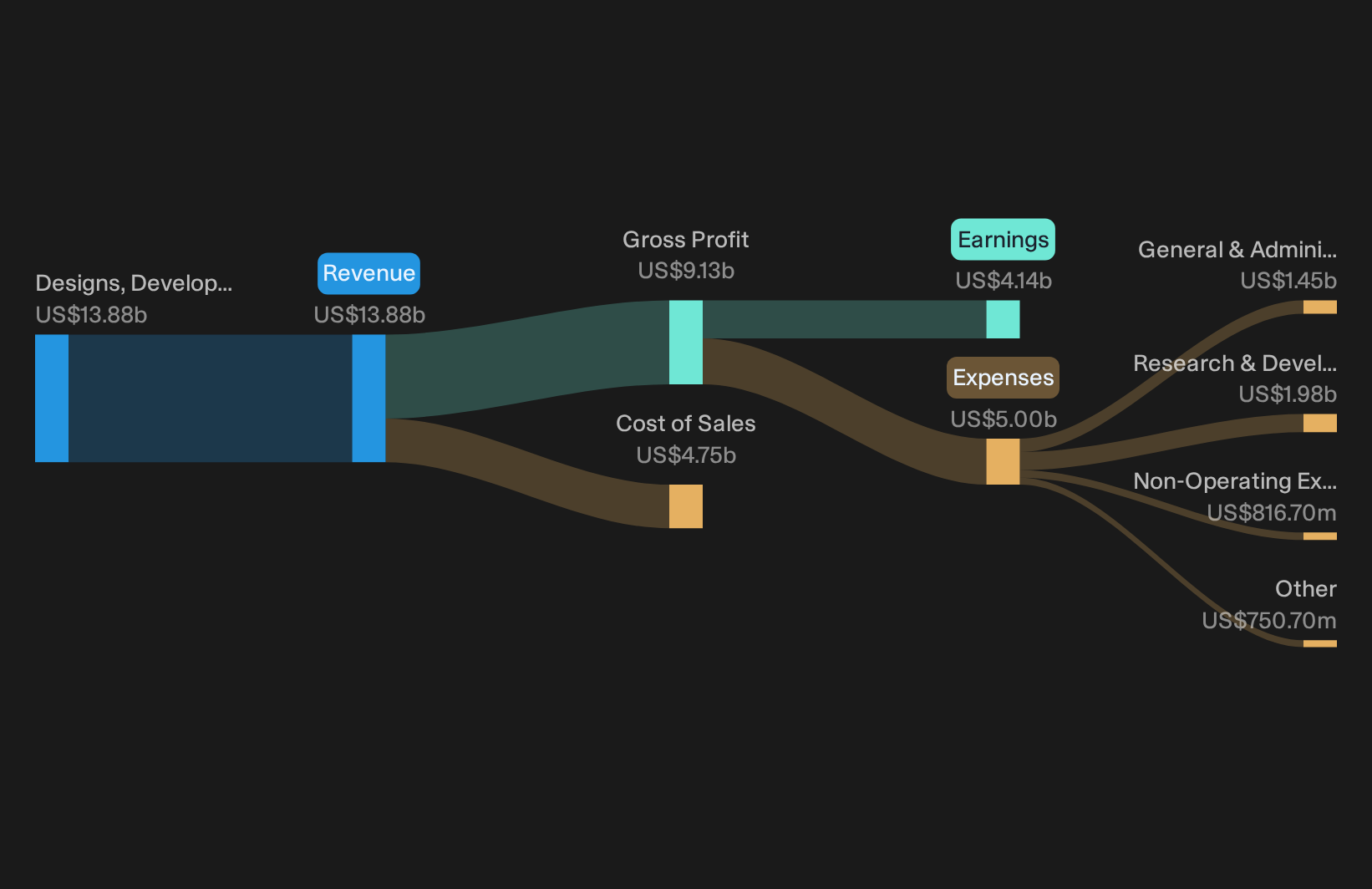
Operations: Analog Devices generates about US$13.9b in revenue from designing, developing, manufacturing, and marketing a broad range of integrated circuits.
Market Cap: US$182.1b
Analog Devices matters in this AI semiconductor and data center screen because its power and signal chips sit inside the servers that keep GPU clusters running efficiently, tying its fortunes directly to how much infrastructure the big cloud and enterprise players are willing to fund.
"Robust expansion of AI infrastructure, green energy investments, and aerospace and defense outlays is creating healthy backlog and supply-constrained opportunities in several high-value segments, likely resulting in continued revenue and profitability momentum as ADI ramps internal capacity and leverages proprietary products."
What ultimately happens to margins and returns will hinge on how one quietly rising cost pressure interacts with that AI infrastructure demand wave.
That cost squeeze is the real hinge for Analog Devices; read the full narrative for Analog Devices to see how capacity ramps and pricing power could be decoupling.
Intel (INTC)
Overview: Intel designs and manufactures CPUs, GPUs, accelerators and data center platforms that power AI workloads for cloud, enterprise and edge users worldwide.
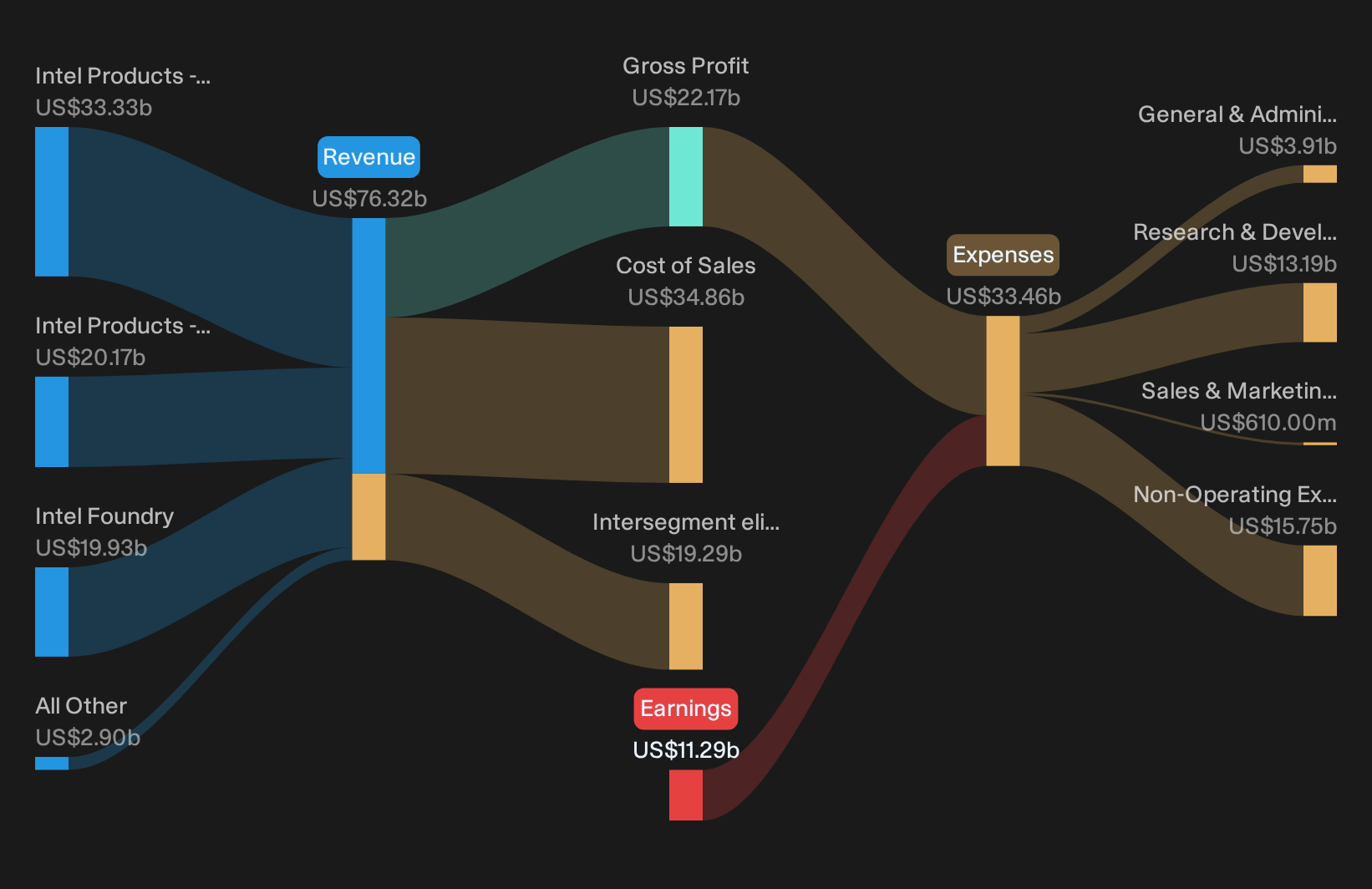
Operations: Intel generates about US$33.3b from client and physical AI products, US$20.2b from Data Center and AI, and US$19.9b from Intel Foundry services.
Market Cap: US$570.6b
Intel sits at the intersection of AI compute demand and data center build outs, so any policy shift that keeps AI infrastructure spending flowing can quickly influence how its accelerator roadmap and foundry push are funded.
"The strategic push toward developing best-in-class products for new and emerging AI workloads, along with refining their AI strategy, is intended to position Intel to compete in an expanding market, with the potential to affect future revenue and market share."
What really tests that AI story is how one quietly growing capital and execution burden ultimately shapes the trade off between margins and scale.
That capital burden is the real swing factor for Intel. Read the full narrative for Intel to see how execution risk and AI upside are really colliding.
Keysight Technologies (KEYS)
Overview: Keysight Technologies supplies design and test tools that help build, validate, and secure high speed chips and data center networks.
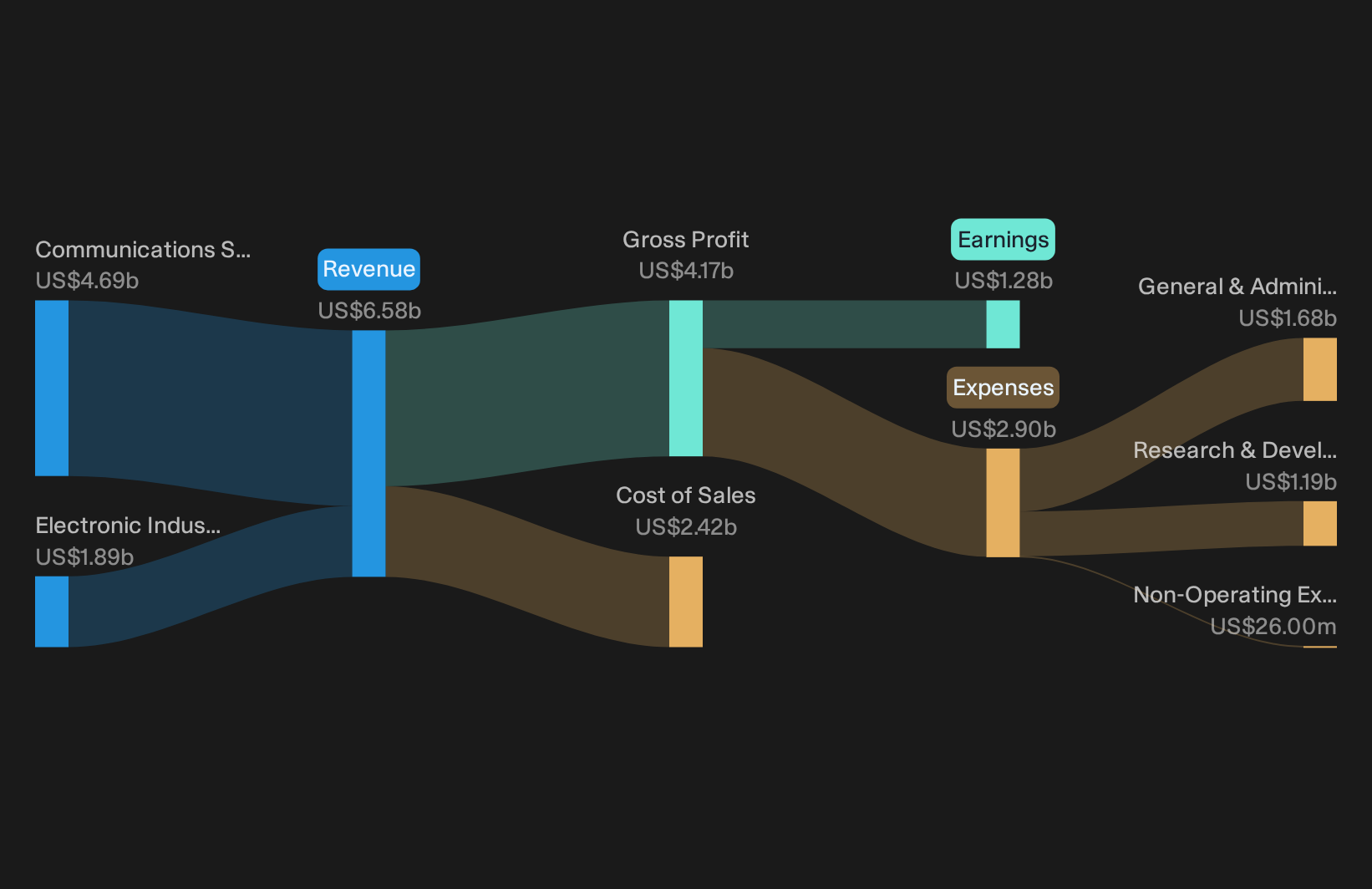
Operations: Keysight generates about US$4.7b from its Communications Solutions Group and about US$1.9b from its Electronic Industrial Solutions Group.
Market Cap: US$57b
Keysight Technologies matters for this AI semiconductor and data center screen because its tools sit behind the scenes of GPU clusters, high speed optics, and switching gear that must work flawlessly together as Washington leans toward keeping AI infrastructure build outs running hot.
"AI data center build outs and the shift to Ethernet based AI networking, including 800G, 1.6T and early 3.2T development, are creating more complex test requirements across the full stack."
What really decides how that complexity translates into shareholder outcomes is how one quiet shift in test intensity interacts with pricing power.
As test intensity ramps up, read the full narrative for Keysight Technologies to learn more about how Keysight Technologies could translate that demand into stronger earnings power and overlooked upside potential.
Seeking Fresh Alternatives Beyond AI?
New breakouts and quiet momentum shifts rarely stay under the radar for long. Screen fresh ideas before the crowd, while it matters, and get in early.
- Spot sturdy cash generators with room to run by scanning the 35 high quality undervalued stocks curated for quality balance sheets and proven earning power.
- Track where automation tailwinds could be building next and filter targeted opportunities through the hand picked 95 robotics and automation stocks.
- Position around long term infrastructure trends by reviewing the curated 39 power grid technology and infrastructure stocks before those stories get fully priced in.
This article by Simply Wall St is general in nature. We provide commentary based on historical data and analyst forecasts only using an unbiased methodology and our articles are not intended to be financial advice. It does not constitute a recommendation to buy or sell any stock, and does not take account of your objectives, or your financial situation. We aim to bring you long-term focused analysis driven by fundamental data. Note that our analysis may not factor in the latest price-sensitive company announcements or qualitative material. Simply Wall St has no position in any stocks mentioned.
Have feedback on this article? Concerned about the content? Get in touch with us directly. Alternatively, email editorial-team@simplywallst.com