


Does Laser Contract Momentum Change The Bull Case For AeroVironment (AVAV)?
- In recent weeks, AeroVironment has reported a first quarter net loss of US$5.07 million on US$480.49 million in revenue, reaffirmed fiscal 2027 guidance, secured a US$464.8 million U.S. Army Enduring High Energy Laser production contract, and booked its first international LOCUST Laser Weapon System order worth more than US$50 million.
- Alongside these awards, AeroVironment has moved to harden its industrial base through a collaboration with Nominal to digitize test and production data, as well as a long-term supply agreement with Attalon for high-energy laser platforms, linking contract wins directly to manufacturing scale and quality control.
- We will now look at how AeroVironment's new U.S. Army high energy laser production contract could influence its broader investment narrative.
Scan how defense hardware momentum is spreading beyond AeroVironment by reviewing our hand-picked 38 robotics and automation stocks that are powering the next wave of autonomous and counter-UAS systems.
AeroVironment Investment Narrative Recap
To own AeroVironment, you need to believe this defense technology company can turn a growing portfolio in drones, counter UAS and directed energy into steadier earnings, despite current losses and heavy exposure to U.S. budgets. The reaffirmed fiscal 2027 outlook and first quarter loss narrowing provide a clearer view of execution progress rather than signaling a completed turnaround.
Right now, the key near term catalyst is converting large laser and UAS awards into reliable, higher margin production while integrating BlueHalo and improving gross margins from post acquisition levels. The biggest risk remains contract and funding concentration in the U.S., along with intense competition that could pressure pricing as programs scale.
The high energy laser production contract is closely tied to the long term supply agreement with Attalon for the Valaris platform, which directly supports AeroVironment's LOCUST and broader directed energy line. This pairing connects headline contract value to actual hardware supply, which is important for understanding how backlog may translate into shipped systems.
Execution around Attalon's capacity ramp and AeroVironment's Albuquerque expansion will be important to monitor, since any production bottlenecks or integration issues could slow revenue recognition from the U.S. Army E HEL award. For investors focused on catalysts, on time delivery and cost control across this supply chain appear just as important as winning additional contracts.
AeroVironment's narrative projects US$3.0b revenue and US$160.6 million earnings by 2029, assuming 14.3% yearly revenue growth and an earnings increase of about US$425.7 million from current earnings of a US$265.1 million loss.
Uncover why AeroVironment's fair value indicates a 44% potential upside to its current price that could narrow quickly.
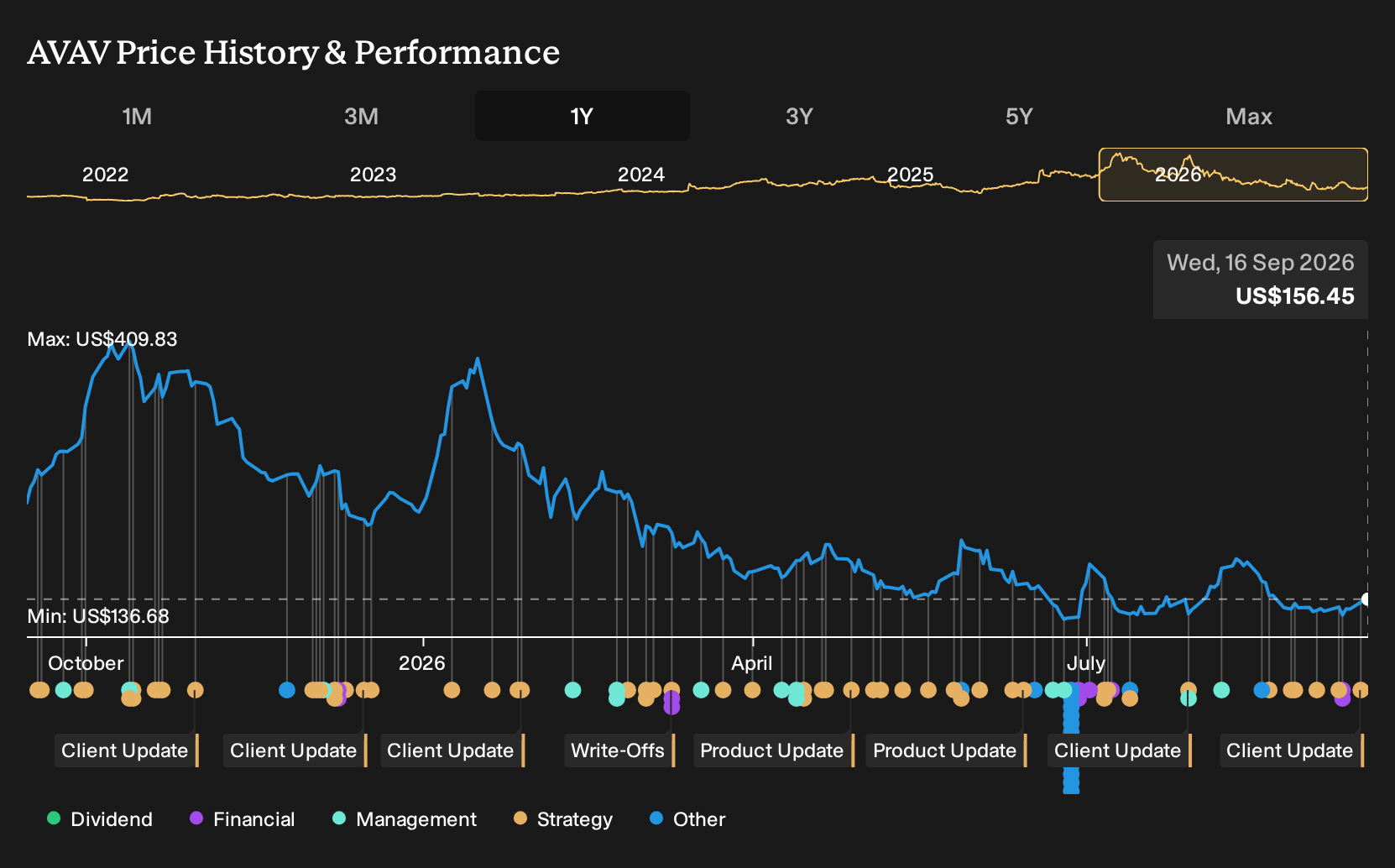
Exploring Other Perspectives
One alternate view argues that the real swing factor for AeroVironment is not contract wins, but how sensitive demand is to shifting defense budgets and tighter export rules. Before this Nominal collaboration, the most cautious analysts were only penciling in about US$2.9b of revenue and US$141.4 million of earnings by 2029. That is a far more conservative path than consensus. It shows how far apart opinions can be, and why it helps you to explore several narratives before deciding how this new data collaboration might reshape expectations.
Explore 8 other AeroVironment fair value estimates, including one that suggests as much as 5% downside from the current price.
Reach Your Own Conclusion
Disagree with existing narratives? Extraordinary investment returns rarely come from following the herd, so go with your instincts.
- A great starting point for your AeroVironment research is our analysis highlighting 2 key rewards and 1 important warning sign that could impact your investment decision.
- See our latest analysis for AeroVironment. The report includes a comprehensive fundamental analysis summarized in a single visual, the Snowflake, making it easy to evaluate AeroVironment's overall financial health at a glance.
Looking For More Ideas Beyond AeroVironment?
Once you have a view on AeroVironment, it can help to cross check that thesis against other opportunities using the Simply Wall St Screener. That way you can see how different risk, income and quality profiles line up next to this defense stock.
- If you want potential income alongside capital growth, scan for established payers by reviewing 6 dividend fortresses that could complement a holdings mix anchored by AeroVironment.
- For investors who care most about capital strength and clean finances, start with a list of solid balance sheet and fundamentals (22 results) that may hold up better when conditions get tougher.
- If you are hunting for future breakouts before they are widely followed, focus on quality outliers through a 16 high quality undiscovered gems that might offer a different risk reward profile to AeroVironment.
This article by Simply Wall St is general in nature. We provide commentary based on historical data and analyst forecasts only using an unbiased methodology and our articles are not intended to be financial advice. It does not constitute a recommendation to buy or sell any stock, and does not take account of your objectives, or your financial situation. We aim to bring you long-term focused analysis driven by fundamental data. Note that our analysis may not factor in the latest price-sensitive company announcements or qualitative material. Simply Wall St has no position in any stocks mentioned.
Have feedback on this article? Concerned about the content? Get in touch with us directly. Alternatively, email editorial-team@simplywallst.com