


An $80 Billion Treasury Shift Could Be a Warning for U.S. Bonds
Denmark’s defense of its territory in Greenland has made headlines this year. Now, its neighbors across the North Sea are rattling the U.S.
Norway’s $2.3 trillion sovereign wealth fund has recommended reducing its government bond holdings and shifting money into higher-yielding fixed-income assets.
Norges Bank Investment Management (NBIM) proposed lowering government debt from 70% to 50% of the fund’s bond benchmark. That asset allocation adjustment could remove about $106 billion from global sovereign bonds, including nearly $80 billion from U.S. Treasurys, according to an estimate by the Financial Times.
The fund would redirect much of that money into assets such as agency mortgage-backed securities. These bonds carry credit quality similar to Treasurys because they are supported by Fannie Mae (FNMA), Freddie Mac (FMCC), or Ginnie Mae, but they typically offer higher yields to compensate investors for the risk that homeowners repay mortgages early.
This adds to Treasury Secretary Scott Bessent’s growing logistical headache. The Danish proposal is another sign that major institutional buyers are demanding better returns from their bond portfolios as government borrowing rises and yields remain elevated. An $80 billion reduction would be small relative to the enormous U.S. Treasury market. But as per the “never one cockroach” theory, it could inspire copycat activity.
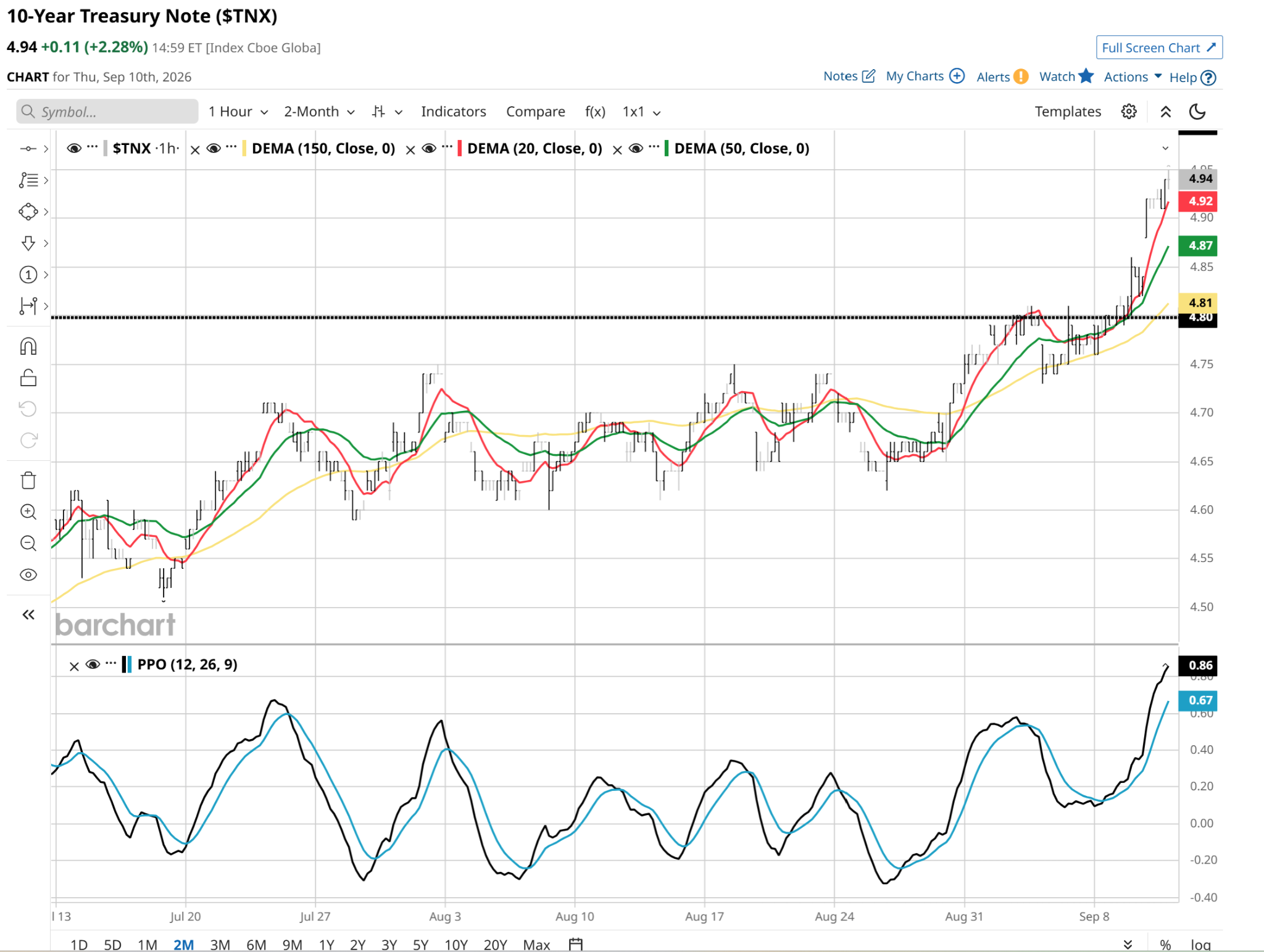
Similar moves by other reserve managers could weaken demand for U.S. debt and add upward pressure to yields. That’s on top of this, which we’ve already seen. This chart shows the 10-year bond yield ($TNX) moving from 4.5% to 4.9% over the past two months.
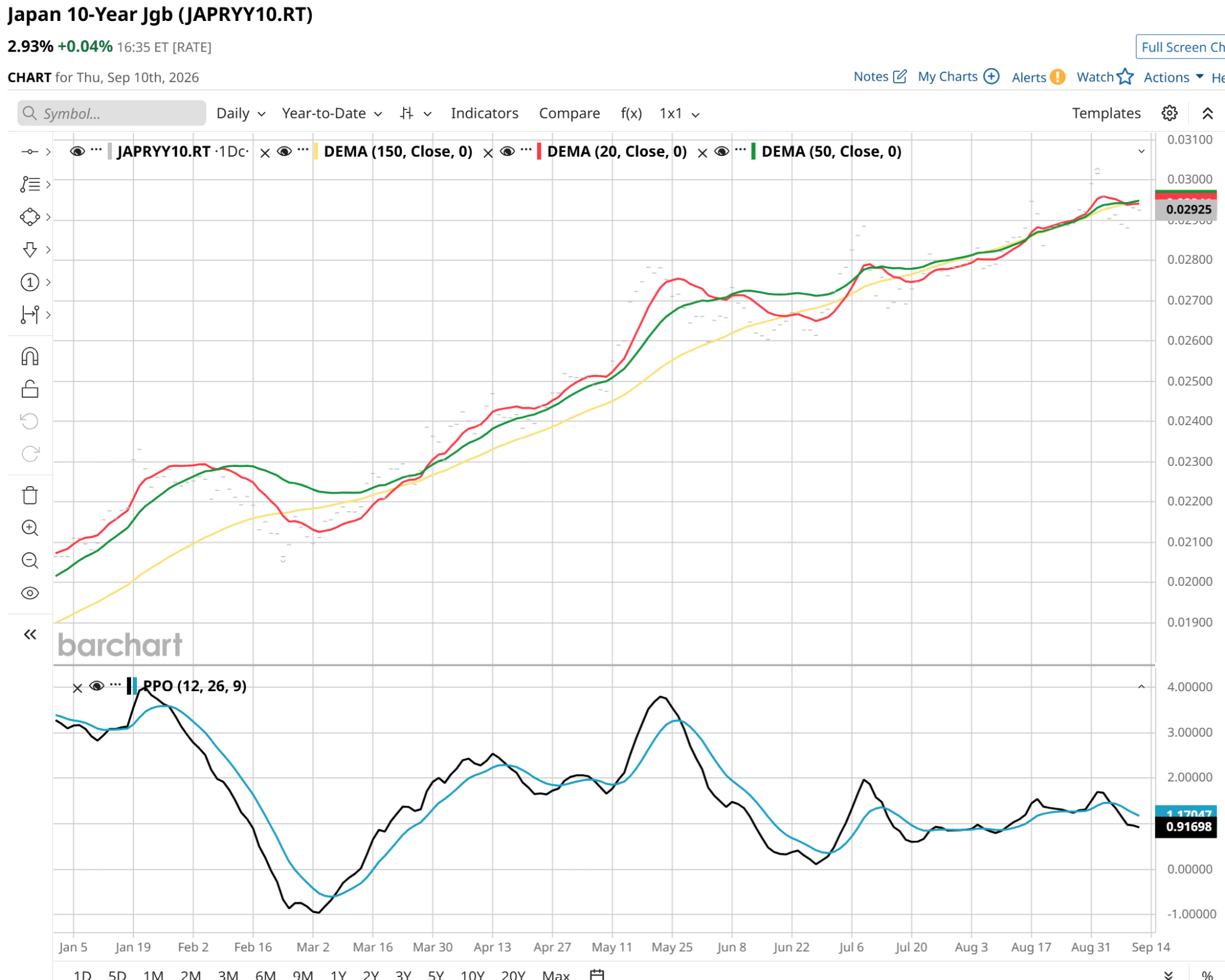
The changes contemplated would leave the fund’s overall U.S. dollar exposure largely intact. Its Treasury weighting would fall by roughly 12%, while its allocation to other U.S. fixed-income securities would rise by 11%. Holdings of British government bonds would remain steady, while Japanese sovereign debt would gain a larger weighting. The 10-year JGB rate has been rising since March and is now over 2.9%, the highest level of the modern era.
NBIM also recommended weighting government bonds according to the value of each country’s outstanding debt rather than the size of its economy. The fund said the broader overhaul would diversify its sources of fixed-income returns while preserving sufficient liquidity during periods of market stress.
The recommendation isn't final. An expert council is expected to submit broader advice to Norway’s finance ministry by January, with the government scheduled to present its proposal to parliament in spring 2027, according to the Financial Times.
While I know it is Wall Street culture to obsess about what the Fed will do, what the government will do about what the Fed does, and what the President will say about all of it, I’m focused elsewhere.
Because while the Japanese bond market and U.S. bond market are not at the core of the NBIM news, this is high on my radar as a “watch this space.”
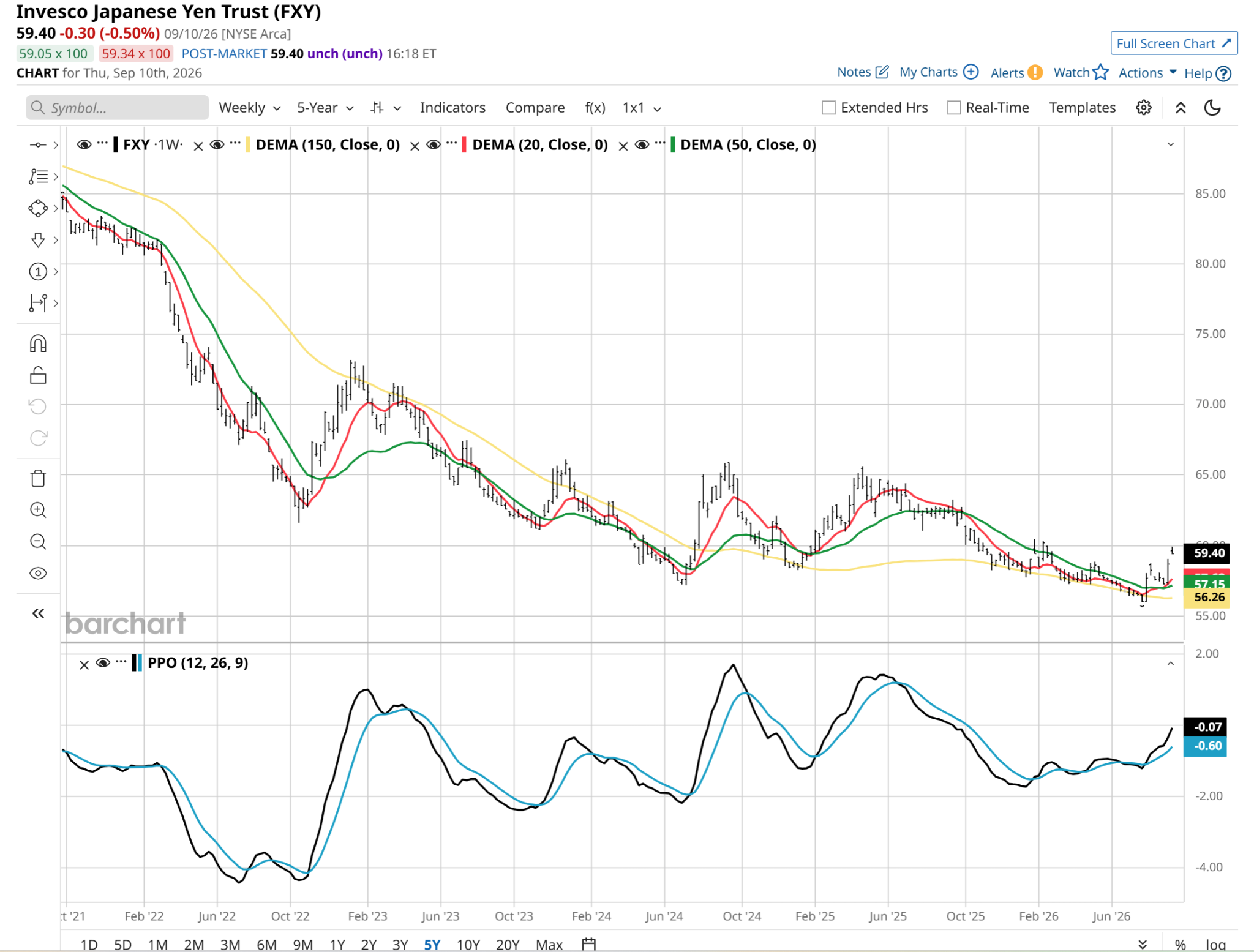
Above is the Invesco Japanese Yen Trust (FXY), one of many currency exchange-traded funds (ETFs) that have traded for many years. It tracks the value of the Japanese yen in U.S. dollars. You can see it has been on a steady slide for years.
At least, it was. Now, it is showing signs of reversing higher. That might be the factor that ruins the long U.S. equity bull market. You see, a lot of money has been made, especially by U.S. hedge fund managers and pension funds, via the “yen carry trade.” Borrow in cheap Yen, invest in higher-yielding U.S. dollar debt and currency. Easy, right?
Well, not if this chart continues on its current trajectory. Norway’s consideration regarding how to allocate assets might just be another thorn in the side of U.S. policy, which I’ll refer to as dissent against the will of Bessent.
Rob Isbitts is a semi-retired CIO, former fiduciary investment advisor, and Barchart columnist. Check out his other work at ETFYourself.com (featuring the Fresh Charts weekly trading post), and ROAR.PiTrade.com, helping investors to better-manage their own portfolios.
On the date of publication, Rob Isbitts did not have (either directly or indirectly) positions in any of the securities mentioned in this article. All information and data in this article is solely for informational purposes. For more information please view the Barchart Disclosure Policy here.