


Nvidia (NVDA) Stock Looks Reasonable With A 29% Gap To Fair Value
NVIDIA has become one of the most heavily watched stocks in global markets, yet current valuation checks suggest the shares may still trade below an internally estimated intrinsic value even after a very strong multi year run. Recent price softness sits alongside an intrinsic value estimate from a Discounted Cash Flow (DCF) model and market multiples that both point to the stock screening as undervalued on these frameworks.
- Over the past 5 years, NVIDIA has delivered a very large total return of about 9x. This means recent investors are assessing valuation after a substantial compounding period.
- Large AI infrastructure investments such as the planned multi billion dollar commitment to Anthropic can support long run cash flow expectations. At the same time, regulatory probes into licensing deals and ongoing legal cases may affect how investors think about future economics and required returns.
- A high value score of 5 out of 5 indicates that on a broad set of checks NVIDIA currently screens as cheap relative to its intrinsic value estimate and market based benchmarks.
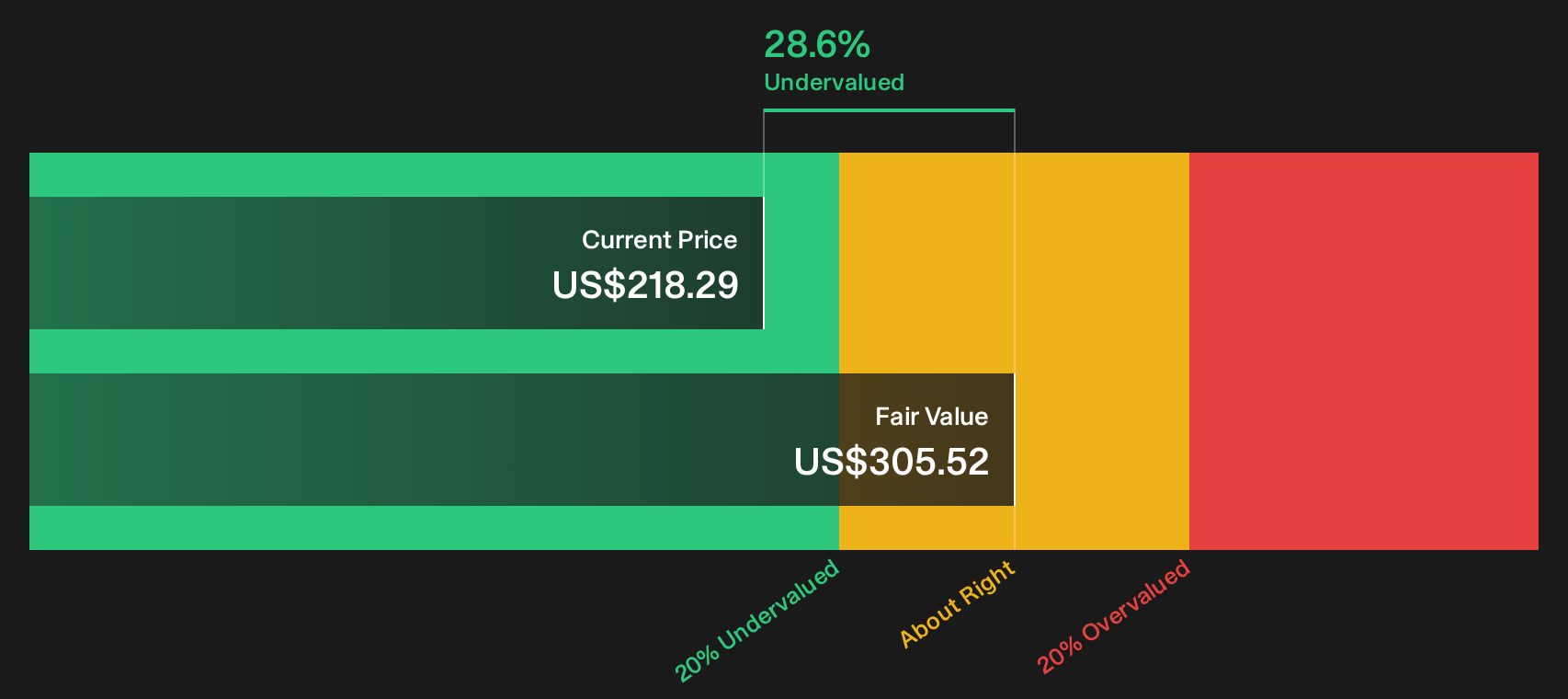
For investors, the debate is whether NVIDIA's recent share price pullback and a roughly 28.6% discount to the DCF intrinsic value estimate still offer an attractive entry point after such a strong multi year performance.
Scan beyond NVIDIA and see how other AI infrastructure players are priced today with our curated list of 89 AI infrastructure stocks.
Is NVIDIA Still Cheap on Cash Flow?
The Discounted Cash Flow model here takes NVIDIA's projected future cash generation and brings it back to today using a required return on equity. NVIDIA is currently reported as producing last twelve month free cash flow of about $126.7b, and the model assumes those cash flows keep growing rather than shrinking away, which is a key reason the intrinsic value screens well above the market price.
On these assumptions, the DCF framework points to an estimated intrinsic value of about $305 per share, while the stock is implied to trade at roughly a 28.6% discount to that figure. Nvidia's planned multi billion dollar investment in Anthropic is an example of why the model leans on sustained cash generation, because it ties the chip supplier more tightly into AI workloads that need its hardware and capital.
On this Discounted Cash Flow view, NVIDIA stock currently screens as undervalued relative to its modelled intrinsic value.
Our Discounted Cash Flow (DCF) analysis suggests NVIDIA is undervalued by 28.6%. Track this in your watchlist or portfolio, or discover 32 more high quality undervalued stocks.
Does NVIDIA Look Undervalued on Earnings?
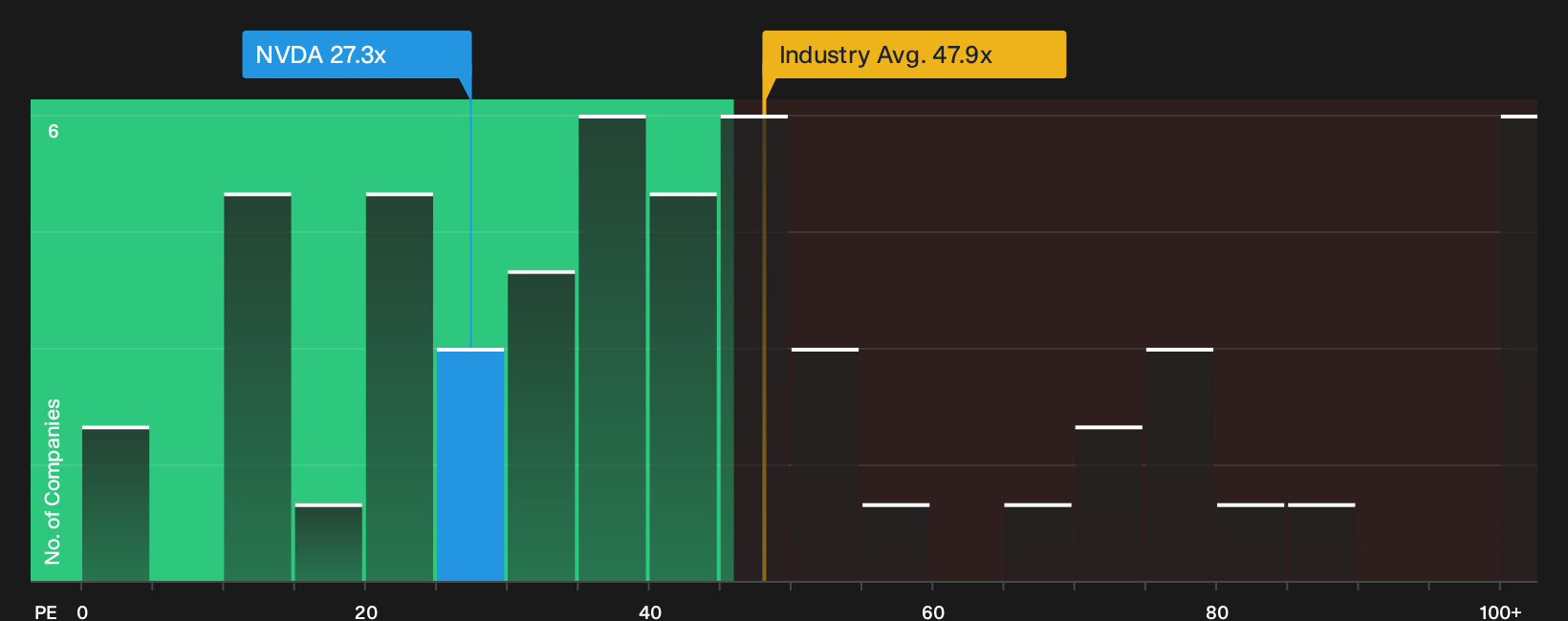
P/E is a useful lens for NVIDIA because earnings remain the main anchor for how investors think about the chip designer's profitability today. On this yardstick, NVIDIA trades on a P/E of about 27.3x, which is well below the broader semiconductor sector on roughly 47.9x and also below a peer group sitting near 68.9x.
A more tailored fair P/E ratio of about 49.1x, which blends factors like NVIDIA's margins, size, growth profile and risk, also sits well above the current 27.3x level. That gap suggests the market in aggregate is applying a sizeable discount to what this framework implies for the stock, even after the strong run and all the attention on AI infrastructure spending.
Taken together, the P/E checks indicate NVIDIA currently appears undervalued on earnings relative to both industry benchmarks and this fair multiple estimate.
See what the numbers say about this price — find out in our valuation breakdown.
The NVIDIA Narrative: What Would Justify Today's Price?
NVIDIA's valuation puzzle only really comes into focus once you ask what story about its future earnings power and cash generation would need to be true for today’s share price to look high or low. Simply Wall St Narratives on the Community page make those stories explicit, linking each scenario to a clear view on where NVIDIA's growth, profitability and risk profile could head next, so you can revisit the assumptions as fresh information arrives.
Community views on NVIDIA are miles apart, with one camp betting on a huge AI runway and the other warning that expectations already look stretched.
Bull case: 36% undervalued
"Nvidia will hit $400b annual revenue in 5 years time, ~90% of revenue will come from data centre customers…"
Read the full Bull Case to see why NVIDIA could be undervalued
Bear case: 110% overvalued
"The extraordinary surge of GPU demand was front-loaded by the initial AI gold rush…"
Read the full Bear Case to see why NVIDIA could be overvalued
Do you think there's more to the story for NVIDIA? Head over to our Community to see what others are saying!
The Bottom Line
NVIDIA screens as undervalued on both the Discounted Cash Flow (DCF) intrinsic value estimate and on earnings multiples, which is a rare alignment for a stock with this profile. The broad valuation checks point to a meaningful discount, yet that gap only closes if AI infrastructure demand and cash generation remain strong enough to support the current build out. The crux for investors is whether regulatory and legal risks, along with the scale of capital commitments, mean the discount reflects real fragility or whether the market is underpricing the durability of NVIDIA's AI economics.
This article by Simply Wall St is general in nature. We provide commentary based on historical data and analyst forecasts only using an unbiased methodology and our articles are not intended to be financial advice. It does not constitute a recommendation to buy or sell any stock, and does not take account of your objectives, or your financial situation. We aim to bring you long-term focused analysis driven by fundamental data. Note that our analysis may not factor in the latest price-sensitive company announcements or qualitative material. Simply Wall St has no position in any stocks mentioned.
Have feedback on this article? Concerned about the content? Get in touch with us directly. Alternatively, email editorial-team@simplywallst.com