


Nike (NKE) Stock May Be 13% Below Fair Value After Onchain Launch
NIKE has been hit hard on the chart over the past five years, yet current valuation checks suggest the stock may now trade below a reasonable intrinsic value estimate. The share price pressure and index removal sit alongside intrinsic value work that points to some upside relative to where the market currently prices NIKE.
- Over the past five years, NIKE shareholders have seen the stock fall about 74%, which has reset expectations and left sentiment weak.
- The launch of a tokenized $NKE instrument on Solana can widen access to the equity, while ongoing competitive pressures in athletic wear may keep pressure on NIKE’s sales mix and pricing power.
- The Discounted Cash Flow (DCF) intrinsic value estimate and market multiple checks both screen NIKE as undervalued, yet a low value score of 2 suggests the broader framework does not flag the stock as an obvious bargain.
The issue now is whether NIKE’s current price reflects a fair discount to its intrinsic value, or if recent weakness has pushed the stock too far below what its cash flows may justify.
Scan beyond NIKE's slump and compare this setup against 32 high quality undervalued stocks that also screen as cheap on cash flows and balance sheet strength.
Is NIKE Still Cheap on Cash Flow?
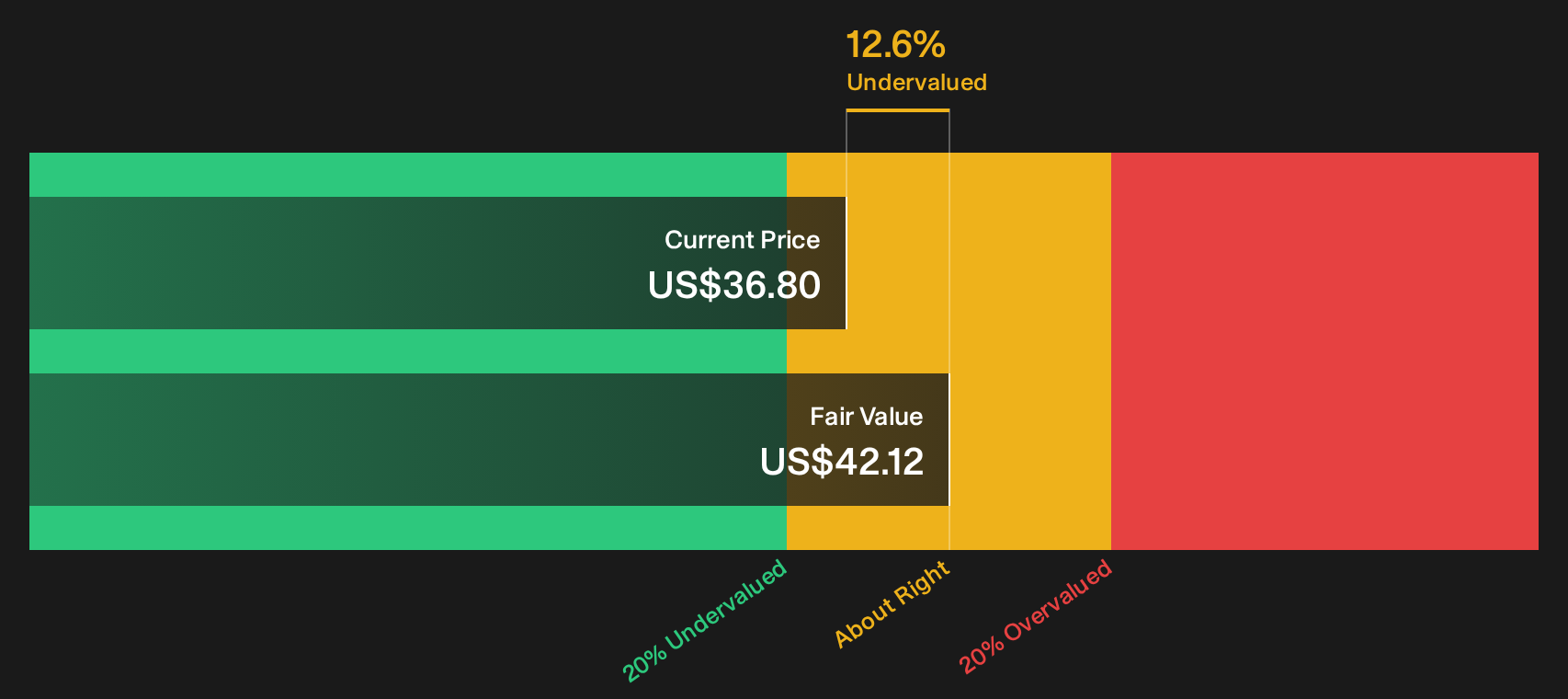
The Discounted Cash Flow (DCF) model here projects what NIKE’s future cash generation could be worth in today’s dollars. Based on the numbers given, the business produced about $2.25b of free cash flow over the latest twelve months in dollar terms, and the model assumes these cash flows keep growing rather than shrinking from that base.
On those projections, the DCF points to an estimated intrinsic value of about $42 per share. This figure is roughly 12.6% above the current market price, which suggests the shares may be undervalued relative to the model’s estimate. Nike’s removal from the S&P 100 because of its market value decline helps explain why the share price trades below this cash flow estimate, even though the model still attributes meaningful value to the underlying franchise.
On this cash flow view, NIKE stock currently appears undervalued relative to what the DCF model implies.
Our Discounted Cash Flow (DCF) analysis suggests NIKE is undervalued by 12.6%. Track this in your watchlist or portfolio, or discover 32 more high quality undervalued stocks.
Is NIKE Still Cheap on Earnings?
P/E works well for NIKE because earnings remain a core lens investors use to price large, established consumer brands.
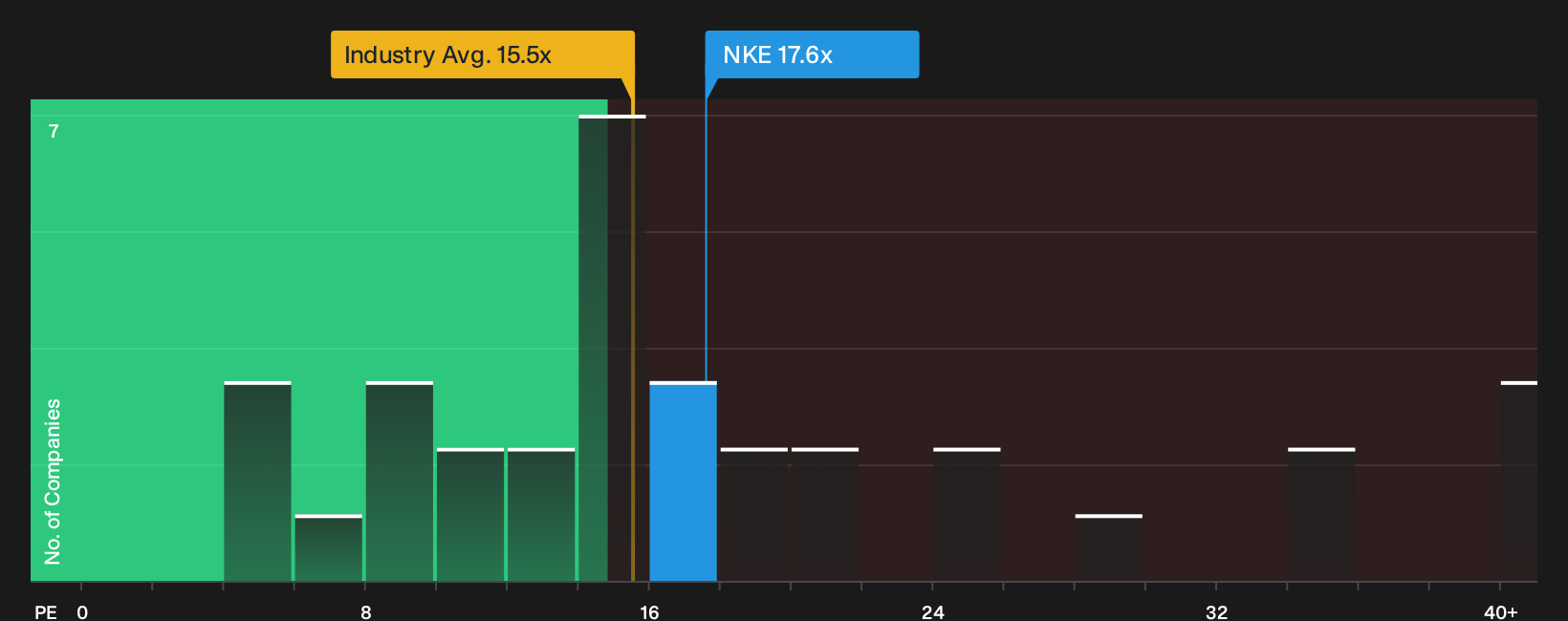
Right now NIKE trades on a P/E of about 17.6x. That sits above the broader luxury sector average of roughly 15.5x and above the peer group at about 13.3x, so on simple comparisons the shares do not look especially cheap. The valuation framework here, which blends factors like profitability, size and risk, points to a fair P/E closer to 22.5x. On this basis, the current multiple is below what that model suggests for the business.
This gap between the 17.6x market multiple and the 22.5x fair P/E indicates investors are pricing NIKE at a discount to what its earnings profile might support on this method.
On this P/E check, NIKE stock appears undervalued relative to the earnings multiple the model flags as reasonable.
See what the numbers say about this price — find out in our valuation breakdown.
The NIKE Narrative: What Would Justify Today's Price?
Simply Wall St Narratives for NIKE pick up where this valuation puzzle leaves off by spelling out which paths for NIKE's future growth, margins and earnings would justify a much higher or lower price than today based on community views on the company. Each scenario links a fair value estimate to a specific storyline about NIKE's potential catalysts and key risks so you can track over time which version of events is actually unfolding.
Community views on NIKE are split wide apart, with one camp seeing a solid franchise underpriced and another arguing the reset still has further to run.
Bull case: roughly fairly valued
"The fact that the ROIC is almost double its cost of capital is good to see…"
Read the full Bull Case to see why NIKE could be undervalued
Bear case: 55% overvalued
"The company is losing brand heat and cultural relevance, especially among Gen Z and younger consumers who are increasingly favoring challenger brands…"
Read the full Bear Case to see why NIKE could be overvalued
Do you think there's more to the story for NIKE? Head over to our Community to see what others are saying!
The Bottom Line
On the numbers, NIKE screens as undervalued on both the Discounted Cash Flow (DCF) intrinsic value estimate and the tailored P/E check, even though the broader value score framework remains cautious. That mix suggests the models see some cushion in the current price, but the cross checks are not strong enough to label it a clear bargain. The key question from here is whether NIKE can defend its brand strength and pricing power against rising competitors so that today’s discount reflects investor nerves rather than a lasting reset in earnings quality.
This article by Simply Wall St is general in nature. We provide commentary based on historical data and analyst forecasts only using an unbiased methodology and our articles are not intended to be financial advice. It does not constitute a recommendation to buy or sell any stock, and does not take account of your objectives, or your financial situation. We aim to bring you long-term focused analysis driven by fundamental data. Note that our analysis may not factor in the latest price-sensitive company announcements or qualitative material. Simply Wall St has no position in any stocks mentioned.
Have feedback on this article? Concerned about the content? Get in touch with us directly. Alternatively, email editorial-team@simplywallst.com