


Kawasaki Kisen Kaisha (TSE:9107) Stock Looks Fairly Priced Despite Cash Flow Upside
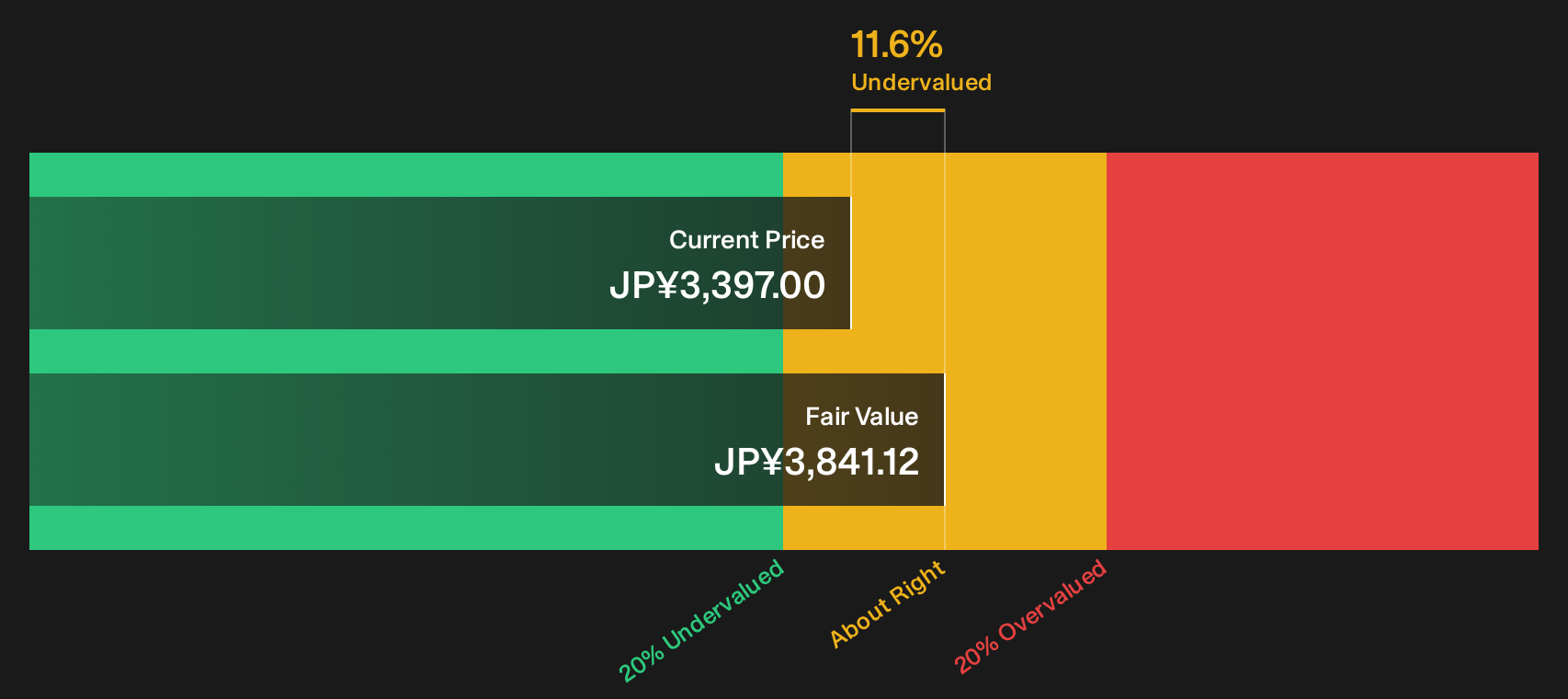
Kawasaki Kisen Kaisha has delivered a very strong run over the past few years, while the latest Discounted Cash Flow (DCF) intrinsic value estimate still points to the shares trading at an 11.6% discount to that model. At the same time, the broader valuation checks lean expensive, which means the recent gains and the DCF view are not fully aligned.
- Over five years the stock has returned roughly 4.7x an initial investment, which makes the current price level especially important for anyone thinking about fresh capital.
- Future cash flow from shipping operations can support the intrinsic value case if earnings remain resilient; however, a downturn in freight demand or pricing would put pressure on both profits and that DCF estimate.
- The broader valuation score is low at 2 out of 6, which suggests Kawasaki Kisen Kaisha does not screen as a clear bargain across the usual checks despite the DCF upside.
For investors, the debate is whether Kawasaki Kisen Kaisha's recent share price strength already reflects most of the value the intrinsic estimate points to, or whether the quoted price still leaves enough cushion for new buyers.
Compare Kawasaki Kisen Kaisha's run with other stocks that screen well on value by scanning 17 high quality undervalued stocks which currently look priced below their underlying fundamentals.
Is Kawasaki Kisen Kaisha Still Cheap on Cash Flow?
The Discounted Cash Flow (DCF) approach values Kawasaki Kisen Kaisha based on the cash it is expected to generate for shareholders over time. Over the latest twelve months, the business produced roughly ¥164.1b of free cash flow, and the model assumes this level of cash generation grows from here rather than shrinks.
Feeding those projections into the 2 Stage Free Cash Flow to Equity model gives an estimated intrinsic value of about ¥3,841 per share. With the current market price sitting below that figure, the DCF view implies roughly an 11.6% gap between what Kawasaki Kisen Kaisha’s cash flows support and where the stock currently trades.
Based on this cash flow outlook, Kawasaki Kisen Kaisha appears undervalued relative to the DCF estimate of intrinsic value.
Our Discounted Cash Flow (DCF) analysis suggests Kawasaki Kisen Kaisha is undervalued by 11.6%. Track this in your watchlist or portfolio, or discover 17 more high quality undervalued stocks.
Where Does Kawasaki Kisen Kaisha Sit on Earnings?
P/E works reasonably well for Kawasaki Kisen Kaisha because earnings remain the key yardstick most investors use when comparing shipping stocks side by side.
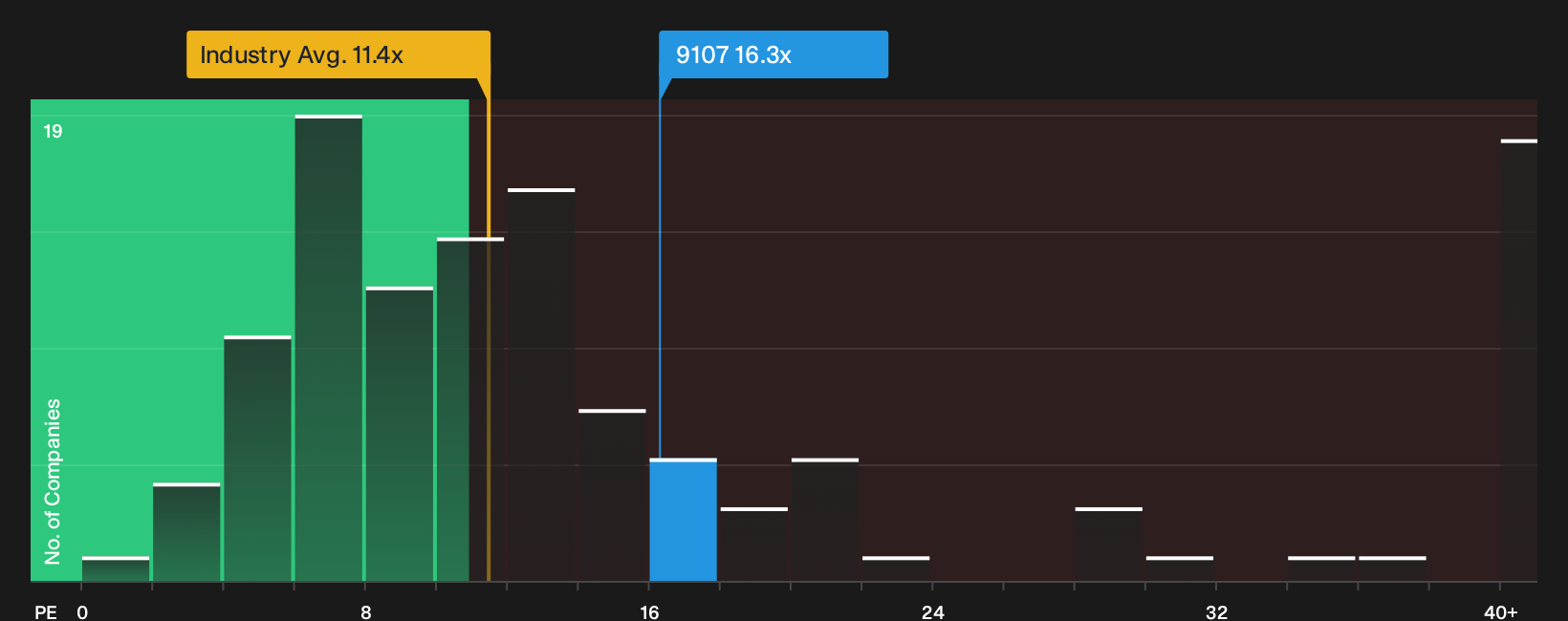
The shares change hands at about 16.3x earnings, which sits above the Shipping industry average of roughly 11.6x and also above the peer group at about 10.4x. On simple benchmarks, that looks like a premium valuation. The fair P/E ratio implied by the model is about 16.3x, which is almost identical to where the stock currently trades.
That tight gap suggests the current price roughly lines up with what the model expects for Kawasaki Kisen Kaisha once its risk profile, profitability and sector are taken into account. Investors weighing the richer P/E against cheaper peers may want to lean more heavily on their own views about the sustainability of current earnings rather than expecting an obvious bargain or bubble.
On the P/E multiple, Kawasaki Kisen Kaisha looks priced at roughly a fair level rather than clearly cheap or clearly expensive.
See what the numbers say about this price — find out in our valuation breakdown.
The Kawasaki Kisen Kaisha Narrative: What Would Justify Today's Price?
Simply Wall St Narratives pick up where the valuation tension for Kawasaki Kisen Kaisha leaves off and explain which assumptions about growth, profitability and earnings would need to hold for the stock to be worth materially more or less than today's quote on the Community page. Each Narrative treats Kawasaki Kisen Kaisha's fair value as a thesis that can be tracked over time rather than a one-off number. This allows you to see how the underlying idea holds up.
The Kawasaki Kisen Kaisha community is effectively split between a more optimistic reset story and a cautious view that recent strength already bakes in a lot of good news.
Bull case: roughly fairly valued
"Kawasaki Kisen Kaisha's strategic investments in eco-friendly LNG-fueled and low-emission ships position the company to capture rising demand from environmentally conscious customers..."
Read the full Bull Case to see why Kawasaki Kisen Kaisha could be undervalued
Bear case: 23% overvalued
"There is a sector-wide risk of overcapacity due to aggressive delivery of new vessels, particularly in the containership segment, which is already contributing to declining short-term freight rates..."
Read the full Bear Case to see why Kawasaki Kisen Kaisha could be overvalued
Do you think there's more to the story for Kawasaki Kisen Kaisha? Head over to our Community to see what others are saying!
The Bottom Line
The Discounted Cash Flow (DCF) view suggests Kawasaki Kisen Kaisha carries some intrinsic value upside, while the P/E workup points to a stock that already trades at roughly a fair multiple. That split stems from the DCF leaning heavily on cash generation from capital intensive assets, whereas the market multiple reflects stronger expectations already baked into the sector and recent price strength. With broader valuation checks screening weak despite the DCF signal, the key question is whether shipping cash flows can stay resilient enough to justify both the intrinsic value estimate and the current premium to peers, rather than this turning into a value trap.
This article by Simply Wall St is general in nature. We provide commentary based on historical data and analyst forecasts only using an unbiased methodology and our articles are not intended to be financial advice. It does not constitute a recommendation to buy or sell any stock, and does not take account of your objectives, or your financial situation. We aim to bring you long-term focused analysis driven by fundamental data. Note that our analysis may not factor in the latest price-sensitive company announcements or qualitative material. Simply Wall St has no position in any stocks mentioned.
Have feedback on this article? Concerned about the content? Get in touch with us directly. Alternatively, email editorial-team@simplywallst.com