


AGC (TSE:5201) Stock May Be 44% Undervalued On Cash Flow And Earnings
AGC stock has delivered a 21.2% gain over the past year, yet current valuation work suggests the market price may still sit below what the company’s cash flows justify. Investors looking at AGC today see both its recent share performance and an intrinsic value estimate that point to further room between price and fundamentals.
- The 21.2% return over the last 12 months signals that the market has already rewarded AGC holders, which raises the bar for any new upside case.
- Future cash generation from AGC’s core operations can support the current share price, while any slowdown in cash flow growth or heavier capital spending may weigh on that support.
- A value score of 4 out of 6 points to a mixed picture rather than a clear bargain or clear overvaluation on the broader checks.
The issue now is whether AGC’s current share price already reflects that intrinsic value estimate or whether a discount still remains for long term investors.
Compare AGC’s 21.2% one year gain and DCF implied upside with other potential opportunities by scanning 16 high quality undervalued stocks that pair cash flow support with solid fundamentals.
Is AGC Still Cheap on Cash Flow?
The Discounted Cash Flow model estimates what AGC is worth today based on the cash it can generate for shareholders over time.
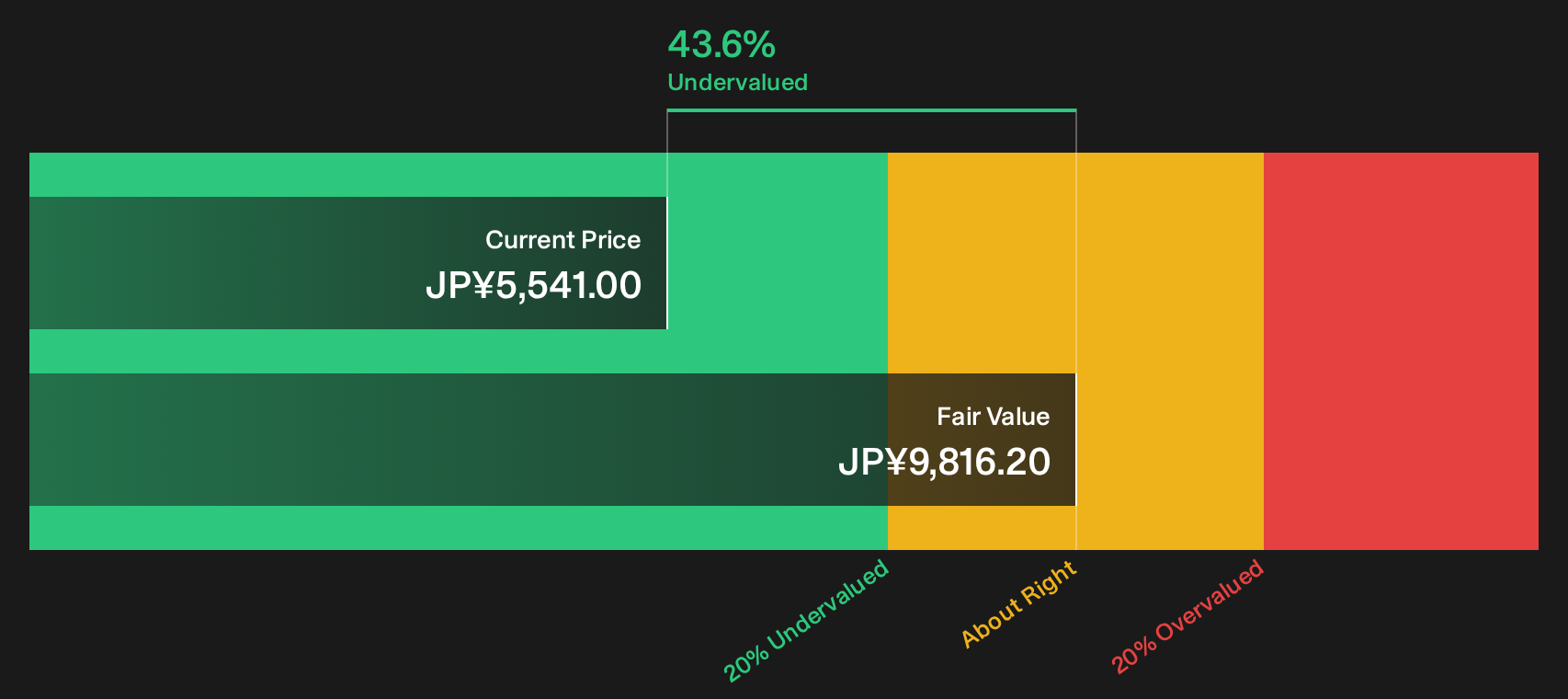
AGC produced last twelve month free cash flow of ¥32.46b, and the projection behind this DCF assumes those cash flows continue to grow rather than shrink. On that set of inputs, the model points to an intrinsic value of about ¥9,818 per share, which sits well above the current share price. That gap reflects both the size of expected future cash generation and the relatively modest P/E and P/B multiples the market is putting on the stock today.
For you as an investor, the key takeaway is the margin between what the cash flow model suggests and what the market is charging. The implied 43.6% discount means the DCF view is consistent with the idea that AGC is not fully priced on fundamentals.
On this DCF work, AGC currently screens as undervalued relative to its estimated intrinsic value.
Our Discounted Cash Flow (DCF) analysis suggests AGC is undervalued by 43.6%. Track this in your watchlist or portfolio, or discover 16 more high quality undervalued stocks.
Is AGC a Bargain on Earnings?
P/E is a reasonable fit for AGC because this business has an earnings record that provides a clear profit base to compare against the share price.
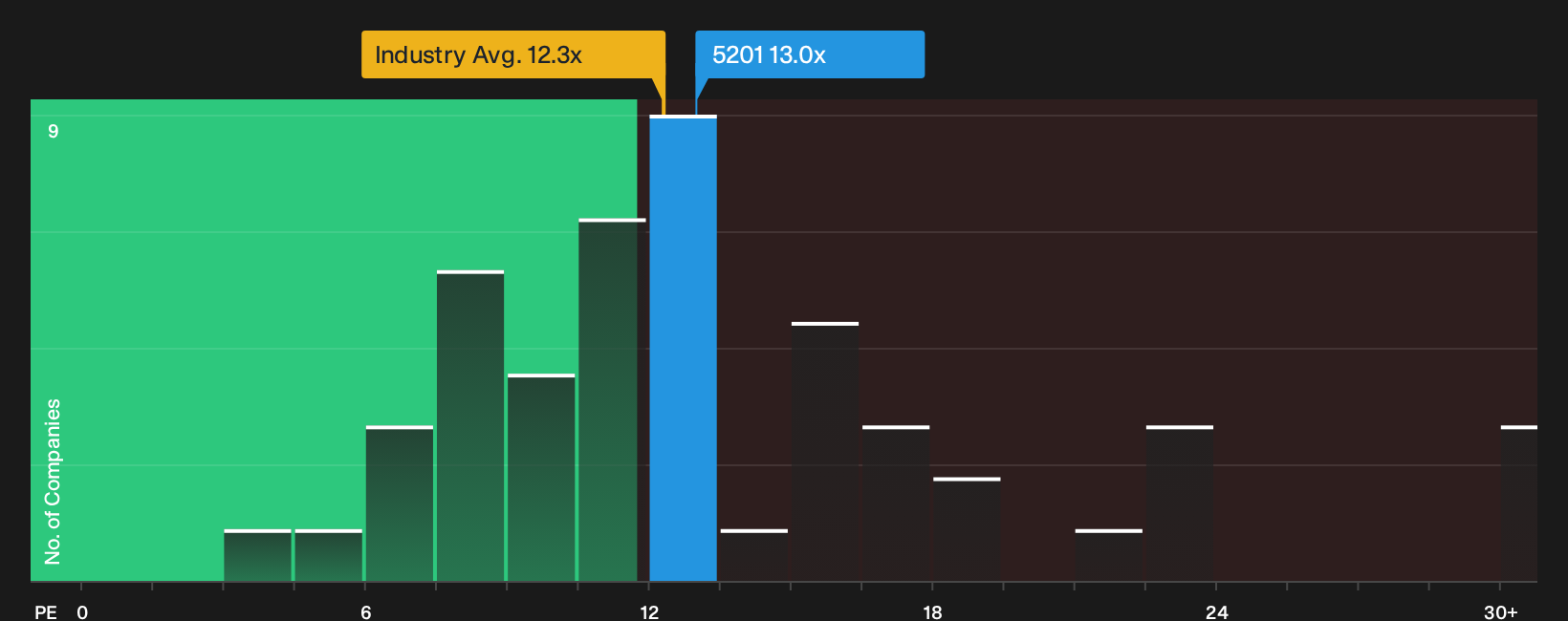
AGC trades on a P/E of about 13.0x, which sits close to the wider building industry average of roughly 12.3x. The more interesting contrast is with peers that cluster near 35.8x. On that simple snapshot, the stock changes hands at a much lower earnings multiple than many comparable companies in the sector.
The fair P/E ratio implied by the broader checks is around 19.0x, which is higher than both AGC’s current multiple and the industry mean. That spread suggests the market price does not fully reflect the earnings profile implied by those fundamentals and risk inputs.
On this earnings yardstick, AGC appears undervalued relative to the P/E level suggested by the fair value framework.
See what the numbers say about this price — find out in our valuation breakdown.
The AGC Narrative: What Would Justify Today's Price?
AGC’s valuation gap raises a simple question for you as an investor. What future path for growth, margins and earnings would need to play out for today’s market price to look conservative or stretched? Simply Wall St Narratives pick up that thread on the Community page and turn it into a set of forward looking stories about AGC, where each one treats fair value as a thesis you can track over time rather than a one off snapshot.
One of the top community narratives on AGC: 19% undervalued
"Structural reforms and the strategic exit from loss-making U.S. biopharmaceutical operations will eliminate a major drag on profits, while refocusing Life Science on high-growth, single-use bag technologies is expected to restore segment profitability and drive new growth from 2026 onward, directly benefitting net income…"
Read one of the top narratives on AGC
Do you think there's more to the story for AGC? Head over to our Community to see what others are saying!
The Bottom Line
AGC screens as undervalued on both the Discounted Cash Flow (DCF) work and the earnings multiple checks, which gives the valuation case some consistency rather than a single outlier signal. The broader scorecard still looks mixed, so the market may be keeping a lid on the share price until it gains more confidence in cash generation and capital spending needs. What really separates the bullish and cautious views now is whether AGC can turn its projected cash flows into durable free cash without requiring heavy reinvestment. If that holds, the current discount reads as opportunity, and if it does not, the gap may simply reflect justified concern.
This article by Simply Wall St is general in nature. We provide commentary based on historical data and analyst forecasts only using an unbiased methodology and our articles are not intended to be financial advice. It does not constitute a recommendation to buy or sell any stock, and does not take account of your objectives, or your financial situation. We aim to bring you long-term focused analysis driven by fundamental data. Note that our analysis may not factor in the latest price-sensitive company announcements or qualitative material. Simply Wall St has no position in any stocks mentioned.
Have feedback on this article? Concerned about the content? Get in touch with us directly. Alternatively, email editorial-team@simplywallst.com