


HSBC (LSE:HSBA) Stock Looks Cheap On Fair Value But Pricey On Earnings
HSBC Holdings has delivered a very large 5 year gain for shareholders, yet its current valuation picture is split, with the Excess Returns intrinsic value estimate pointing to upside while market based multiples lean the other way.
- Over the past 5 years, HSBC Holdings has returned about 4.6x. This puts recent debate firmly on whether the current share price already embeds very optimistic expectations.
- Recent leadership changes, including CFO Pam Kaur planning to step down while remaining as an adviser, can support the ongoing strategic projects investors are watching. At the same time, intensified action on Covid era loan defaulters may add legal and credit related uncertainty to how earnings quality is assessed.
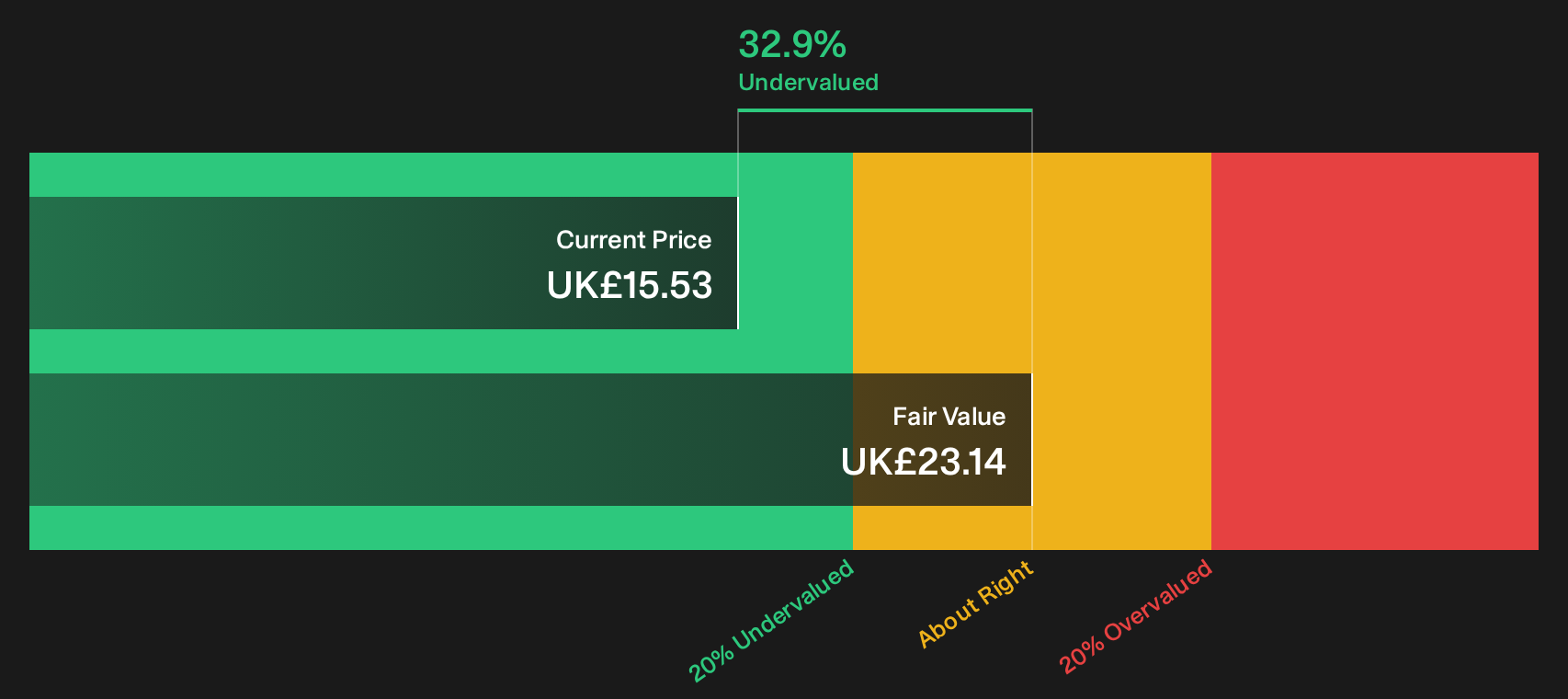
- The stock screens as undervalued on the Excess Returns intrinsic value estimate by about 33%. However, the low value score of 2 out of 6 suggests HSBC Holdings is not a clear bargain on the broader checks.
The issue now is whether HSBC Holdings shares deserve to trade closer to the intrinsic value estimate or whether the current market pricing already reflects a full view of the bank's prospects.
Compare HSBC Holdings' sharp 5 year run with other potential breakouts by scanning our hand picked list of 9 high quality undervalued stocks that also score well on quality checks.
Is HSBC Holdings Still Cheap on Excess Returns?
The Excess Returns model values HSBC Holdings by comparing what it earns on shareholder capital with the return investors require. On this view, the bank is expected to generate stable earnings of about £1.93 per share on a Book Value base of £10.08, with an average Return on Equity of 16.31%. After covering an estimated equity cost of £0.99 per share, that leaves an Excess Return of £0.93, which compounds on a projected Stable Book Value of £11.82.
Feeding these inputs into the Excess Returns framework produces an estimated intrinsic value of about £23.10 per share. That sits above the current share price, implying the stock screens as undervalued by roughly 32.8%. The planned departure of CFO Pam Kaur, even with her advisory role continuing, helps explain why some investors may still apply a caution discount despite the model indicating a higher value.
On balance, the Excess Returns approach suggests HSBC Holdings currently appears undervalued relative to what its projected profitability on equity implies.
Our Excess Returns analysis suggests HSBC Holdings is undervalued by 32.8%. Track this in your watchlist or portfolio, or discover 9 more high quality undervalued stocks.
Does HSBC Holdings Look Pricey on Earnings?
P/E is usually the cleanest quick check for a large bank like HSBC Holdings, because earnings per share and credit costs are what shareholders watch most closely.
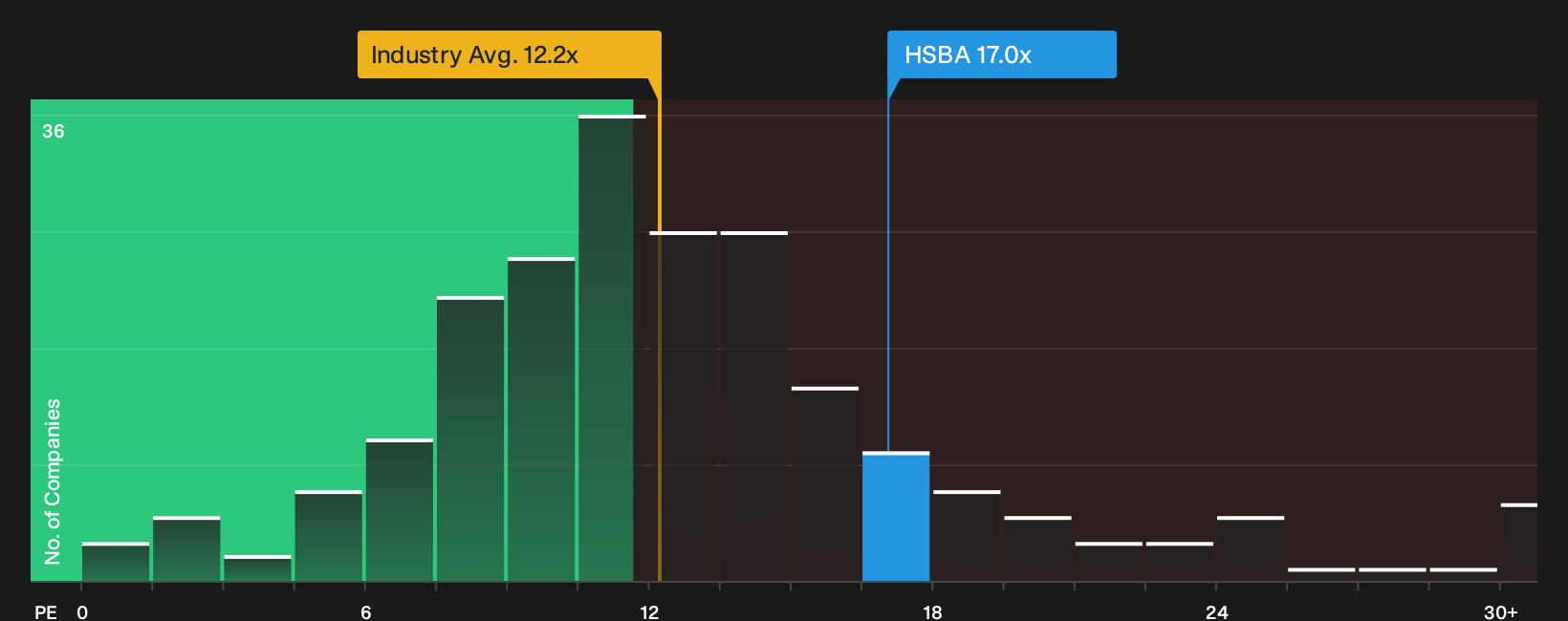
On this measure, HSBC trades on a P/E of about 17.1x. That compares with an industry average of roughly 11.5x for banks and a peer group around 11.6x. A tailored fair P/E ratio for HSBC of about 11.2x suggests the equity changes hands at a premium to what its sector, size and risk profile would typically justify. The gap between the current multiple and this fair ratio is wide enough that the stock screens as richer than both direct competitors and the broader banking industry.
On the P/E yardstick alone, HSBC Holdings currently appears more expensive relative to both its banking peers and its modelled fair earnings multiple.
See what the numbers say about this price — find out in our valuation breakdown.
The HSBC Holdings Narrative: What Would Justify Today's Price?
Simply Wall St Narratives for HSBC Holdings pick up where this valuation split leaves off and explain which growth, margin and earnings paths would need to play out for the shares to be worth meaningfully more or less than today. Each Narrative links a specific potential value to a clear storyline about HSBC Holdings' possible catalysts and risks, so you can track over time which version of events is taking shape on the Community page.
Community views on HSBC Holdings are far apart, with one group leaning into the Wealth and Asia story while another worries about concentration risk and execution costs.
Bull case: 16% undervalued
"Rapid expansion of Wealth and new customer flows in Asia, including US$29b of net new invested assets with more than half from Asia and over 900,000 new to bank customers year to date, shows HSBC is plugged into long term growth in cross border capital and rising affluent wealth…"
Read the full Bull Case to see why HSBC Holdings could be undervalued
Bear case: 6% overvalued
"Continued exposure and strategic reliance on growth from Asia, particularly Hong Kong and mainland China, leaves HSBC vulnerable to region specific macroeconomic slowdowns, heightened regulatory crackdowns, or geopolitical tensions, potentially dampening top line revenue growth and eroding net margins…"
Read the full Bear Case to see why HSBC Holdings could be overvalued
Do you think there's more to the story for HSBC Holdings? Head over to our Community to see what others are saying!
The Bottom Line
HSBC Holdings looks pulled in two directions. The Excess Returns intrinsic value estimate points to meaningful upside, while the current P/E suggests the shares trade on the rich side compared with banking peers. That split reflects a model that likes the profitability on equity and a market that is already paying up for earnings and headline growth expectations after a very strong 5 year move. The key judgment from here is whether the current discount to intrinsic value compensates you enough for execution and legal risks, or whether the premium multiple and low broader valuation score signal a possible value trap.
This article by Simply Wall St is general in nature. We provide commentary based on historical data and analyst forecasts only using an unbiased methodology and our articles are not intended to be financial advice. It does not constitute a recommendation to buy or sell any stock, and does not take account of your objectives, or your financial situation. We aim to bring you long-term focused analysis driven by fundamental data. Note that our analysis may not factor in the latest price-sensitive company announcements or qualitative material. Simply Wall St has no position in any stocks mentioned.
Have feedback on this article? Concerned about the content? Get in touch with us directly. Alternatively, email editorial-team@simplywallst.com