


Baker Hughes (BKR) Stock Looks Discounted On Cash Flow After A 177% Run
Baker Hughes stock has delivered a strong 176.7% gain over the past 5 years, yet current valuation checks still suggest the shares may trade below a conservative view of intrinsic value. The Discounted Cash Flow (DCF) estimate points to the stock pricing in a meaningful discount, and the broader multiples-based read also leans cheap rather than fully reflecting that performance.
- Over 5 years, Baker Hughes has returned 176.7%, which puts long term holders in a solid position even after recent pullbacks.
- Agentic AI projects like the Leucipa platform and the new offshore stimulation contract with bp can support expectations for future cash generation, while any slowdown in digital adoption or weaker project activity would pose a risk to that cash flow story.
- On Simply Wall St’s checks, Baker Hughes screens as undervalued in 6 of 6 valuation tests, which points to a broad read that the current price underestimates the business.
The issue now is whether that apparent discount in Baker Hughes is wide enough to compensate you for the operational and industry risks that come with the stock.
Scan 31 high quality undervalued stocks that, like Baker Hughes, pair solid multi year returns with valuations that still suggest the market is pricing in a meaningful discount.
Is Baker Hughes Still Cheap on Cash Flow?
The Discounted Cash Flow (DCF) approach here focuses on the cash Baker Hughes can generate for shareholders over time. On the latest twelve month numbers, the business produced about $3.1b of free cash flow, and the model assumes those cash flows keep growing rather than shrinking.
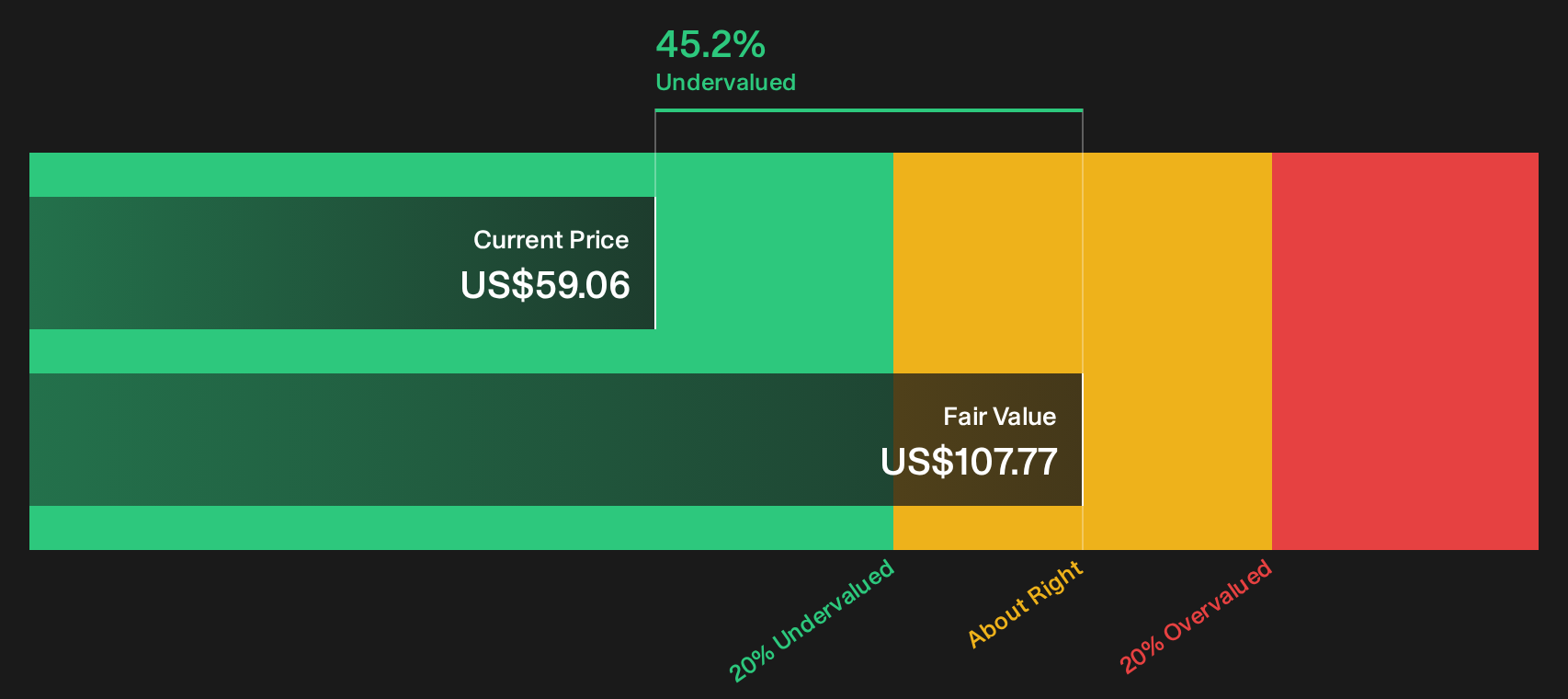
On those inputs, the DCF points to an estimated intrinsic value of about $108 per share. That implies the current market price sits well below what the cash generation profile would support, leaving the stock looking undervalued. The recent contract to deliver offshore stimulation services for bp helps explain why some investors view the cash flow outlook as more resilient than the share price suggests.
On this Discounted Cash Flow view, Baker Hughes stock appears undervalued relative to the cash it is expected to produce.
Our Discounted Cash Flow (DCF) analysis suggests Baker Hughes is undervalued by 45.2%. Track this in your watchlist or portfolio, or discover 31 more high quality undervalued stocks.
Is Baker Hughes a Bargain on Earnings?
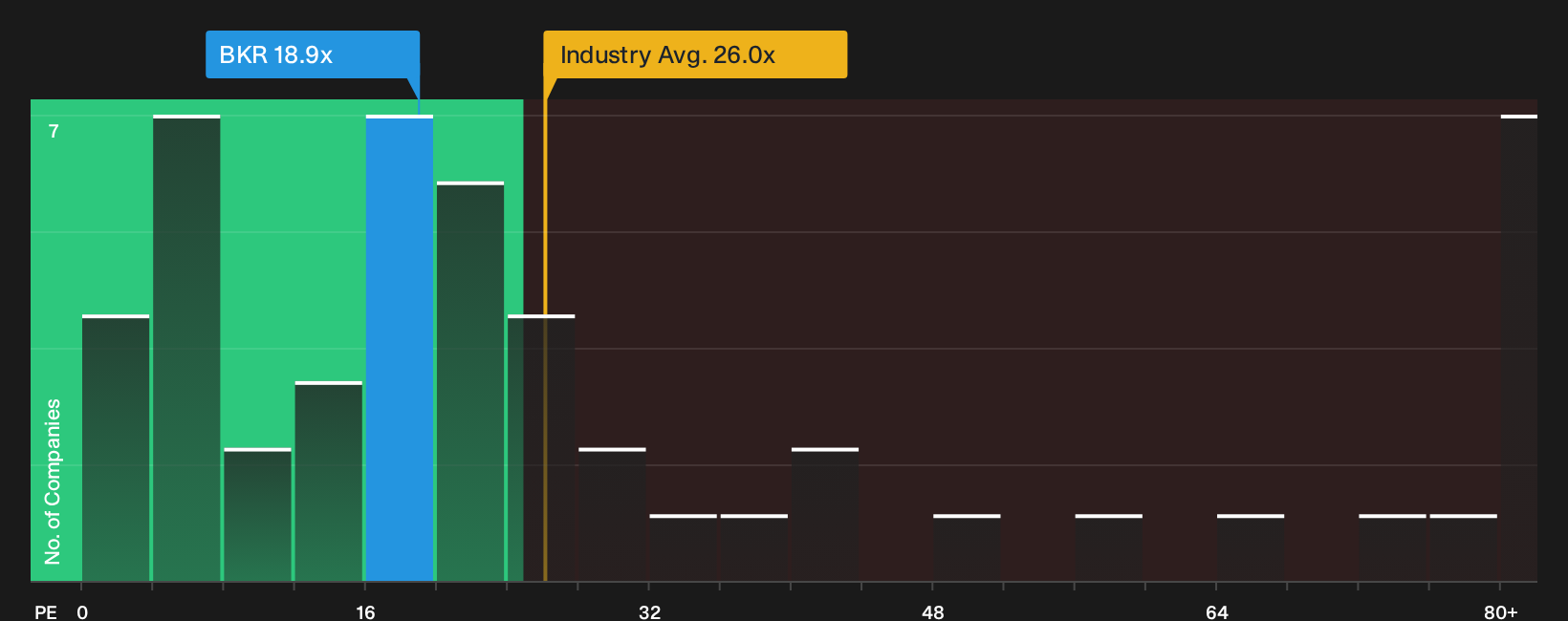
The P/E ratio suits Baker Hughes because earnings already reflect both its energy equipment footprint and its higher margin digital and AI driven services. The stock trades on a P/E of about 18.9x, which is below the Energy Services industry average of 26.0x and well under the peer group reading of 37.5x. For a large scale service provider with a mix of hardware, software and AI platforms, that is a relatively modest earnings tag.
Simply Wall St’s fair P/E ratio for Baker Hughes is 21.5x. Compared with the current 18.9x earnings multiple, that suggests a valuation that prices the company below what its growth profile, profitability, size and risk mix would usually imply.
On the P/E yardstick, Baker Hughes stock appears undervalued compared with both its tailored fair multiple and the wider Energy Services group.
See what the numbers say about this price — find out in our valuation breakdown.
The Baker Hughes Narrative: What Would Justify Today's Price?
Simply Wall St Narratives for Baker Hughes pick up where the valuation work stops and focus on the specific futures that could justify very different share prices. Narratives translate the DCF and P/E outputs into clear paths for Baker Hughes' growth, margins and earnings, so you see which mix of assumptions would need to play out. Where a single ratio or model gives you one figure, these stories spell out the future that figure relies on so you can watch whether reality keeps matching it.
Community views on Baker Hughes split sharply, with one group focusing on the multi year order book and another fixating on execution risk around that same backlog.
Bull case: 31% undervalued
"Record IET orders of US$4.9b in the quarter, a 25% rise in IET orders over the last 4 quarters to US$16.6b and an RPO of US$33.1b support multi year revenue visibility and give a foundation for earnings resilience as this backlog converts..."
Read the full Bull Case to see why Baker Hughes could be undervalued
Bear case: roughly fairly valued
"Heavy concentration of current growth on LNG and gas infrastructure projects, such as large QatarEnergy contracts and the San Matias Pipeline, leaves future revenue exposed if project approvals, maintenance schedules or export flows slow..."
Read the full Bear Case to see why Baker Hughes could be overvalued
Do you think there's more to the story for Baker Hughes? Head over to our Community to see what others are saying!
The Bottom Line
Baker Hughes screens as undervalued on both Discounted Cash Flow (DCF) and earnings multiples, so the valuation work is broadly pointing in the same direction rather than sending mixed messages. That discount only helps if the firm converts its order book, digital platforms and AI tools into reliable cash generation without slipping on execution or project risk. The real hinge now is whether the market keeps treating that gap as a warning about LNG and gas exposure, or eventually re-prices the stock if cash flows and earnings stay aligned with current expectations.
This article by Simply Wall St is general in nature. We provide commentary based on historical data and analyst forecasts only using an unbiased methodology and our articles are not intended to be financial advice. It does not constitute a recommendation to buy or sell any stock, and does not take account of your objectives, or your financial situation. We aim to bring you long-term focused analysis driven by fundamental data. Note that our analysis may not factor in the latest price-sensitive company announcements or qualitative material. Simply Wall St has no position in any stocks mentioned.
Have feedback on this article? Concerned about the content? Get in touch with us directly. Alternatively, email editorial-team@simplywallst.com