


How Honda Software Tie Up At Nissan Motor (TSE:7201) Has Changed Its Investment Story
- In August 2026, Honda announced that Nissan Motor and Honda had signed a joint development agreement to standardize core ECUs, in-vehicle operating systems, middleware and vehicle control software for next-generation software defined vehicles planned for use from fiscal 2029.
- The deal focuses on shared electronic and software architecture, which could influence Nissan Motor's R&D spending profile, product timing and scale efficiencies across upcoming electric and software heavy models.
- Now we will look at how this shared ECU and software platform plan might reshape Nissan Motor's broader investment narrative.
Scan how Nissan Motor’s software push compares with other electrification and automation plays by reviewing our curated list of 37 robotics and automation stocks aligned with the same long-term auto tech transition.
Nissan Motor Investment Narrative Recap
Nissan Motor still appeals most to shareholders who buy into a long game in electric and software defined vehicles while accepting a messy repair job in China, cash flow and brand. The Honda software platform deal supports that thesis on paper by targeting faster development cycles and shared costs. It does not fix the near term pressure points by itself. The biggest swing factor over the next couple of years remains whether restructuring, plant consolidation and product refreshes can stop the earnings bleed while heavy investment and weak liquidity stay front of mind.
The alliance narrative with Renault and Mitsubishi is the clearest operational backdrop for this Honda agreement. Investors tracking catalysts already look at shared platforms and purchasing scale as key levers for Nissan Motor to control spending and protect margins while it is still loss making. Honda now sits in that broader network on the software side. The practical question is execution. Nissan needs these collaborations to translate into simpler architectures, lower engineering duplication and quicker model cycles without adding complexity or distracting from the turnaround work already under way.
That said, anyone treating this emerging software story as straightforward growth still has to reckon with ...
Read the full Nissan Motor narrative to see the case behind these numbers.
Nissan Motor's current loss of ¥413.6 billion and the analyst consensus for earnings of ¥198.9 billion by 2029 imply an earnings swing of about ¥612.5 billion, based on expected 3.0% yearly revenue growth and projected 2029 revenue of ¥13,417.8 billion.
Nissan Motor's forecasts put fair value at ¥397 against a ¥307 share price, a 29% upside to its current price that could narrow quickly.
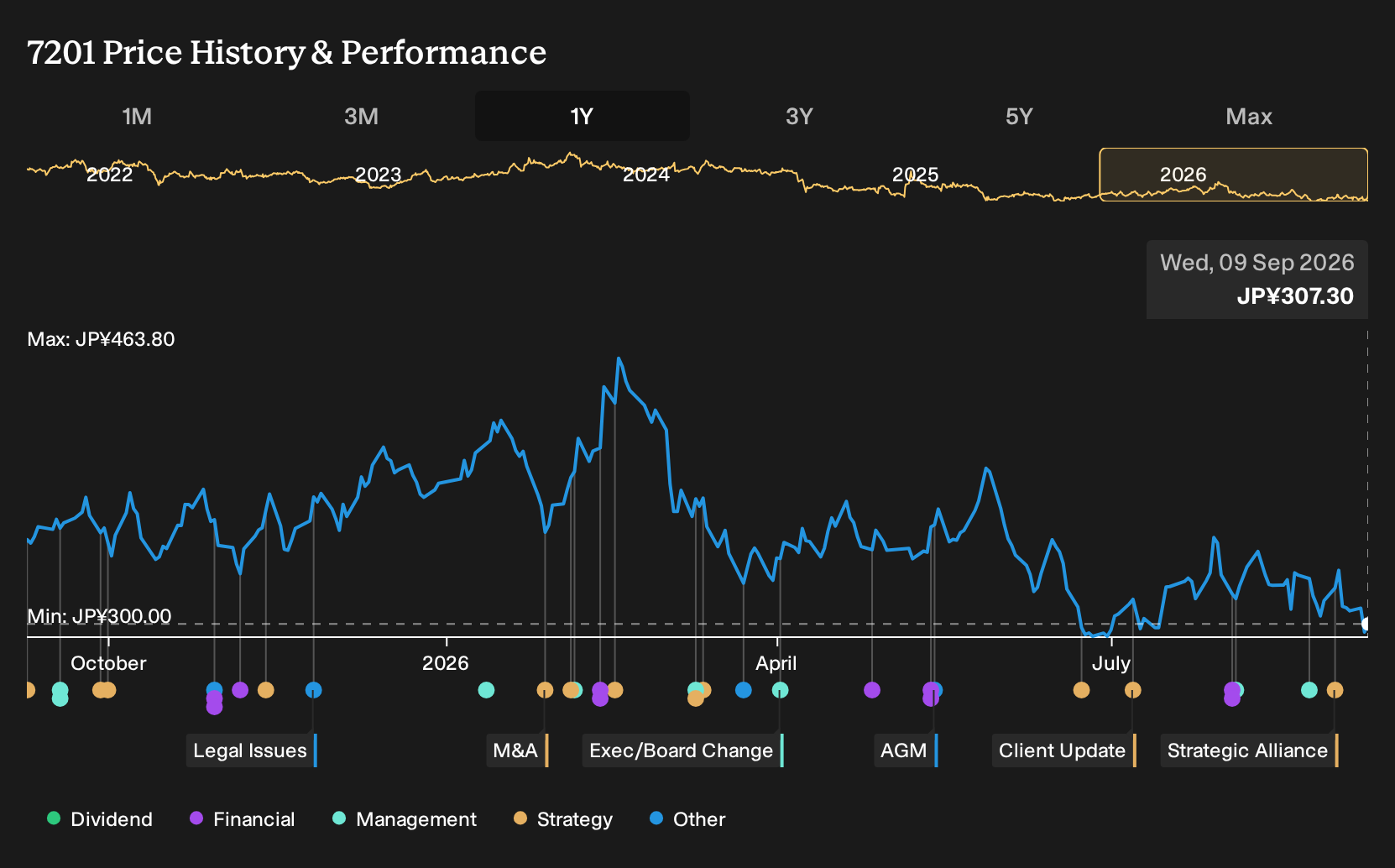
Exploring Other Perspectives
Some of the most optimistic analysts already leaned into software as the big swing factor for Nissan Motor. Before this Honda news, they were projecting revenue of about ¥14,101.7b and earnings of roughly ¥300.6b by 2029. You can treat this ECU partnership as a fresh data point and compare it with more cautious views.
If you want a broader view of market sentiment toward Nissan Motor, compare the current fair value assessment with 4 other fair value estimates for Nissan Motor.
Form Your Own Verdict
Disagree with existing narratives? Extraordinary investment returns rarely come from following the herd, so go with your instincts.
- A great starting point for your Nissan Motor research is our analysis highlighting 3 key rewards and 2 important warning signs that could impact your investment decision.
- See our latest analysis for Nissan Motor. The report includes a comprehensive fundamental analysis summarized in a single visual, the Snowflake, making it easy to evaluate Nissan Motor's overall financial health at a glance.
Looking For More Investment Ideas Beyond Nissan Motor?
If the Nissan Motor story has you thinking about how to balance risk, income and quality across your portfolio, it can help to scan a wider field of opportunities using the Simply Wall St Screener.
- For investors who want growth potential without ignoring balance sheet strength, review our 74 high quality undiscovered gems that pair solid fundamentals with under-the-radar stories.
- If capital preservation sits high on your priority list, filter for companies on our 47 resilient stocks with low risk scores and see which businesses align with a steadier risk profile.
- For a focus on financial resilience, check out the list of solid balance sheet and fundamentals (19 results) to find firms with balance sheets that can better support long term plans.
This article by Simply Wall St is general in nature. We provide commentary based on historical data and analyst forecasts only using an unbiased methodology and our articles are not intended to be financial advice. It does not constitute a recommendation to buy or sell any stock, and does not take account of your objectives, or your financial situation. We aim to bring you long-term focused analysis driven by fundamental data. Note that our analysis may not factor in the latest price-sensitive company announcements or qualitative material. Simply Wall St has no position in any stocks mentioned.
Have feedback on this article? Concerned about the content? Get in touch with us directly. Alternatively, email editorial-team@simplywallst.com