


Komo is optimistic that the yen will strengthen or ease the pressure on Japanese debt, and Japan's AI and semiconductor sectors are expected to recover early
The Zhitong Finance App learned that the recent strong rebound in the yen is drawing global investors' attention to the chain reaction in the financial market. The J.P. Morgan Japan Securities Strategy Team believes that a stronger yen is expected to ease the upward pressure on Japanese government bond yields, thereby boosting the early recovery of artificial intelligence (AI) and semiconductor stocks listed in Tokyo.
J.P. Morgan strategists, including Rie Nishihara, said real estate stocks that have underperformed recently may also benefit from this. However, the appreciation of the yen will have a negative impact on profits in some industries, such as transportation, logistics, and the automobile industry.
J.P. Morgan's optimistic judgment on Tokyo AI and semiconductor stocks is in stark contrast to Saxo Bank's views on global stock markets. Saxo strategist Charu Chanana warned that the rapid rise of yen against the US dollar could trigger the liquidation of some crowded and highly leveraged positions in global stock markets. Highly valued software stocks, AI-related semiconductor stocks, and interest rate sensitive stocks such as real estate investment trusts (REITs) all face potential risks. She explained, “For many years, investors have been borrowing yen at a very low cost and then investing their capital in high-yield currencies and risky assets. Funds facing losses or rising margin requirements may first sell their most liquid and profitable positions, regardless of whether the fundamentals of these companies change.”
Over the past week, the yen experienced its most rapid appreciation since 2022. The yen broke through the 155 key support level from above 160 against the US dollar and hit 152.89 in the intraday session on Tuesday, a seven-month high since mid-February.
The exchange rate of the yen against the US dollar broke through the 155 mark
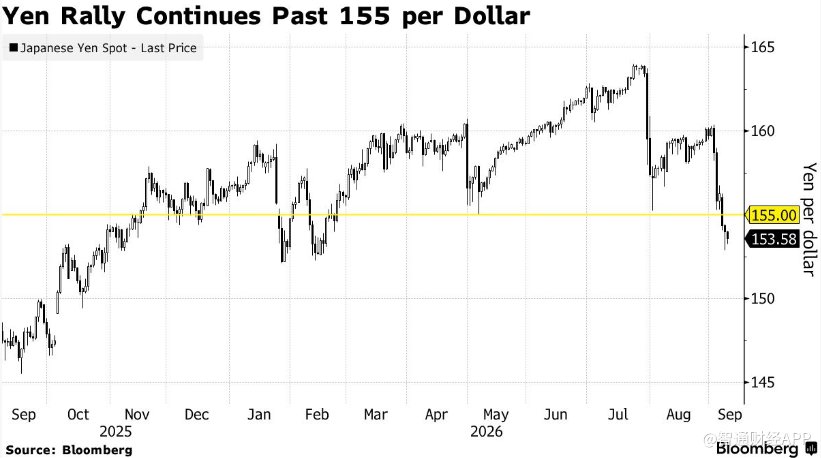
The yen continued its gains against the dollar on Wednesday, partly due to the latest tough shouting from US Treasury Secretary Scott Bessent. Bezent publicly “wrote down” to foreign exchange traders, saying bluntly that he was actively promoting the appreciation of the yen, and claimed that “I am a bookmaker now,” stressing that he has an information asymmetry advantage, and warned yen bears not to gamble with him.
According to reports, Bezent said on Tuesday, “I have the advantage of information asymmetry.” He also said, “I'm a bookmaker now, so I have quite a deep understanding of what actions the Japanese, the Bank of Japan, and Japanese policy makers will take when we interfere with the yen.”
At the market level, long and short games have intensified dramatically. Hedge funds are aggressively lengthening the yen, betting that the exchange rate will rise above the 150 mark by the end of the year. Some targets are even pointing directly at 140; however, Japanese retail investors are bucking the trend and increasing their short positions, and the differences between institutions and retail investors are becoming more and more obvious.
The core driving force behind this round of sharp rise in yen is the market's reassessment of the Bank of Japan's interest rate hike path. The overnight index swap (OIS) market shows that traders have fully absorbed the expectations of a 25 basis point rate hike on September 18.