


IPO Preview | Tangji Healthcare: What is the first-mover advantage of the card position's 111% growth track endoscopic weight loss circuit “China's first”?
Recently, news that Hangzhou Tangji Medical Technology Co., Ltd. (hereinafter referred to as Tangji Medical) submitted a listing application to the Hong Kong Stock Exchange on the main board attracted attention in the capital market. When the global weight loss market was looking for a better solution in the dispute between GLP-1 weight loss drugs and traditional surgical gastric incisions, Sugar Ji Medical proved that the third path of “minimally invasive and reversible” is a proven commercial reality with clinical coverage of 490 hospitals, the practical accumulation of more than 5,200 surgeries, and a gross profit margin of over 84%.
Track Breakdown: “China's First” Endoscopic Weight Loss and Metabolism
According to public information, Tangji Medical was founded in 2016 and focuses on the development and commercialization of intestinal interventional medical devices in the field of obesity and metabolic diseases. As of the last practical date, the company has built a well-structured product matrix: on the one hand, the core product Gastric Flow Stent System (GBS) has been commercialized. This product is a digestive endoscopic duodenal-jejunal bypass cannula (DJBL) device suitable for obesity. Currently, the company is actively promoting the expansion of GBS indications among people with lower BMI to expand the coverage of potential patients; on the other hand, two marketed products and a digital health management platform have been approved and registered, and an auxiliary product ecosystem centered on the diagnosis and treatment of metabolic diseases; in addition, 13 Model under development pipeline It is in various clinical stages, covering indications such as metabolism-related steatohepatitis and type 2 diabetes, providing a potential valuation anchor for the company's medium- to long-term growth.
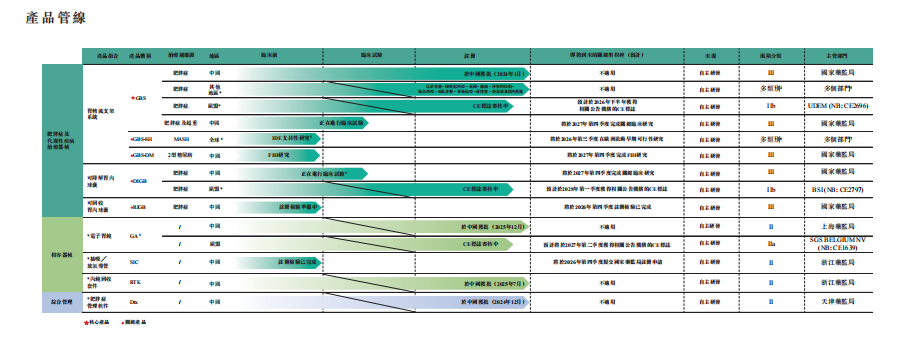
After years of research and development, GBS was approved for listing by the State Drug Administration in January 2024, following the green channel for innovative medical devices, becoming the first three-class innovative medical device approved for digestive endoscopic treatment of obesity in China. GBS is not only the first domestic, but also the world's first commercially approved intestinal stent for obesity.
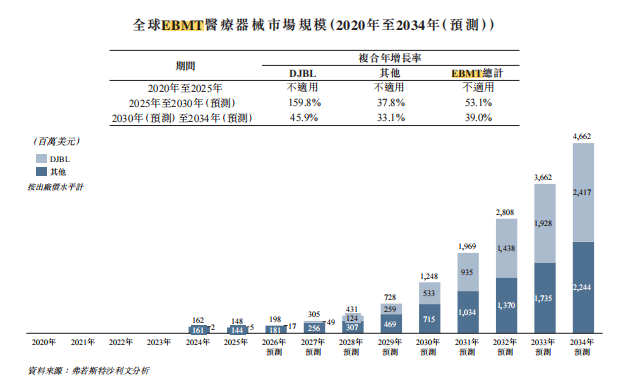
Product-side advantages need to be matched with sufficient market space to transform into real commercial value. Judging from a racetrack perspective, the Sugoshi Medical Card slot is an incremental market that is rapidly exploding. According to Frost & Sullivan data, the global market size of endoscopic weight loss and metabolism (EBMT) devices is expected to grow from US$148 million in 2025 to US$1,248 billion in 2030, with a compound annual growth rate of 53.1%; China's EBMT device market is expected to grow from 32 million yuan in 2025 to 1,352 billion yuan in 2030, with a compound annual growth rate of 111.1%. What supports this rapid growth is the huge patient base of obese patients in China, which reached 233.7 million in 2025 and is expected to rise to 329.8 million in 2034 — the double resonance of market expansion and demand release, which forms the fundamentals of the breakdown of the Tangji medical circuit.
The market space is vast, but the competitive landscape is also worth examining. Currently, China's EBMT market is showing a pattern of “one power, more research, international wait-and-see” — Tangji Medical is the only company with three types of commercialized devices in this segment, and is in an absolute leading position. This means that the company will still enjoy the “no man's land dividend” of segmented tracks within the next 2-3 years, and has pricing power and a first-mover advantage in market entry.
It is worth noting that the company is actively promoting the GBS-Low BMI project, expanding the indications from BMI ≥30 kg/m² to people with BMI ≥25 kg/m² with complications. If approved successfully, the number of patients will expand from current obese people to people who are overweight with metabolic abnormalities, and the market size will increase by orders of magnitude. At the same time, GBS has been approved in 11 countries and regions, including Hong Kong, Indonesia, Thailand, Saudi Arabia, and Brazil, and EU CE certification is also being actively promoted. This two-wheel drive strategy of “in-depth expansion of the domestic market+more flowering of overseas markets” has opened up multi-dimensional space for GBS's long-term growth.
Accelerating commercialization: the growth logic behind 5,200 surgeries
From approval for marketing to commercialization, GBS's market introduction pace shows a typical penetration curve for innovative medical devices — the initial hospital admission accumulation period was long, and once the critical point was crossed, the number of surgeries showed a nonlinear jump.
The number of GBS implantation surgeries was 239 in 2024, and jumped to 2066 in 2025, an increase of more than 8 times over the previous year; in the first half of 2026, the number of cases reached 1955, a year-on-year growth rate of 139.3%. As of the last practical date, the total number of cases exceeded 5,200, covering 490 hospitals across the country. The commercial network has moved from the extensive deployment stage of “horse racing field” to the deep penetration stage of “intensive cultivation” — the next growth engine will come more from increasing output from a single hospital than from expanding the number of hospitals, which places higher demands on academic promotion capabilities and continuous education for doctors. Corresponding to this, the company has completed operation training for more than 650 doctors, laying the talent base for the continuous rise in the number of surgeries in a single hospital.
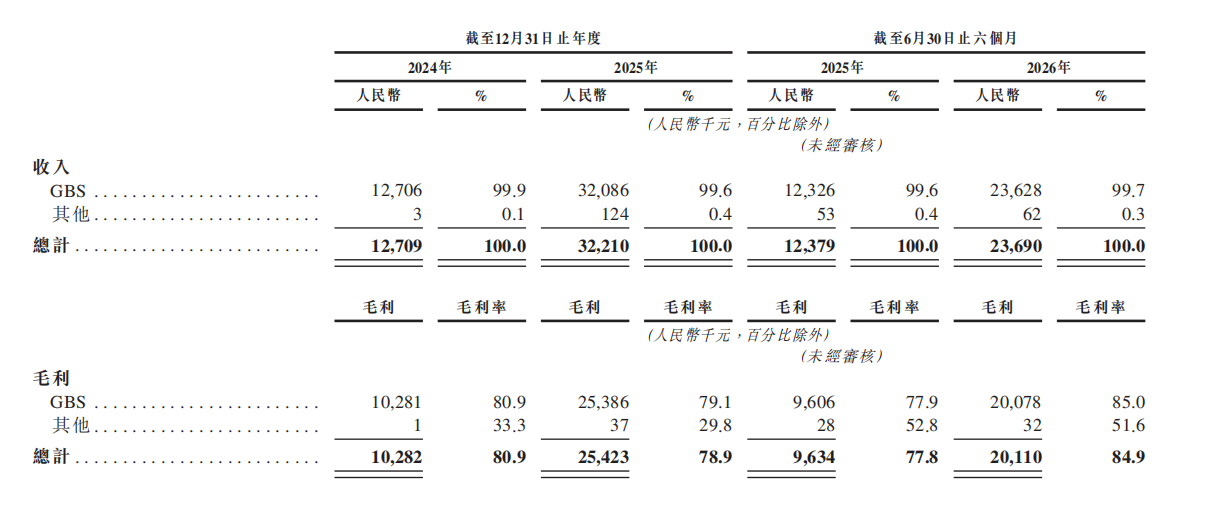
The jump in the number of surgeries directly translates into an increase in the scale of revenue. Revenue for the full year of 2024 was 12.709 million yuan; in 2025, it increased to 32.21 million yuan, a year-on-year increase of 153.5%; revenue for the first half of 2026 was 23.69 million yuan, an increase of 91.4% year-on-year. Judging from the channel structure, distribution accounted for 99.7% in the first half of 2026, showing significant distribution dominant characteristics.
The efficiency of the channel structure is ultimately reflected in profitability. The overall gross profit margin for the first half of 2026 was 84.9%, and the gross margin of GBS single products reached 85%. This high level of gross profit is based on three pillars: differentiated clinical value of the world's first, a blue ocean pattern with no similar competitors, and entry barriers brought about by the Green Channel for Innovative Medical Devices.
In summary, GBS's commercialization curve has verified the market demand and clinical acceptance of the product. High gross margin and rapid growth form the fundamental support for short-term valuations. However, the real test point of commercialization efficiency lies in the continuous increase in output from a single hospital, a trend downward trend in cost rates, and whether the 13 pipelines can break out of the second growth curve — all three are indispensable, which together form the core logic of the company moving from “one product to the world” to a sustainable profit platform.
Pipeline depth: from a single product to a metabolic disease treatment platform
According to the prospectus, Tangji Medical is relying on the GBS technology platform to accelerate the transformation into a platform-based enterprise by constructing 13 research pipelines.
In terms of expanding indications, the company is promoting three major directions: GBS-Low BMI is targeting obesity with metabolic abnormalities. The key clinical trials are expected to be completed by the end of 2027, which is expected to expand the market size by an order of magnitude; GBS-SH has been certified as a breakthrough device by the FDA for metabolism-related steatohepatitis (MASH), and plans to launch an international multi-center registration test by the end of 2027, which is expected to open up the blue ocean market; GBS-DM targets obesity combined with type 2 diabetes and is expected to complete the first human (FIH) clinical trial in the second half of 2027.
In addition to the GBS platform, the company has deployed a degradable intragastric balloon (DIGB). The product is automatically discharged after 3-4 months, eliminating endoscopic removal operations, and complements GBS to broaden the coverage of the endoscopic weight loss market. Its key clinical trials in China are expected to be completed in 2027, and the European CE mark application was submitted in February 2026.
In addition, the company is simultaneously building assistive devices and digital platforms, and has been approved for electronic gastroscopy, endoscopy recycling kits and China's first digital health platform (DTX) for obesity management, aiming to create a full-cycle management ecosystem of “device+digital health+clinical nutrition”. In terms of global layout, GBS has been approved in 12 countries and regions including China, Indonesia, Saudi Arabia, and Brazil, and EU CE certification is expected to be completed in the second half of 2026.
In summary, GBS, the core product of Tangji Medical, has used 5,200 surgeries and a gross margin of 84.9% to prove the clinical acceptance and commercial monetization capacity of the product; 13 pipelines outline the long-term story of the transition from a “single product” to a “metabolic disease treatment platform.” Whether Sugar Ji Medical can complete the transformation from first-mover advantage to systemic barriers before competitors enter the market will be a key yardstick for the final pricing given by the capital market.