


Intel Stock Draws Fresh Attention After Trump Post And High NA EUV Progress
- Intel and ASML reported that High NA EUV is already in high volume use at Intel Foundry on select Intel 18A layers, while Intel’s Xeon 6 and OpenVINO partnership with Kasm is enabling GPU free, on premises AI workspaces for regulated enterprises.
- The combination of hardware attestation work through the TRACE specification and local AI inference on Xeon 6 highlights Intel’s push to tie advanced manufacturing, trusted compute, and enterprise AI workloads into a single, more cohesive offering.
- With High NA EUV already in production, this Intel news sets up a fresh look at how manufacturing execution shapes the broader investment narrative.
Scan beyond Intel and spot other chipmakers and AI infrastructure players that fit this thesis with the curated 55 AI infrastructure stocks.
Intel Investment Narrative Recap
To own Intel, you need to believe the company can turn its foundry bet and AI focus into durable earnings while cleaning up a complex organization. The short term hinge remains execution on advanced manufacturing, including High NA EUV at Intel 18A, without letting OpEx and CapEx stretch the balance sheet too far. Recent High NA milestones look helpful for confidence in the roadmap. The biggest near term risk still sits in slow AI workload adoption on Intel platforms and any slip in utilization of new fabs that leaves fixed costs heavy while the business is still loss making.
The most relevant recent update here is Intel Foundry’s work with ASML on High NA EUV in high volume output for Intel 18A and select Panther Lake layers. This sits right on top of the near term catalyst you care about: whether Intel can show manufacturing reliability that attracts and keeps external foundry clients while using existing assets efficiently. Evidence that overlay, throughput and availability meet internal expectations helps that story. It does not remove the risk that capacity ramps ahead of firm third party demand or that organizational friction slows product cycles.
Even so, there is a practical constraint that could matter a lot for Intel’s AI and foundry story if ...
Read the full Intel narrative to see the case behind these numbers.
Intel's current analyst narrative points to US$92.4b in revenue and US$21.7b in earnings by 2029, built on an assumed 17.4% yearly expansion in revenue and a swing in earnings of roughly US$33b from a loss of US$11.3b today to that US$21.7b forecast level.
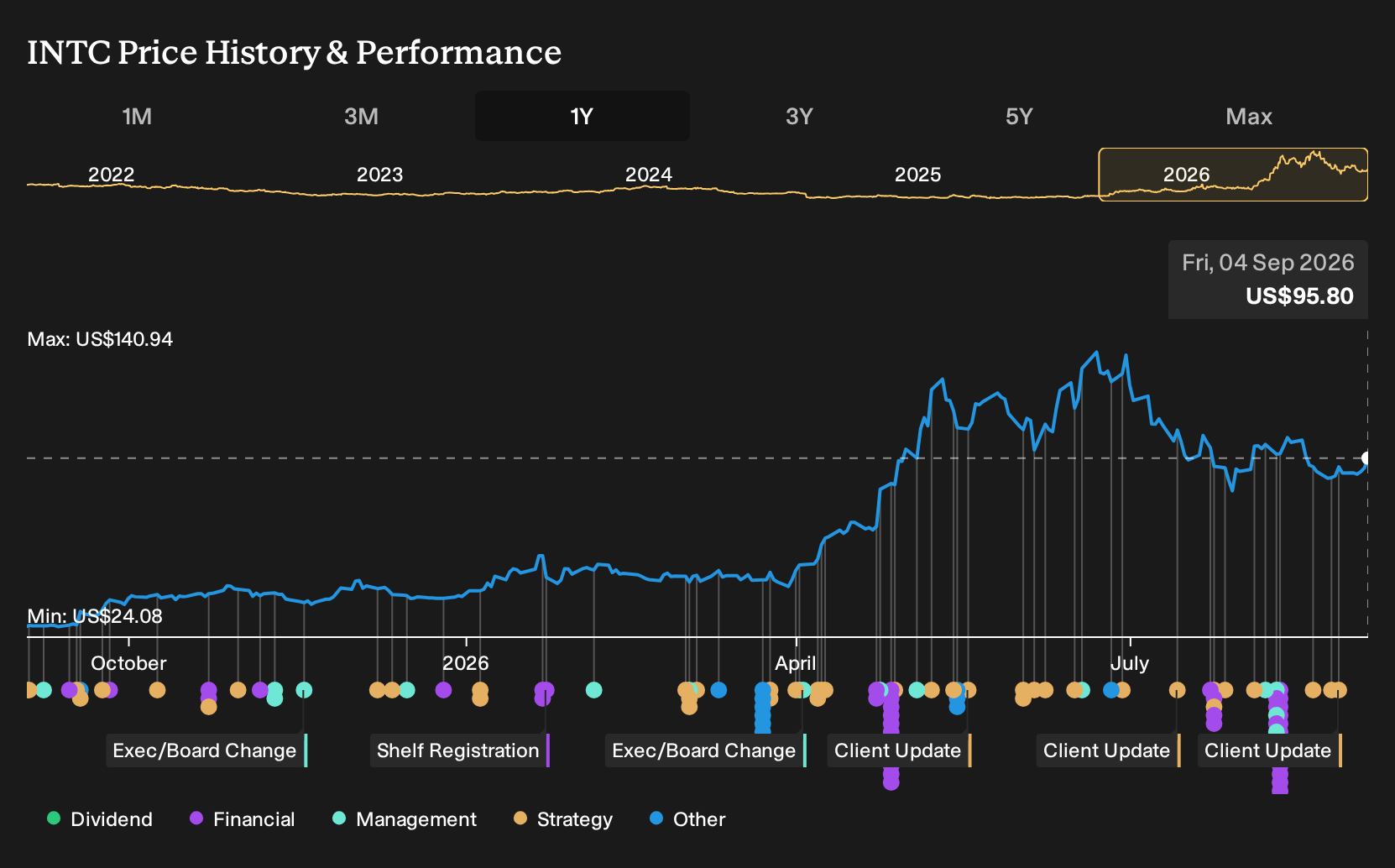
Intel's forecasts frame fair value at $115.65 versus $95.80, a 21% upside to its current price that may not last much longer.
Exploring Other Perspectives
One alternate view leans hard on execution risk. Those analysts worry that even with Intel’s High NA EUV progress, organizational friction and reliance on older nodes keep AI foundry wins slower than hoped. Their pre news forecasts sat closer to US$75.8b revenue and US$6.9b earnings for 2029, which is a reminder that sentiment ranges widely and could shift again as this story evolves.
To see how your view on Intel lines up with the crowd, check the 16 other fair value estimates for Intel and compare where others mark fair value.
Decide For Yourself
Don't just follow the ticker. Dig into the data and build a conviction that's truly your own.
- A great starting point for your Intel research is our analysis highlighting 1 key reward and 1 important warning sign that could impact your investment decision.
- See our latest analysis for Intel. The report includes a comprehensive fundamental analysis summarized in a single visual, the Snowflake, making it easy to evaluate Intel's overall financial health at a glance.
Looking For More Investment Ideas Beyond Intel?
Once you have a handle on Intel, it often pays to widen the lens and see which other businesses line up with the same kind of balance between quality, risk, and price.
- If resilience matters most to you, start with a curated list of companies that score well on stability by checking the 83 resilient stocks with low risk scores.
- For investors hunting for mispriced quality, broaden your watchlist with the 49 high quality undervalued stocks, which screens for stronger fundamentals at lower valuations.
- If steady finances are non negotiable, focus on businesses with cleaner debt profiles and healthier cash positions through the list of solid balance sheet and fundamentals (24 results).
This article by Simply Wall St is general in nature. We provide commentary based on historical data and analyst forecasts only using an unbiased methodology and our articles are not intended to be financial advice. It does not constitute a recommendation to buy or sell any stock, and does not take account of your objectives, or your financial situation. We aim to bring you long-term focused analysis driven by fundamental data. Note that our analysis may not factor in the latest price-sensitive company announcements or qualitative material. Simply Wall St has no position in any stocks mentioned.
Have feedback on this article? Concerned about the content? Get in touch with us directly. Alternatively, email editorial-team@simplywallst.com