


The “Assisted Reproduction Code” behind the Greater Bay Area: Jinxin Reproduction (01951) preempts the card and how to nurture the first “10,000 cycle” superleader
In recent years, as cities are increasingly connected and the flow of talent, capital and medical resources has accelerated, reproductive health needs scattered across different cities are gradually gathering in the Guangdong-Hong Kong-Macao Greater Bay Area, a large linked regional market with a population of over 88 million and a total economy of over 15 trillion yuan.
The Zhitong Finance App learned that within the Guangdong-Hong Kong-Macao Greater Bay Area, Guangdong Province had the highest birth rate in the country for eight consecutive years. Since 2018, more than 10% of the country's newborns have come from Guangdong Province every year. In 2025, the number of newborns in Guangdong will account for about 13% of the country's total, providing unique demographic momentum for the Greater Bay Area.
What is behind the high birth rate is the strong momentum brought about by the structure and continued influx of young people in Guangdong. According to the data, Guangdong currently accounts for nearly 70% of the working-age population. The continuous influx of young people has injected long-lasting fertility momentum into the Greater Bay Area, and has also provided sufficient space for the increase in the penetration rate of assisted reproduction in the Greater Bay Area.
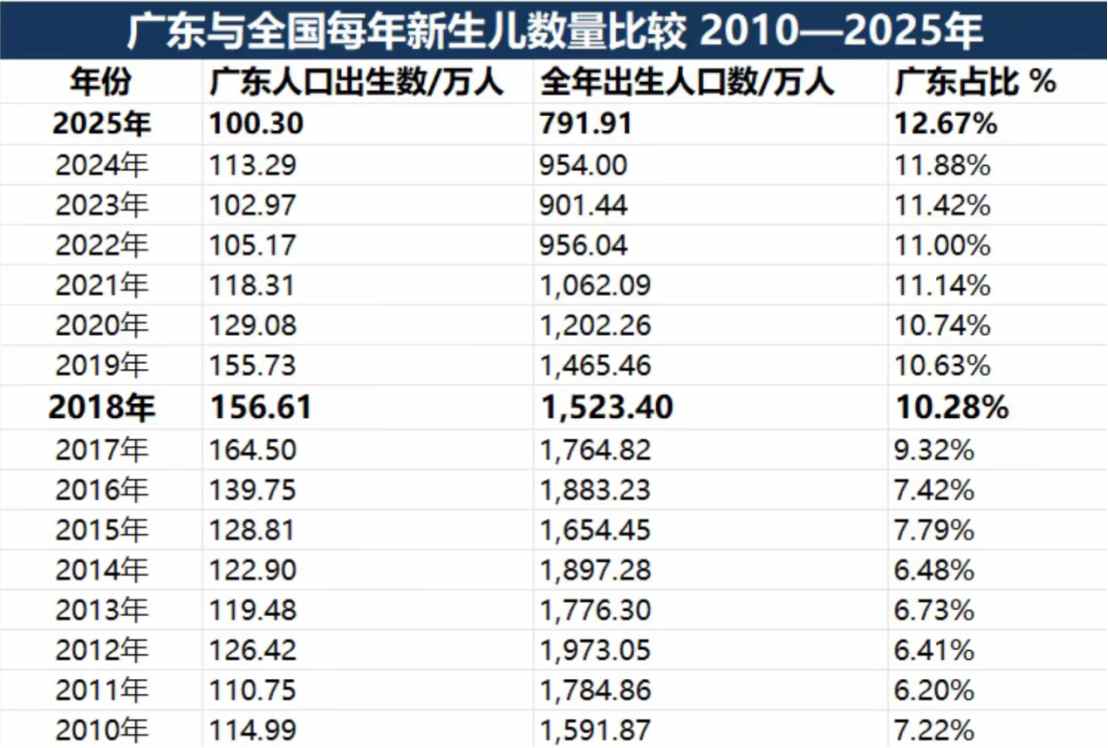
However, the Greater Bay Area is one of the most important high-density fertility supply areas in the country, and the concentration of assisted reproductive services within it is still low. According to the data, there are more than 60 reproductive centers in Guangdong Province alone in the Greater Bay Area, and there are about 110,000 assisted reproduction treatment cycles per year. However, until now, there have been no Greater Bay Area super fertility centers with the ability to continue to grow, with an annual treatment cycle exceeding 10,000, and there is an obvious gap in the market that needs to be filled urgently.
In this context, Jinxin Reproduction (01951), the largest assisted reproduction medical institution in China, has built its southern headquarters in Shenzhen through the “one hospital, two centers” layout with Shenzhen Zhongshan Obstetrics and Gynecology Hospital, Hong Kong Thanksgiving Medical Center, and Jinxin Medical Science and Technology Innovation Center. It is expected to further integrate the superior services and scientific research resources of the Greater Bay Area, and introduce leading technical, academic and management resources in Southeast Asia, Europe and the US to build a super assisted reproduction medical hub for the Greater Bay Area, covering Southeast Asia and the international markets.
The largest population with potential for assisted reproduction in the country and lacks a benchmark reproductive center
The “2026 White Paper on the Development Status and Future Trends of China's Assisted Reproduction Industry” shows that in 2020-2030, driven by an increase in the proportion of infertility in the elderly and an increase in treatment penetration, China's assisted reproduction market is in the phase of releasing demand, and the market size is growing against the population cycle, and is expected to grow from 23.5 billion yuan to 63 billion yuan.
Driven by improved macroeconomic conditions, delayed demand release, and expanded health insurance coverage, 2026-2027 is expected to be a key inflection point in China's assisted reproduction industry's transition from an adjustment period to a recovery period. Along with the concentrated release of industry demand, the number of domestic egg retrieval cycles is also growing at the same time: it surpassed 1 million in 2025, and is expected to reach 1.885 million in 2035, with a compound annual growth rate of over 7%.
As mentioned above, the reason why the Greater Bay Area has become one of the most important high-density supply areas for population growth in the country is mainly due to the strong momentum brought about by the structure and continuous influx of young people in Guangdong.
Within Guangdong Province, Shenzhen, where Jinxin Fertility's southern headquarters is located, is an important fulcrum for population mobility and fertility. According to data, at the end of 2024, the resident population of Shenzhen was about 17.99 million, with an average age of 32.5, accounting for nearly 80% of the population aged 15-59. Among them, young people aged 14 to 35 accounted for almost half of the country, making it a veritable “city of youth”; the per capita disposable income of residents reached 81,100 yuan. A young population structure, strong ability to pay, and continuously improved payment guarantees form the foundation for the development of reproductive health services.
Payment policy is the second key variable in the Greater Bay Area.
Take Shenzhen as an example. According to the Shenzhen Health Insurance Administration, starting from October 1, 2024, eight assisted reproduction programs, including egg retrieval, embryo transfer, and single sperm injection, will be included in basic medical insurance payments. They will be implemented according to a category of special treatment. There is no threshold, and they can be reimbursed at up to 90%. Within one year of implementation of the policy, more than 37,000 families in Shenzhen have received support, and health insurance funds have paid more than 241 million yuan. Lowering the payment threshold is allowing more potential demand to enter standardized diagnosis and treatment earlier. This means that not only is there “intensive demand” within the Greater Bay Area, but “regional acceptance centers with payment support” are being formed.
Furthermore, the Greater Bay Area is also a natural host for cross-border patients.
Cross-border assisted reproduction services in the Greater Bay Area have three major advantages: short physical distance, low language and cultural communication costs, and the time cost of traveling between Guangdong, Hong Kong and Macao is significantly lower than overseas cross-border medical treatment; high internal supply density in the Greater Bay Area, and regional head centers have the advantages of complex case management, subject capacity and process efficiency; Guangdong, Hong Kong and Macao move quickly and efficiently in health insurance policies, medical management, laboratory expansion and service chain design, and are particularly suitable for high-frequency follow-up patients.
Against the backdrop of changes in population structure, improvements in fertility support policies, and continuous progress in assisted reproduction technology, the assisted reproduction industry in China is still in a long-term stage of development. In this process, the Guangdong-Hong Kong-Macao Greater Bay Area is expected to become an important template for establishing a childbirth-friendly society and a bridgehead for assisted reproduction development in China, relying on demand density, payment policies, and cross-border acceptance capabilities.
Multiple factors, such as the leading health insurance environment in the country, drive the “reproductive friendliness” of the Greater Bay Area
The country is vigorously building a “childbirth-friendly” society. It is very important to reduce the burden of patients seeking medical treatment, create a good social care environment, and the scientific concept of friendly and healthy assisted reproduction. All of these, the Greater Bay Area is at the forefront of the country, and has also brought good development soil for assisted reproduction medical institutions.
In terms of reducing the burden of medical treatment for patients, Guangdong Health Insurance is doing its best to support assisted reproduction throughout the country. (Supplemental Health Insurance Support Policy).
At this year's European Reproduction Conference, a set of data showed that if patients reduce their out-of-pocket costs by 50%, the ART (assisted reproduction) live birth rate will increase 2.67 times, directly proving that health insurance payment policies determine the level of assisted reproduction penetration in a country to a certain extent.
In terms of a friendly environment for childbearing and the concept of patient reproduction, Guangdong Province is located in an economically developed region and is more likely to accept the application of new medical technology and new treatment methods.
With a good external environment, Jinxin Fertility is also rapidly iterating in terms of technology. According to Dr. Diao Lianghui, director of the Reproductive Medicine Clinical Research Center at Shenzhen Zhongshan Obstetrics and Gynecology Hospital, Shenzhen Zhongshan Obstetrics and Gynecology Hospital has a history of 40 years. The first reproductive medicine center in Shenzhen was established in 1997, and the first IVF in Shenzhen was born. It has a significant first-mover advantage and deep clinical experience. As the source of reproductive medicine technology in the Greater Bay Area, Shenzhen Zhongshan Obstetrics and Gynecology Hospital has always used “Zhongshan Medical Gene” as the base color to build a “professional talent team+leading global laboratory+innovative research platform” three-dimensional driving system.
Diao Lianghui said, “The hospital's innovative advantage lies in a 'closed loop transformation system for medical research driven by clinical issues' — setting questions with clinical problems, supported by scientific research platforms, and implemented through technological transformation. At present, the hospital has built a multi-level scientific research platform covering research institutes, provincial and municipal key laboratories and clinical research centers, forming a mature technological transformation path in key areas such as reproductive immunity, embryonic development, and male infertility.”
He explained that the hospital pioneered the country's first digital evaluation system for endometrial immune cells, and has completed the analysis of more than 10,000 clinical samples, providing strong support for accurate diagnosis and treatment of difficult conditions such as recurrent miscarriages. At the same time, the male AI microfluidic sperm screening technology has also entered the clinical trial stage, and the IVD certificate application process is being promoted simultaneously.
Zhitong Finance App learned that in 1986, at the invitation of the Shenzhen Special Administrative Region Government, a team of medical experts led by Professor Mei Hua from the First Affiliated Hospital of Sun Yat-sen Medical University established Sun Yat-sen Medical University Shenzhen Medical Center in Shenzhen, then changed its name to Sun Yat-sen Medical University Shenzhen Urology Hospital; in the same year, Professor Zhuang Guanglun of Zhongshan Medical University, founded the first IVF center in Shenzhen at the hospital. In 2004, the name was changed to Shenzhen Zhongshan Urology Hospital. The hospital gradually developed into a specialist hospital featuring assisted reproduction. It officially changed its name to Shenzhen Zhongshan Obstetrics and Gynecology Hospital in 2023. It has ranked first in terms of reproduction scale in Shenzhen for many years, with a total of nearly 50,000 IVF births.
Meanwhile, in order to continuously strengthen its scientific research and clinical medical capabilities, Shenzhen Zhongshan Obstetrics and Gynecology Hospital continues to introduce “high-precision” medical personnel. For example, after the operation of the new campus of Shenzhen Zhongshan Obstetrics and Gynecology Hospital, many well-known industry experts and doctor resources were introduced, such as “Famous Doctor from Lingnan”, Li Baoxing, who was the deputy director of the Institute of Urology at Shenzhen University, and famous reproductive doctor Tian Fuying continued to join. In terms of high-end talent reserves, Shenzhen Zhongshan Obstetrics and Gynecology Hospital now has 8 full-time PIs and more than 20 core researchers, and is carrying out interdisciplinary joint research with universities at home and abroad.
With the continuous development of assisted reproductive technology, clinical diagnosis and treatment are evolving in the direction of precision and individualization. In this context, if we want to fully establish a super assisted reproduction medical hub in the Greater Bay Area, support from Jinxin Fertility is also essential.
According to the Zhitong Finance App, in recent years, Jinxin Fertility has continued to promote technological innovation in key areas such as data-driven decision-making technology, oocyte maturation and fertility preservation technology, male reproductive testing technology, embryo evaluation and genetic screening technology, and clinical diagnosis and treatment plans.
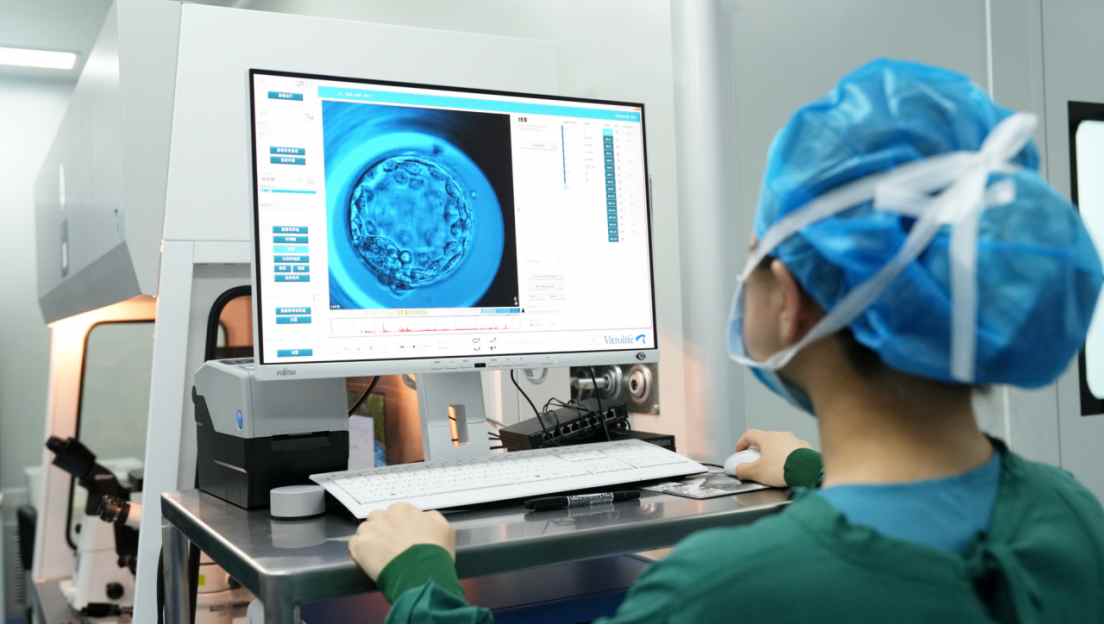
Furthermore, through the application of cutting-edge technology such as CAPA-IVM technology, AI embryo evaluation, non-invasive embryo chromosome screening, and innovative clinical diagnosis and treatment plans such as the 3F IVF friendly program, Jinxin Fertility has maintained a stable and leading success rate of assisted reproduction at various centers, and has developed a relatively complete technical advantage in laboratory management and clinical diagnosis and treatment systems.
Diao Lianghui said, “In recent years, Jinxin Fertility and Shenzhen Zhongshan Obstetrics and Gynecology Hospital have carried out innovative resource sharing and in-depth technical cooperation in multiple dimensions, such as infrastructure and platform upgrades, introduction of expert resources, and GCP base linkage and AI network construction.”
Build an assisted reproduction service hub and build a service and technology moat
In recent years, as market demand continues to grow and capital attention increases, the assisted reproduction industry has entered a new round of development dividends.
As far as Jinxin Fertility is concerned, with multi-dimensional promotion of clinical technology, service capabilities and international layout, the company has formed a relatively complete competitive advantage system in the Greater Bay Area, establishing its market position as a leading agency in the assisted reproduction industry in China. Since the establishment of the Southern Headquarters, relying on a cross-regional operation network and large-scale business foundation, Jinxin and Shenzhen Zhongshan Obstetrics and Gynecology Hospital are speeding up construction into a super assisted reproduction medical hub for the Greater Bay Area, Southeast Asia, and international markets.
In recent years, the development trend of the domestic assisted reproduction industry is shifting from “scarce licenses” to “large-scale operation”. In response, Huang Chunyu, director of Shenzhen Zhongshan Obstetrics and Gynecology Hospital, said in an exclusive interview with the Zhitong Finance App: “Currently, the most scarce thing in the industry is not a license, but a large-scale assisted reproduction center with large-scale and integrated operation capabilities.”
And if we want to become a super assisted reproductive health hub in the Greater Bay Area, brand effect and breadth of services are indispensable. Huang Chunyu said, “In order to meet current industry trends, Shenzhen Zhongshan Obstetrics and Gynecology Hospital has clarified a differentiated competitive strategy: the hospital will work to break down license barriers, focus on technical depth and breadth of services, and completely open up the four-dimensional integrated strategic path of 'deepening technology, broadening the region, lengthening the cycle, and strengthening operation'.”
However, the official operation of the new hospital area this year is seen as a core opportunity for the development of Shenzhen Zhongshan Obstetrics and Gynecology Hospital in the next five years and a key fulcrum for achieving the strategic path.
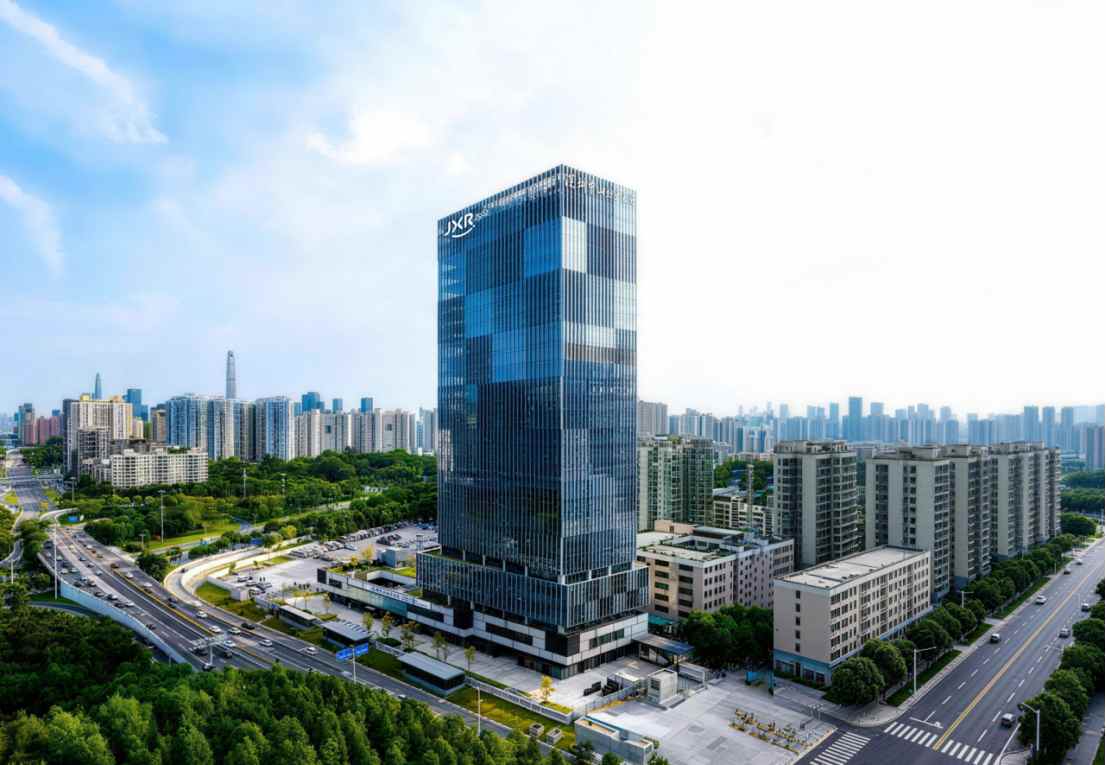
According to the Zhitong Finance App, the useful area of the new hospital has been expanded by 4 times compared to the old site. It is currently the largest private obstetrics and gynecology specialist hospital in the Guangdong-Hong Kong-Macao Greater Bay Area, with assisted reproductive medicine as its core business. Compared to general hospitals, it can focus 100% on the field of obstetrics and gynecology and reproduction, and the allocation of resources is more concentrated.
Huang Chunyu explained that with the hardware space upgrade, the new campus of Shenzhen Zhongshan Obstetrics and Gynecology Hospital uses “one-stop service and integrated medical treatment” as the core concept, restructured and deeply integrated the six core departments of reproductive medicine, urology, gynecology, obstetrics and reproductive immunology, and traditional Chinese medicine, and relied on a digital platform to gradually build a full-cycle customer service system covering consultation, treatment and follow-up management.
In addition, the new hospital has greatly optimized the flow of medical treatment through an AI digital support system for mothers and children, a personalized management system for patients, and integrated IVF pregnancy and delivery management, and established a closed loop of full-life cycle services covering “pregnancy preparation, one pregnancy, one delivery, and one post-delivery”, solving the pain points where the old hospital cannot meet high-end needs, continuously improving patients' medical treatment efficiency and treatment experience, and forming a differentiated advantage in large-scale operation and patient service capabilities, greatly expanding the hospital's service breadth.
Recently, Jinxin Fertility announced the results for the six months ended June 30, 2026. During the reporting period, the company achieved revenue of 1,373 billion yuan, an increase of 6.6% over the previous year; adjusted EBITDA was 340 million yuan, an increase of 49.8% over the previous year.
It is worth mentioning that on the business side, since the company's Shenzhen hospital was fully operational in the 26Q2 quarter, with 40 years of medical technology accumulation and hardware upgrades in the new hospital, its high-net-worth business was already beginning to see results in the first half of 2026: in addition to a sharp increase of 32.5% in initial infertility cases, the VIP penetration rate increased 6.9 percentage points to 9.2% year on year, and the number of initial visits of Hong Kong patients increased 62% year on year. Relying on the location advantage of the Guangdong-Hong Kong-Macao Greater Bay Area in the future, the company will focus on VIP and international business, and its high-net-worth business is expected to grow rapidly.
In recent years, the state and society have continued to improve the fertility support policy system, and assisted reproduction technology is gradually shifting from “supplementary medical services” to “an important part of the fertility support system”, becoming an important support for building a childbirth-friendly society.
In this context, Jinxin Fertility is building a Guangdong-Hong Kong-Macao Greater Bay Area Super Fertility Center with Shenzhen Zhongshan Obstetrics and Gynecology Hospital as the core, which is expected to further strengthen Jinxin's resource integration and regional collaboration in the Greater Bay Area, enhance the company's ability to integrate assisted reproduction and serve women throughout the life cycle, and consolidate its market position in the Greater Bay Area and leading institutions in the domestic assisted reproduction industry.