


Counterpoint Research: Increased storage prices will drive up mobile phone costs, and the average price of smartphones sold worldwide will rise by about 15% in 2026
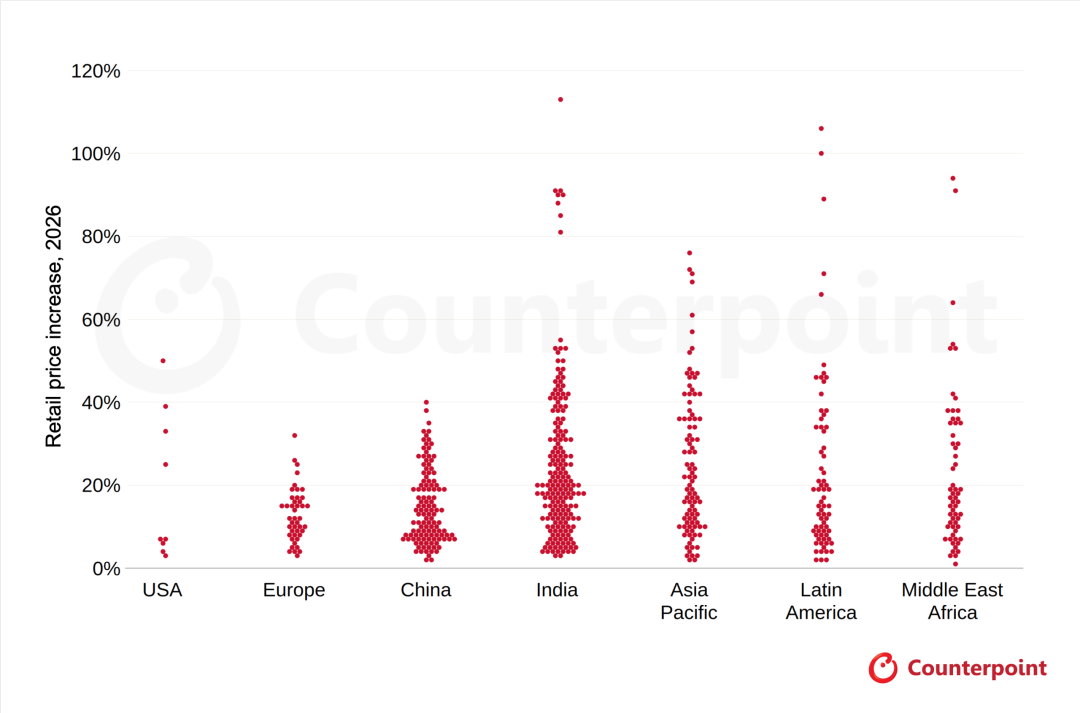
The Zhitong Finance App learned that according to the latest global smartphone price trend tracking released by Counterpoint Research, the retail price of smartphones sold worldwide has increased by an average of 15% since 2026, and the prices of some models have nearly doubled. As the cost of storage and other components continues to rise, OEMs are continuously passing on higher costs to consumers. The price-sensitive market is facing higher pressure than the market where high-end models account for a relatively high level, and the price of newly released smartphones is also higher than that of previous generation products, which indicates that global smartphone prices are showing an overall upward trend.
Tarun Pathak, research director at Counterpoint Research, said, “Storage has become a key factor driving the rise in smartphone BoM costs, and is reshaping the pricing system across the industry, leaving more and more limited room for OEMs to absorb higher costs. The impact was particularly evident in price-sensitive markets, where average prices rose 16% to 21%, further reducing the affordability of smartphones. Consumers are coping with rising prices by lengthening switching cycles, waiting for major promotions to buy, or switching to the second-hand market. In a market where high-end models account for a relatively high proportion, preferential measures such as installment payments and trade-ins can help mitigate the impact of price increases.”
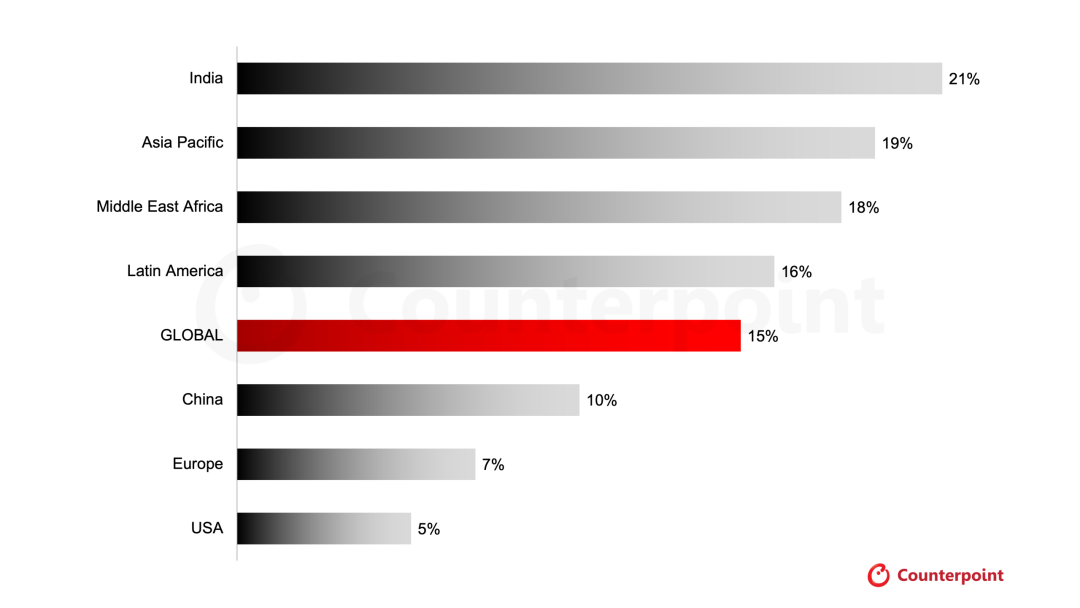
The increase in retail prices of smartphones sold in various markets in 2026
Source: Counterpoint Research Global Smartphone Price Trend Tracking
The Indian market had the highest increase, reaching 21%, followed by Asia Pacific and the Middle East and Africa, which rose 19% and 18%, respectively. In these markets, the lower-middle segment accounts for a large share of smartphone sales, limiting the ability of OEMs to absorb the pressure of BoM costs brought about by rising storage costs. Latin America followed suit, with retail prices rising 16%, while declining promotional discounts also boosted actual payment prices.
The increase in retail prices in a market with a relatively high share of high-end machines was relatively moderate. Among them, the Chinese market rose 10%, Europe rose 7%, and the US rose 5%. In these markets, price increases are mainly concentrated on newly launched models rather than models currently on sale. In markets such as the US, since many consumers use post-paid plans, the cost of the device is usually spread over the monthly bill, so the impact of price increases is relatively small.
In addition to rising prices, OEMs are also optimizing product specifications to control costs. Common measures include reducing storage capacity, reducing camera configurations, and introducing more 4G models in specific market segments. On the demand side, operators and retailers mitigate the impact of rising prices on consumers through consumer finance, trade-in, and installment payments.
Smartphone retail prices will rise an average of 15% in 2026
Source: Counterpoint Research Global Smartphone Price Trend Tracking
Apple continues to keep iPhone prices stable. This is particularly noteworthy because iPhones account for more than half of Apple's total revenue, storage prices have quadrupled since the fourth quarter of 2025, and macroeconomic headwinds continue.
Karn Chauhan, senior analyst at Counterpoint Research, said: “Prices of new smartphones are expected to continue to rise in the coming quarters, including the upcoming iPhone 18 series. Tight storage supplies and higher component costs are expected to continue in the short term, further increasing pressure on OEMs' margins. OEMs may prioritize high-end models to protect profitability while limiting price increases in price-sensitive markets through specification adjustments, storage configurations, and product portfolio optimization.”