


The swap market is fully priced to raise interest rates in September, and Nomura went one step further: under extreme circumstances, the Bank of Japan may strike a rare “triple strike” during the year
The Zhitong Finance App learned that Nomura Securities recently pointed out that if pressure to depreciate the yen continues to increase, the Bank of Japan may raise interest rates three times in a row before December this year under extreme circumstances.
Yujiro Goto, head of foreign exchange strategy at Nomura, said in an interview that this month's interest rate hike of 25 basis points “seems reasonable,” and “if the weak yen continues to spread to the 160 mark, the possibility of continuous interest rate hikes in October and December is not ruled out.”
Goto's remarks highlight a sharp shift in market expectations for the Bank of Japan's policy — until now, the bank has maintained a cautious pace in the process of normalizing monetary policy. Since this week, as market expectations for faster policy tightening have heated up, and speculations that the Japanese government pension investment fund may adjust asset allocation, the yen has accumulated a cumulative appreciation of more than 2%, and the exchange rate against the US dollar is around 156.
According to swap market data, the market has fully priced the Bank of Japan to raise interest rates by 25 basis points before September, and expectations of another rate hike before January next year are all reflected in the price. Bank of Japan Governor Kazuo Ueda has hinted that action is possible at this month's meeting; while Takada Hajime, one of the most hawkish members of the policy committee, did not rule out the possibility of a drastic or continuous rate hike.
Despite this, raising interest rates three times in a row is still an unusually aggressive pace of austerity for a central bank that has fought deflation and kept borrowing costs close to zero for the past 30 years.
Goto's basic expectations are relatively mild. He believes that it is reasonable and necessary for the Bank of Japan to raise interest rates at least once every quarter in the future, and maintains the current target judgment on the USD/JPY exchange rate of 154.
Goto also pointed out that the Japanese government's stance on monetary policy may become a key variable in whether the yen can continue to strengthen. Investors are paying close attention to Prime Minister Takaichi Sanae's remarks — she had reservations about interest rate hikes before, and the market wants to know if she supports the central bank's further policy tightening.
“If she continues to show a negative attitude towards interest rate hikes, the market will be disappointed and the yen may be sold off again,” Goto said. Conversely, if Sanae Takaichi avoids taking a stand on monetary policy or emphasizes the independence of the central bank, he believes there is room for the yen to rise above the 150 mark.
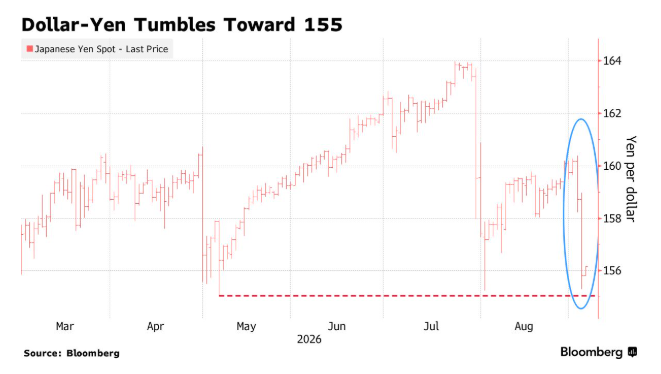
Furthermore, the Federal Reserve's policy trends may also be a catalyst for a new round. A recent statement by a Federal Reserve official suggests that US policymakers may have no intention of rushing to raise interest rates in September. Goto said that if the Federal Reserve remains on hold and the Bank of Japan sends hawkish signals, the weak dollar may make a comeback, driving the dollar-yen exchange rate below 155 levels earlier than expected by the market.