


Carvana (CVNA) Could Be 16% Undervalued After Its $1.66b Loan Refinance
Why Carvana’s new Term Loan B matters for shareholders
Carvana (CVNA) has just closed a new US$1.66b senior secured Term Loan B. The company is refinancing its higher coupon 2030 secured notes with longer dated, lower cost debt that reshapes the company’s capital structure.
See our latest analysis for Carvana.
Carvana’s new Term Loan B comes after a mixed share price run, with the stock down 7.51% over the past week but up 15.63% on a 1 month share price return and a very large 3 year total shareholder return of about 7x. The refinancing news signals that recent price swings may be reflecting changing views on Carvana’s balance sheet risk and its ability to fund future growth without adding extra near term pressure from higher coupon debt.
If this update has you thinking about where else debt and growth stories might be unfolding, it could be worth scanning 19 top founder-led companies
Carvana’s share price has pulled back this year, yet it still trades below the average analyst target and above some tighter fair value estimates. So where does a reasonable valuation range actually sit after this refinancing move?
Most Popular Narrative: 15.6% Undervalued
Carvana’s most followed narrative puts fair value at about $82.83, compared with the last close of $69.91. That gap frames how investors might interpret the new Term Loan B.
The acceleration in consumer preference for purchasing vehicles online and increased comfort with high-value e-commerce transactions positions Carvana to capture a larger share of the used vehicle retail market, supporting outsized long-term unit and revenue growth.
Want to understand why this narrative supports a higher fair value for Carvana? It leans heavily on compound revenue growth, firmer margins and a premium earnings multiple that assumes this online used car model keeps scaling efficiently.
Result: Fair Value of $82.83 (UNDERVALUED)
Have a read of the narrative in full and understand what's behind the forecasts.
However, investors also need to weigh risks such as potential logistics bottlenecks in Carvana’s reconditioning network and softer than expected margins if marketing spend increases faster than revenue.
Find out about the key risks to this Carvana narrative.
Another View on Carvana’s Valuation
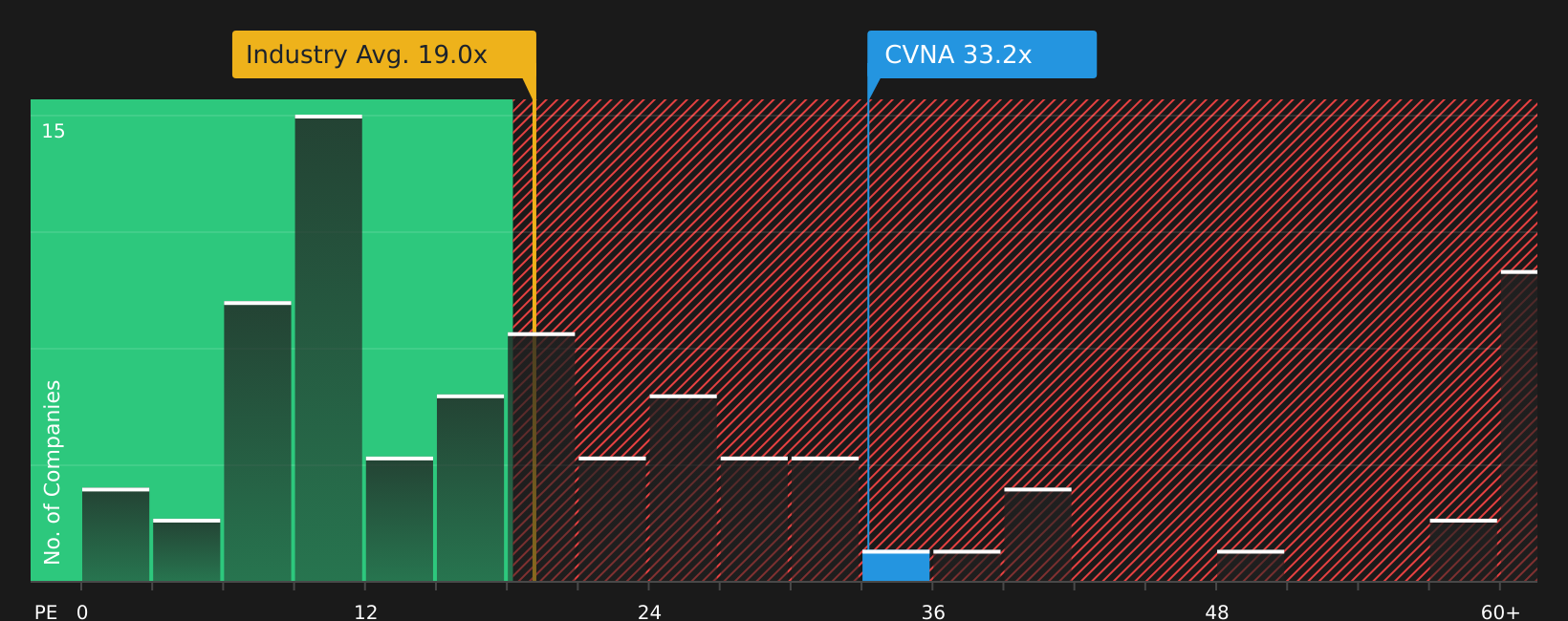
The analyst narrative suggests Carvana is about 15.6% undervalued, yet the current P/E of 32.1x tells a different story. It is higher than the US Specialty Retail industry at 19x and above the fair ratio of 27.3x that the market could move towards. This may indicate more downside risk than upside.
See what the numbers say about this price — find out in our valuation breakdown.
Next Steps
Given this mix of optimism and caution around Carvana, it makes sense to review the numbers yourself and decide how the risk and reward trade off looks in your own portfolio, then weigh up the 2 key rewards and 1 important warning sign
Looking for more investment ideas beyond Carvana?
If Carvana has sharpened your focus on where capital goes next, do not stop here. Use these ideas to spot opportunities that could reshape your portfolio.
- Target potential mispricings by scanning for quality companies that still look attractively priced using the 48 high quality undervalued stocks.
- Strengthen your income stream by reviewing stocks that feature reliable payouts in the 12 dividend fortresses.
- Prioritise resilience by focusing on companies that show financial robustness through the solid balance sheet and fundamentals stocks screener (50 results).
This article by Simply Wall St is general in nature. We provide commentary based on historical data and analyst forecasts only using an unbiased methodology and our articles are not intended to be financial advice. It does not constitute a recommendation to buy or sell any stock, and does not take account of your objectives, or your financial situation. We aim to bring you long-term focused analysis driven by fundamental data. Note that our analysis may not factor in the latest price-sensitive company announcements or qualitative material. Simply Wall St has no position in any stocks mentioned.
Have feedback on this article? Concerned about the content? Get in touch with us directly. Alternatively, email editorial-team@simplywallst.com