


IPO News | Best (300580.SZ) Second Listing Hong Kong Stock Exchange specializes in electronic functional enhancing materials
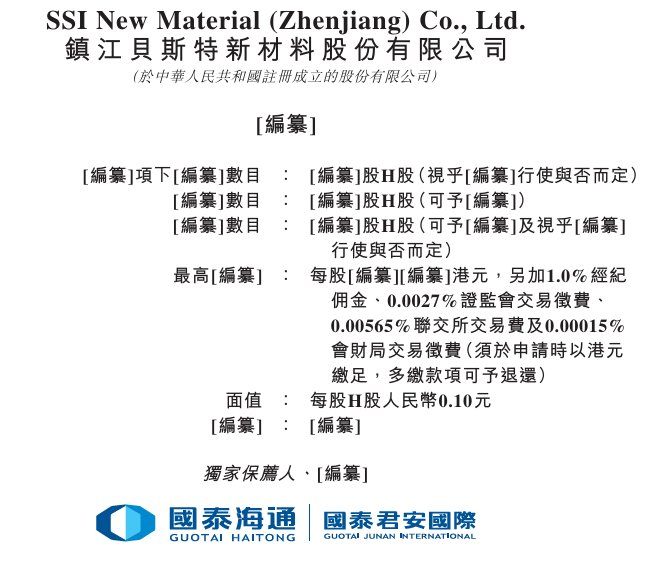
The Zhitong Finance App learned that according to the Hong Kong Stock Exchange's disclosure on August 21, Zhenjiang Best New Materials Co., Ltd. (abbreviation: Best, 300580.SZ) submitted a listing application to the main board of the Hong Kong Stock Exchange, and Cathay Pacific Haitong is its sole sponsor. The company submitted a listing application to the Hong Kong Stock Exchange on January 12 this year.
Company profile
According to the prospectus, Best is an electronic function enhancing materials company with a mature business layout in the fields of acoustic enhancement materials, electronic ceramic materials, electronic adhesives, and energy enhancing materials. Based on deep insight into industry development and technological evolution, and with solid R&D capabilities and lean management expertise, Best has built three core technology platforms, namely inorganic powder technology platform, polymer material technology platform, and composite material technology platform.
The company's electronic function enhancing materials are mainly used to improve the acoustic, optical, thermal and electrical properties of components and devices in the field of consumer electronics products and new energy sources. They can provide comprehensive functional enhancing material solutions for a wide range of downstream application scenarios, covering the fields of smartphones, laptops, tablets, smart wearable devices and new energy vehicles.
As technology becomes more mature and product capabilities continue to improve, the downstream application scenarios of the company's products are gradually expanding into high-growth fields such as advanced packaging, computing power, and other semiconductor-related fields. With the established core technology platform, the company has built four major business units: (i) acoustically enhanced materials, (ii) electronic ceramic materials, (iii) electronic adhesives, and (iv) energy enhanced materials.
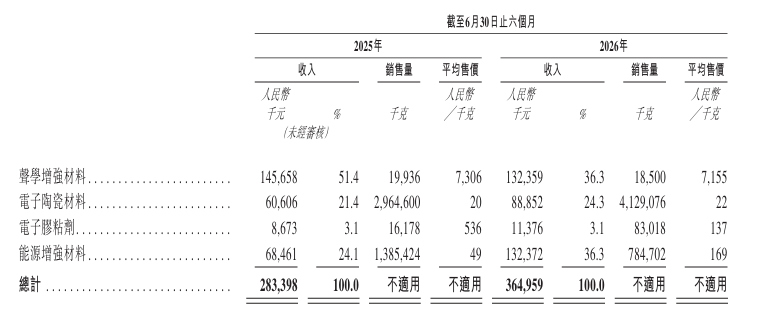
According to Frost & Sullivan's data, according to revenue in 2025, the company ranked as follows: No. 1 in the global acoustical enhancing materials market, with a market share of about 20.0%; ranked second in the global market for alumina ceramic materials for LIB diaphragm coatings, with a market share of about 14.3%; ranked fourth in the global acoustic adhesive market, with a market share of about 3.2%; and ranked third in the global high reflective glaze market, with a market share of 4.6%.
The company mainly uses a direct sales model and has established close and direct ties with customers through direct sales. The customer base mainly includes component manufacturers in the consumer electronics and new energy fields.
As of 2023, the year ended December 31, 2025, and the six months ended June 30, 2026, the company's sales to the five major customers in each year/period accounted for 88.2%, 82.3%, 78.4% and 75.7% of the total revenue for the same period, respectively. Furthermore, sales to the largest customers in each period accounted for 28.4%, 20.9%, 22.3%, and 33.3% of total revenue for the same period, respectively.
Financial data
revenue
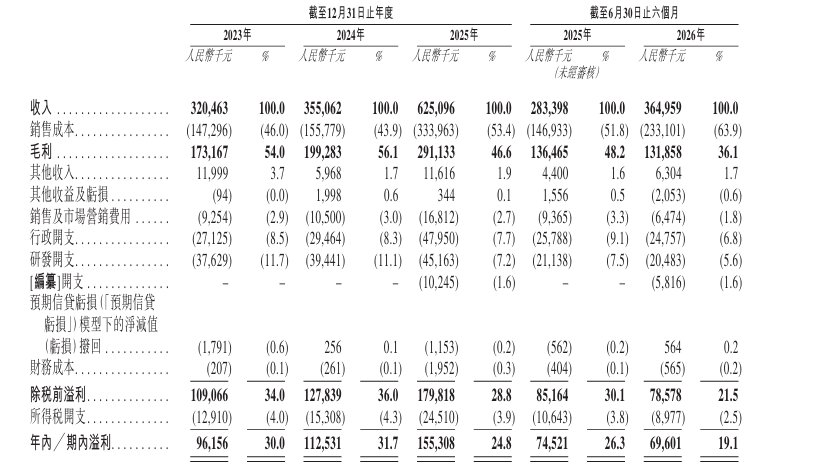
For the six months ended June 30 in 2023, 2024, 2025, and 2026, the company recorded revenue of RMB 320 million, RMB 355 million, RMB 625 million and RMB 365 million respectively.
Mouri
For the six months ended June 30 in 2023, 2024, 2025, and 2026, the company recorded gross profit of RMB 173 million, RMB 199 million, RMB 291 million, and RMB 132 million respectively.
Profit during the year/period
In 2023, 2024, 2025, and 2026 for the six months ended June 30, the company recorded year/period profit of 9615.6 yuan, 113 million yuan, 155 million yuan, and 69.61 million yuan respectively.
Industry Overview
The demand for acoustically enhanced materials is highly dependent on the scale of shipments of smart consumer electronics terminals. Benefiting from steady growth in the terminal market and rising demand for high performance, the development of acoustic technology focuses more on accuracy, immersion, and dynamic balance.
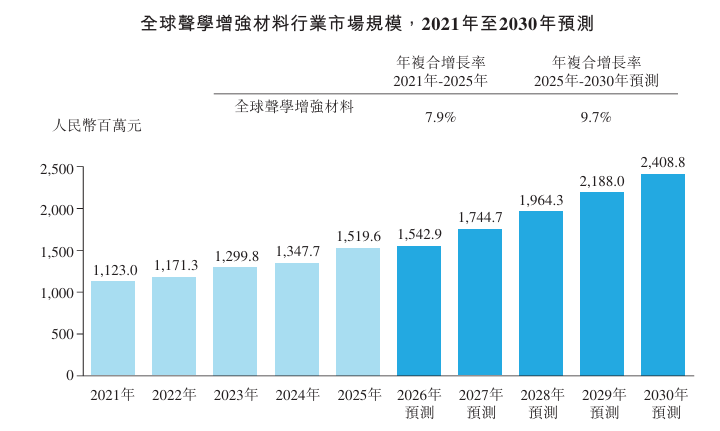
The market size of the global acoustical enhancing materials industry grew from RMB 1,123.0 million in 2021 to RMB 1,519.6 million in 2025, with a compound annual growth rate of 7.9%. The market size is expected to grow further to RMB 2,408.8 million by 2030, with a compound annual growth rate of 9.7% from 2025 to 2030.
As AI technology reshapes the consumer electronics landscape, product sound quality has leapt from a basic auxiliary function of a product to a core element that forms product differentiation advantages and improves and optimizes the user experience. Specifically, as AI smartphones become thinner and lighter, they seriously squeeze the physical space in the back chamber of the speaker, causing damage to sound quality, especially low frequency performance. Products with end-side AI capabilities are expected to become a core category for future market growth.
Global AI smartphone shipments are expected to grow from 379.5 million units in 2025 to 1,184.3 million units in 2030, with a compound annual growth rate of 25.6%. Global AI PC shipments are expected to grow from 67.6 million units in 2025 to 211.8 million units in 2030, with a compound annual growth rate of 25.7%.
Furthermore, global folding screen phone shipments are expected to increase from 26.2 million units in 2025 to 73.2 million units in 2030, with a compound annual growth rate of 22.8%. Among them, the increase in the number of micro speakers in single folding screen phones has led to an increase in the use of acoustically enhancing materials, resulting in an increase in the market.
Generally speaking, the amount of sound-absorbing particles used in a single folding screen phone is much higher than that of traditional smartphones. AI smartphones, AI PCs, and folding screen phones are expected to lead a new growth cycle of acoustically enhanced materials.
The competitive landscape
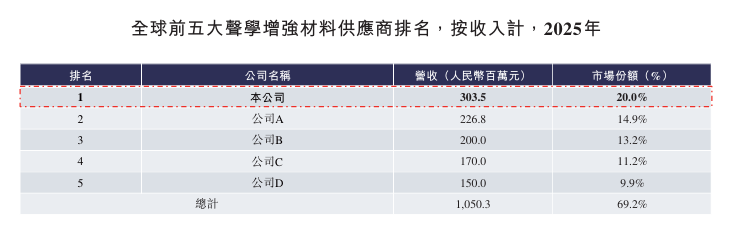
The competitive pattern of the global acoustic enhancing materials industry is concentrated. In 2025, the global acoustical enhancing materials market reached RMB 1,519.6 million by revenue, and the top five suppliers of acoustic enhancing materials by revenue together accounted for 69.2% of the market share. Among them, with revenue of RMB 303.5 million, the company accounts for about 20.0% of the global market share, ranking first in the world.
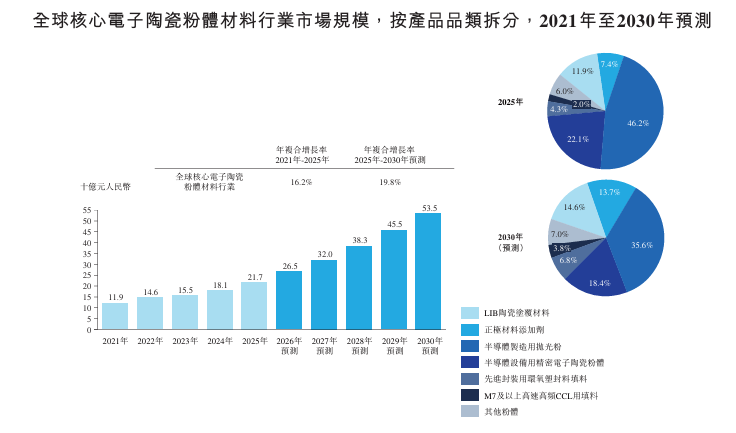
Electronic ceramic powder mainly refers to inorganic non-metallic fine powder that has been carefully designed and prepared to manufacture electronic ceramic components and components.
The global core electronic ceramic powder market grew from RMB 11.9 billion in 2021 to RMB 21.7 billion in 2025, with a compound annual growth rate of 16.2%. With the continuous penetration and surge in demand in downstream new energy, semiconductors and data centers, the growing demand for high-purity, high-performance powder materials will rapidly drive the core electronic ceramic powder market size. By 2030, the global core electronic ceramic powder market will reach RMB 53.5 billion, and the compound annual growth rate from 2025 to 2030 will reach 19.8%.
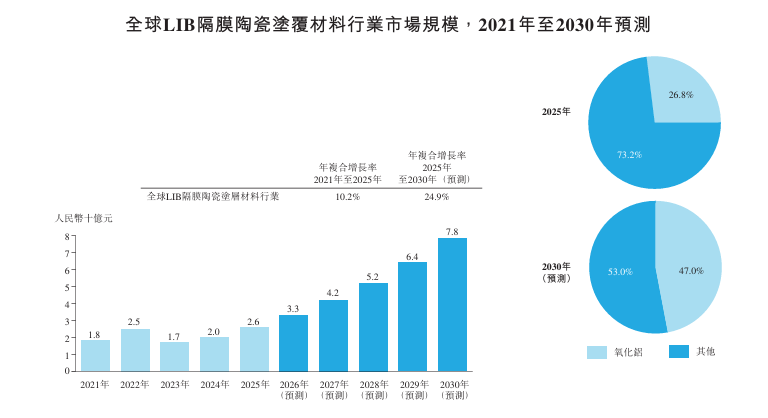
The global market for LIB diaphragm ceramic coating materials grew from RMB 1.8 billion in 2021 to RMB 2.6 billion in 2025, with a compound annual growth rate of 10.2%. As the penetration rate of high-performance diaphragms continues to increase in new energy vehicles and energy storage systems, the global market is expected to reach RMB 7.8 billion by 2030, with a compound annual growth rate of 24.9% from 2025 to 2030. Notably, thanks to its high thermal stability and excellent particle conductivity, alumina's market share will continue to expand, from 26.8% in 2025 to 47.0% in 2030.
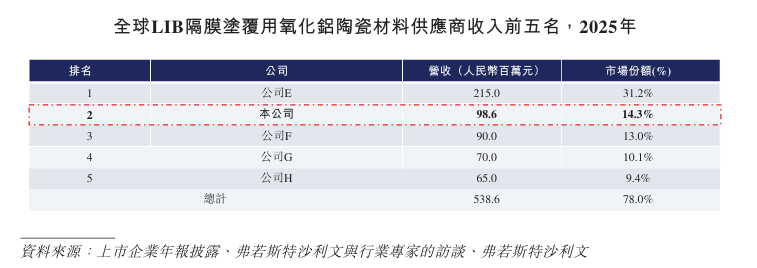
The global market concentration of alumina ceramic materials for LIB diaphragm coatings is high, and leading companies dominate. In 2025, the top five revenue companies together accounted for about 78.0% of the market share. Among them, the company has a significant leading edge, ranking second in the industry with a global market share of 14.3%.
Board Information
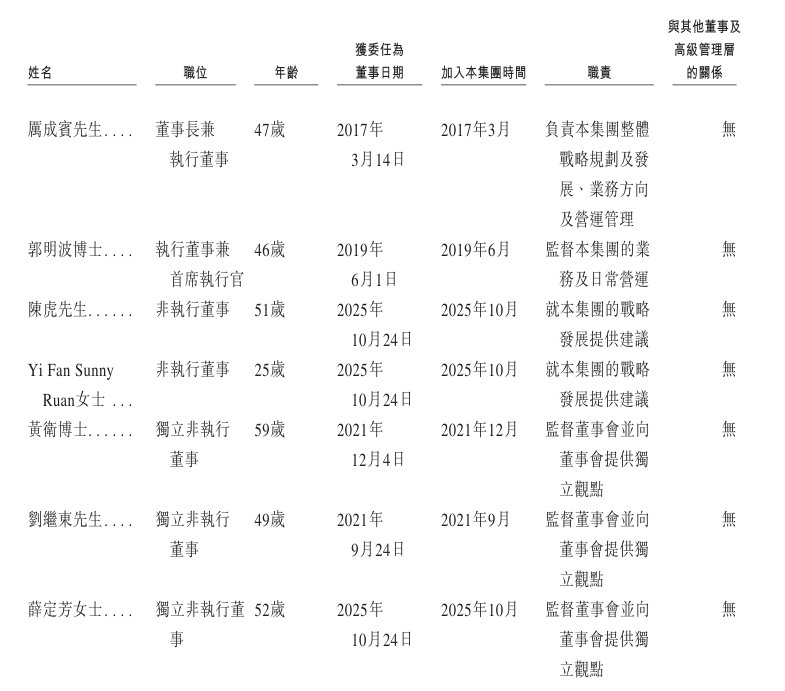
The board of directors of the company currently consists of 7 directors, including 2 executive directors, 2 non-executive directors and 3 independent non-executive directors.
Shareholding structure
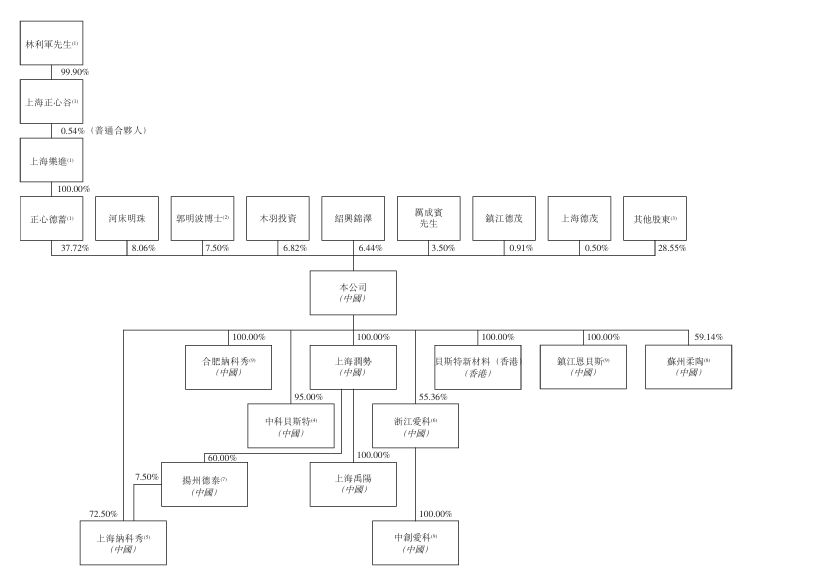
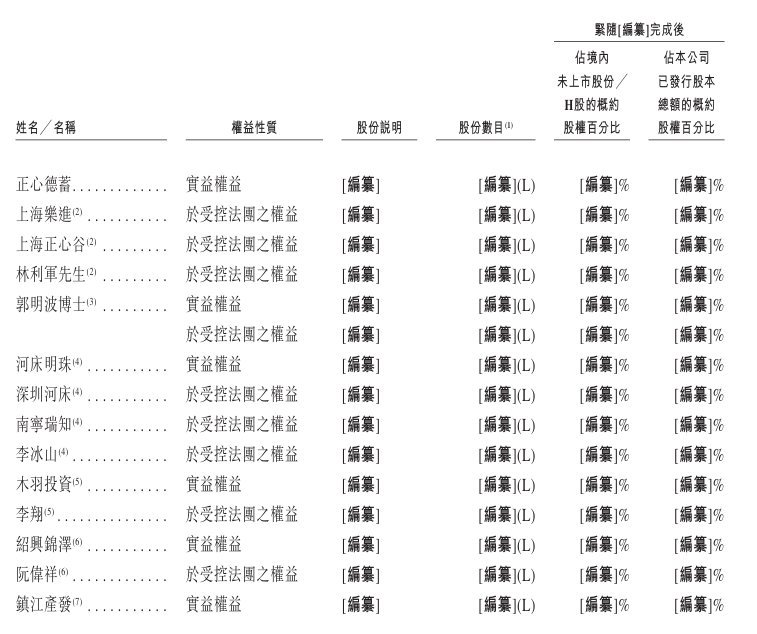
As of August 14, 2026, Zhengxin Dequ owned 37.72% of the company's shares. Shanghai Lejin holds 100.00% of Shanghai Lejin's shares, while Shanghai Lejin's general partner Shanghai Zhengxin Valley holds about 0.54% of the shares.
Shanghai Lejin has 25 limited partners, including (i) Hangzhou Longshan Chemical Co., Ltd., Shanghai Baomin Investment Management Co., Ltd., and Shanghai Tantong Investment Partnership (limited partnership) each held about 20.12%, 18.73% and 10.14% of Shanghai Lejin's partnership interests, while none of the other limited partners held 10% or more of them; and (ii) Shanghai Tantong Investment Partnership (Limited Partnership), Shanghai Zhengxingu Industrial Co., Ltd., Zhuhai Hengqin Xuyao Investment Management Partnership (Limited Partnership) and Zhuhai Hengqin Xuyao Investment Management Partnership The enterprise (limited partnership) holds about 10.14%, 2.30%, 1.35% and 2.69% of Shanghai Lejin's partnership interests, respectively, and holds a total of about 16.48% of partnership interests. These companies are directly or indirectly controlled by Shanghai Zhengxin Valley and/or Mr. Lin Lijun.
All of Shanghai Lejin's limited partners are passive investors, and none of the limited partners hold 30% or more of their partnership interests. Shanghai Lejin's limited partners have authorized the general partner, that is, Shanghai Zhengxin Valley to make decisions and execution on partner matters on their behalf. Shanghai Zhengxin Valley is 99.90% owned by Mr. Lin Lijun, and 0.10% is owned by an independent third party, Mr. Zhao Yongsheng.
Intermediary team
Sole sponsor: Guotai Junan Finance Co., Ltd.
Company Legal Adviser: On Hong Kong Law: JunHe Law Firm; On Chinese Law and Data Privacy Law: Beijing Deheng Law Firm
Sole Sponsor Legal Adviser: On Hong Kong Law: Jingtian Gongcheng Law Firm Limited Liability Partnership; On Chinese Law: Jingtian Gongcheng Law Firm
Reporting Accountants and Independent Auditors: Deloitte Guan Huang Chen Fang
Industry Advisor: Frost & Sullivan (Beijing) Consulting Co., Ltd. Shanghai Branch
Compliance Advisor: Haode Finance Co., Ltd.