


Hugo Boss (XTRA:BOSS) Stock Looks Near Fair Value As Earnings Lag News
After a difficult three years in which Hugo Boss shares have fallen about 41.6%, the stock now trades around €37.59 and the valuation checks point to a picture that looks neither clearly cheap nor clearly expensive.
- The share price decline of about 41.6% over three years suggests long term holders have absorbed a significant drawdown that raises the bar for any fresh investment case.
- Frasers Group lifting its stake to nearly 48% can support confidence in Hugo Boss, while ongoing challenges in women's apparel and the Chinese market remain a key risk for how investors price the brand's earnings power.
- The valuation framework scores Hugo Boss at 4 out of 6 checks, which points to a mixed picture rather than a clear bargain or clear overvaluation.
The issue now is whether the current price for Hugo Boss fairly reflects these mixed signals or leaves a margin of safety for new investors.
Find out why Hugo Boss' -10.6% return over the last year is lagging behind its peers.
Where Does Hugo Boss Sit on Earnings?
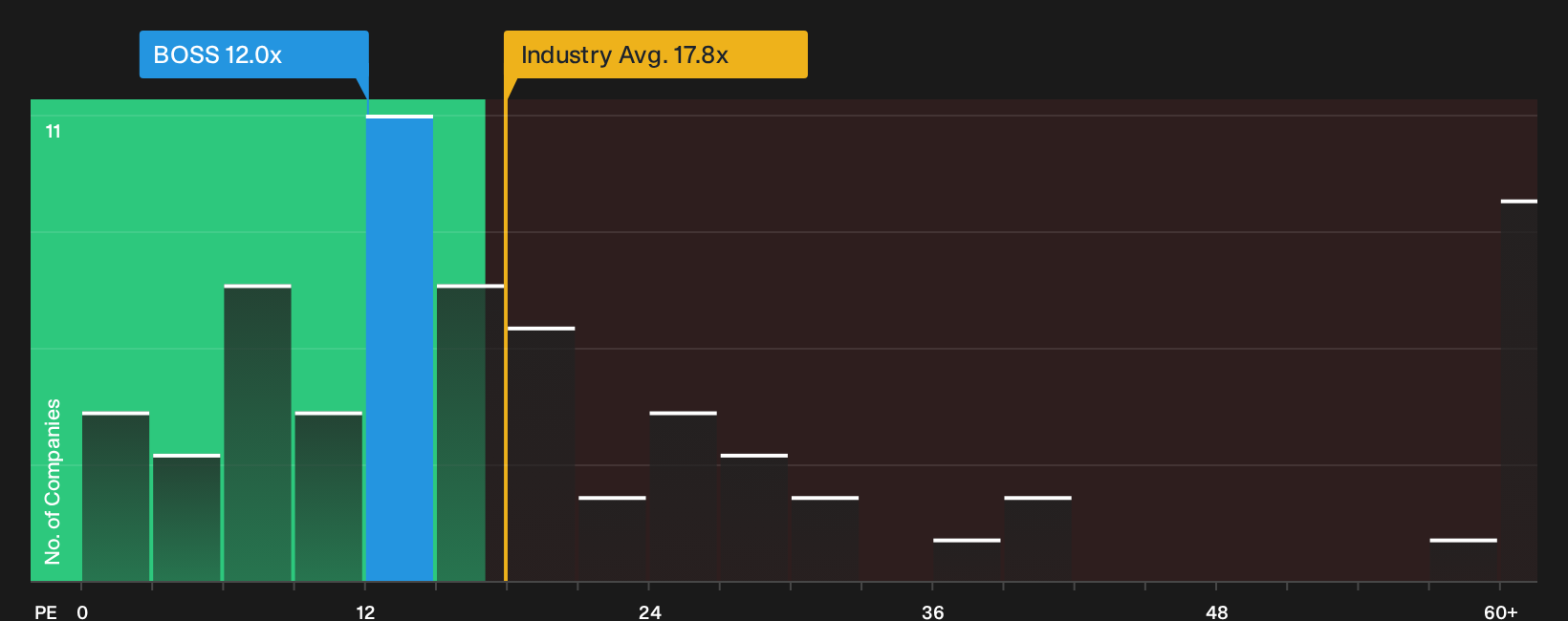
The P/E multiple suits Hugo Boss because earnings are a key focus for many investors in the Luxury sector. The stock currently trades on about 11.9x earnings, which is below both the Luxury industry average of around 15.8x and a higher peer group average of about 38.7x. At face value this indicates that the market is attaching a lower earnings multiple to Hugo Boss than to many luxury peers.
The tailored fair P/E for Hugo Boss, which blends its earnings profile, size and risk, is around 11.0x. That is very close to the current 11.9x. Despite the higher profile of Frasers Group after its takeover attempt in 2026, the market is still pricing Hugo Boss at a level that aligns closely with what this framework suggests for its earnings power.
On the P/E lens, Hugo Boss appears roughly fairly valued given the balance of its current earnings and risk profile.
See what the numbers say about this price — find out in our valuation breakdown.
The Hugo Boss Narrative: What Would Justify Today's Price?
Simply Wall St Narratives aim to close the gap between Hugo Boss' current valuation puzzle and the different futures investors may be weighing. Each scenario spells out what sort of growth, margins and earnings path would need to hold for Hugo Boss' stock to be worth meaningfully more or less than today. Each one also ties a fair value estimate to a specific mix of potential catalysts and risks, so you can track which version of events gains traction over time.
The Hugo Boss community splits between those who see a refreshed brand with more to give and those who think the takeover saga already sets a ceiling.
Bull case: 25% undervalued
"Hugo Boss's rapid expansion of its loyalty program, including successful integration with WeChat and imminent U.S. rollout, positions the company to deeply engage with the burgeoning global upper-middle class..."
Read the full Bull Case to see why Hugo Boss could be undervalued
Bear case: roughly fairly valued
"Increasingly digital-savvy consumers and the rapid acceleration of direct-to-consumer competitors are driving greater price transparency and eroding brand loyalty..."
Read the full Bear Case to see why Hugo Boss could be overvalued
Do you think there's more to the story for Hugo Boss? Head over to our Community to see what others are saying!
The Bottom Line
For Hugo Boss the current market multiple suggests the stock is priced around what the framework sees as reasonable for its earnings profile and risk. There is no clear signal that the market is either overly pessimistic or overly optimistic at this stage. The real divide between bulls and bears now is whether the company can sustain earnings strength while addressing pressure in womenswear and China so that the current P/E does not slip into value trap territory. Your view on that execution question and the chance of any future shift in control is likely to drive whether the current valuation feels attractive or just adequate.
This article by Simply Wall St is general in nature. We provide commentary based on historical data and analyst forecasts only using an unbiased methodology and our articles are not intended to be financial advice. It does not constitute a recommendation to buy or sell any stock, and does not take account of your objectives, or your financial situation. We aim to bring you long-term focused analysis driven by fundamental data. Note that our analysis may not factor in the latest price-sensitive company announcements or qualitative material. Simply Wall St has no position in any stocks mentioned.
Have feedback on this article? Concerned about the content? Get in touch with us directly. Alternatively, email editorial-team@simplywallst.com