


How Insmed’s Sharply Narrowed Q2 2026 Net Loss At Insmed (INSM) Has Changed Its Investment Story
- In August 2026, Insmed Incorporated reported second-quarter 2026 results showing a net loss of US$13.24 million, down sharply from US$321.69 million a year earlier, with basic and diluted loss per share from continuing operations at US$0.06 versus US$1.70.
- Over the first half of 2026, Insmed’s net loss narrowed to US$176.81 million from a very large loss of US$578.27 million, suggesting meaningfully lower cash burn and tighter cost control compared with the prior year period.
- We’ll now examine how Insmed’s sharply reduced quarterly net loss might influence the existing investment narrative built around brensocatib launches.
Invest in the nuclear renaissance through our list of 93 elite nuclear energy infrastructure plays powering the global AI revolution.
Insmed Investment Narrative Recap
To own Insmed, you need to believe its respiratory portfolio, especially brensocatib, can justify today’s valuation despite ongoing losses. The sharply reduced Q2 2026 net loss signals better cost control, but it does not remove the key near term catalyst around brensocatib launches or the biggest risk that payer pushback and cautious adoption could still slow revenue ramp and pressure margins.
The Q2 2026 earnings update is most relevant when set against Insmed’s February guidance for at least US$1.0 billion in 2026 BRINSUPRI revenue and US$450 million to US$470 million from ARIKAYCE. The improved quarterly loss suggests Insmed is tightening expenses as it prepares to support these launches, but the guidance and timing of regulatory and market access milestones remain the crucial reference points for how the story might evolve.
But the key issue investors still need to be aware of is how tighter reimbursement could affect...
Read the full narrative on Insmed (it's free!)
Insmed's narrative projects $4.1 billion revenue and $1.0 billion earnings by 2029. This requires 70.4% yearly revenue growth and about a $2.2 billion earnings increase from -$1.2 billion today.
Uncover how Insmed's forecasts yield a $197.14 fair value, a 53% upside to its current price.
Exploring Other Perspectives
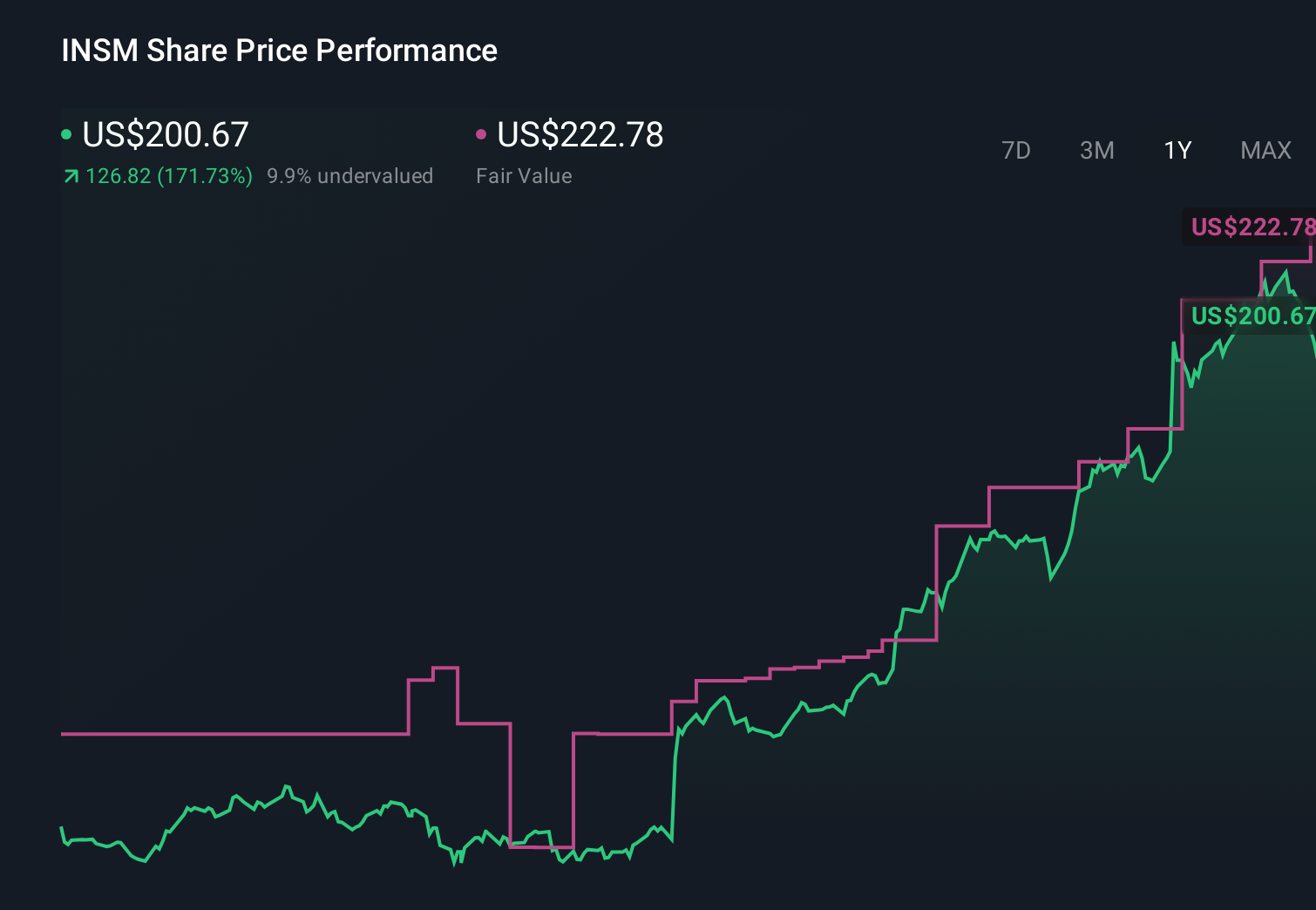
Compared with consensus, the most cautious analysts were already assuming about US$3.8 billion of 2029 revenue but only US$77.4 million of earnings, so this sharper loss reduction might meaningfully challenge their view that reimbursement and adoption hurdles will keep long term margins cramped.
Explore 3 other fair value estimates on Insmed - why the stock might be worth just $197.14!
The Verdict Is Yours
Don't just follow the ticker - dig into the data and build a conviction that's truly your own.
- A great starting point for your Insmed research is our analysis highlighting 3 key rewards and 2 important warning signs that could impact your investment decision.
- Our free Insmed research report provides a comprehensive fundamental analysis summarized in a single visual - the Snowflake - making it easy to evaluate Insmed's overall financial health at a glance.
No Opportunity In Insmed?
Every day counts. These free picks are already gaining attention. See them before the crowd does:
- Find 50 companies with promising cash flow potential yet trading below their fair value.
- Capitalize on the AI infrastructure supercycle with our selection of the 56 best 'picks and shovels' of the AI gold rush converting record-breaking demand into massive cash flow.
- AI is about to change healthcare. These 42 stocks are working on everything from early diagnostics to drug discovery. The best part - they are all under $10b in market cap - there's still time to get in early.
This article by Simply Wall St is general in nature. We provide commentary based on historical data and analyst forecasts only using an unbiased methodology and our articles are not intended to be financial advice. It does not constitute a recommendation to buy or sell any stock, and does not take account of your objectives, or your financial situation. We aim to bring you long-term focused analysis driven by fundamental data. Note that our analysis may not factor in the latest price-sensitive company announcements or qualitative material. Simply Wall St has no position in any stocks mentioned.
Have feedback on this article? Concerned about the content? Get in touch with us directly. Alternatively, email editorial-team@simplywallst.com