


JLL: In the first half of the year, the pace of new supply of new office buildings in first-tier cities gradually slowed, and the pressure to eliminate market stock was briefly relieved
The Zhitong Finance App learned that JLL released China's Grade A office market review and outlook for the first half of 2026. In the first half of 2026, the pace of new supply of new office buildings in China's first-tier cities gradually slowed down, the pressure to remove market stocks was briefly relieved, and the overall vacancy rate declined slightly. The total construction area added to the market in first-tier cities reached 802,000 square meters in the first half of the year, showing a significant decline from the same period last year. Short-term incremental supply contraction created a favorable window for market restoration. However, from a full-year perspective, market supply pressure is still prominent — it is expected that in the second half of 2026, first-tier cities will centrally enter the market with an additional area of 3,036 million square meters. Large-scale incremental implementation will push the overall supply trend throughout the year, and competitive pressure on the market will continue to increase in the future.
Demand side: Leasing activity continues to recover, and new momentum builds an engine for increasing demand
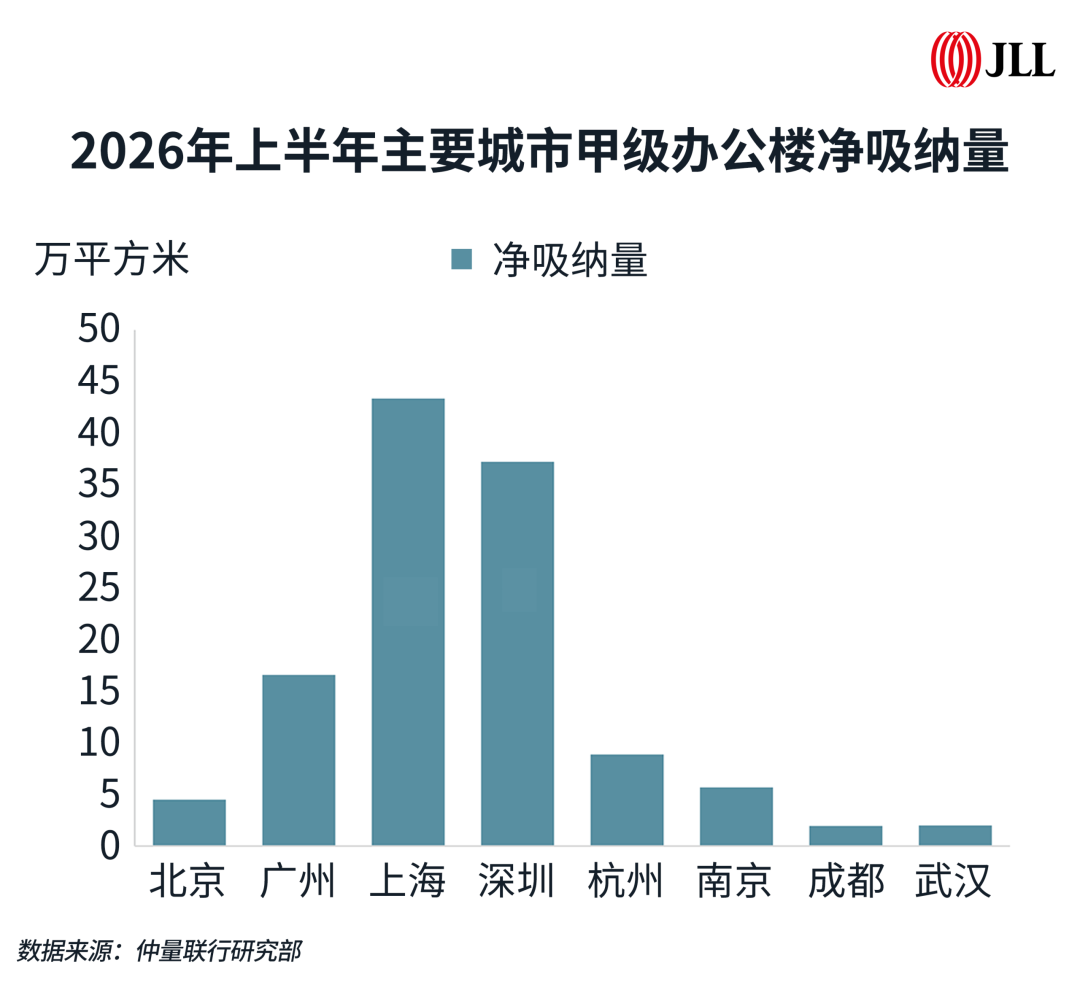
In the first half of 2026, the leasing activity of Class A office buildings in first-tier cities improved steadily, and the overall market showed a recovery trend, but structural differentiation between sectors and buildings continued to be prominent. In Shanghai, the overall market has benefited from the release of demand for upgraded leasing by enterprises, and leasing transaction activity for high-quality, high-quality grade A office building projects has been significantly restored. Financial and professional service companies are still the core demand players in the market. At the same time, the rental demand of technology Internet companies represented by artificial intelligence and game tracks provides continuous incremental support to the market.
Tenants' demand in the Beijing market showed obvious characteristics of area and product preferences. In the first half of the year, leasing transactions were mainly concentrated in a small area of 300 to 500 square meters. Tenants generally favored standardized office space delivered in hardcover and portable. Against the backdrop of a slowdown in overall market demand growth, the Zhongguancun area continues to attract cutting-edge emerging technology companies such as quantitative funds and artificial intelligence with the advantage of gathering hard-core industries.
The net absorption volume of the Shenzhen market continued to recover and strengthen, maintaining significant quarter-on-quarter and year-over-year growth. The hardware technology and new economy industries, represented by smart hardware, artificial intelligence and applications, and brands going overseas, formed the most active source of rental demand in the first half of the year, accounting for nearly 30% of total transactions. Emerging industries have also become the core driving force for the incremental demand in the Guangzhou office building market. Benefiting from Chinese companies' overseas strategies and artificial intelligence technology, emerging industries such as gaming, beauty, and cross-border e-commerce accelerated expansion, contributing 65% of the city's upgrades and expansionary transactions in the first half of the year.
The structural recovery characteristics of the 1.5 tier and second-tier city office building markets are equally remarkable, and emerging industries have become the main endogenous driving force for improving the quality and recovery of the market. In Chengdu, the rental demand for AI, software development, and game companies remained active; relying on the double dividends of technology iteration and overseas business, game companies' rental expansion and relocation leasing transactions performed particularly well in the first half of the year. In Nanjing, technology internet companies represented by data services and software development, and life science companies such as medical devices have all effectively promoted the elimination of the Grade A office building market. In Hangzhou, emerging industries such as artificial intelligence and applications, games, diverse retail formats, e-commerce, and entertainment represented by live streaming and skits brought active rental demand to the Class A office building market in the first half of the year. Overall demand in the Wuhan market has been stable for half a year. Emerging technology companies such as AI and chips, and medical and life science companies such as innovative drugs and medical devices have also performed well in new leases and rental expansion.
Supply side: The short-term supply pace settled, and the high level pattern continued in the second half of the year
In the first half of 2026, the pace of new supply of new office buildings in China's first-tier cities gradually slowed down, the pressure to remove market stocks was briefly relieved, and the overall vacancy rate declined slightly. The total construction area added to the market in first-tier cities reached 802,000 square meters in the first half of the year, showing a significant decline from the same period last year. Short-term incremental supply contraction created a favorable window for market restoration. However, from a full-year perspective, market supply pressure is still prominent — it is expected that in the second half of 2026, first-tier cities will centrally enter the market with an additional area of 3,036 million square meters. Large-scale incremental implementation will push the overall supply trend throughout the year, and competitive pressure on the market will continue to increase in the future.
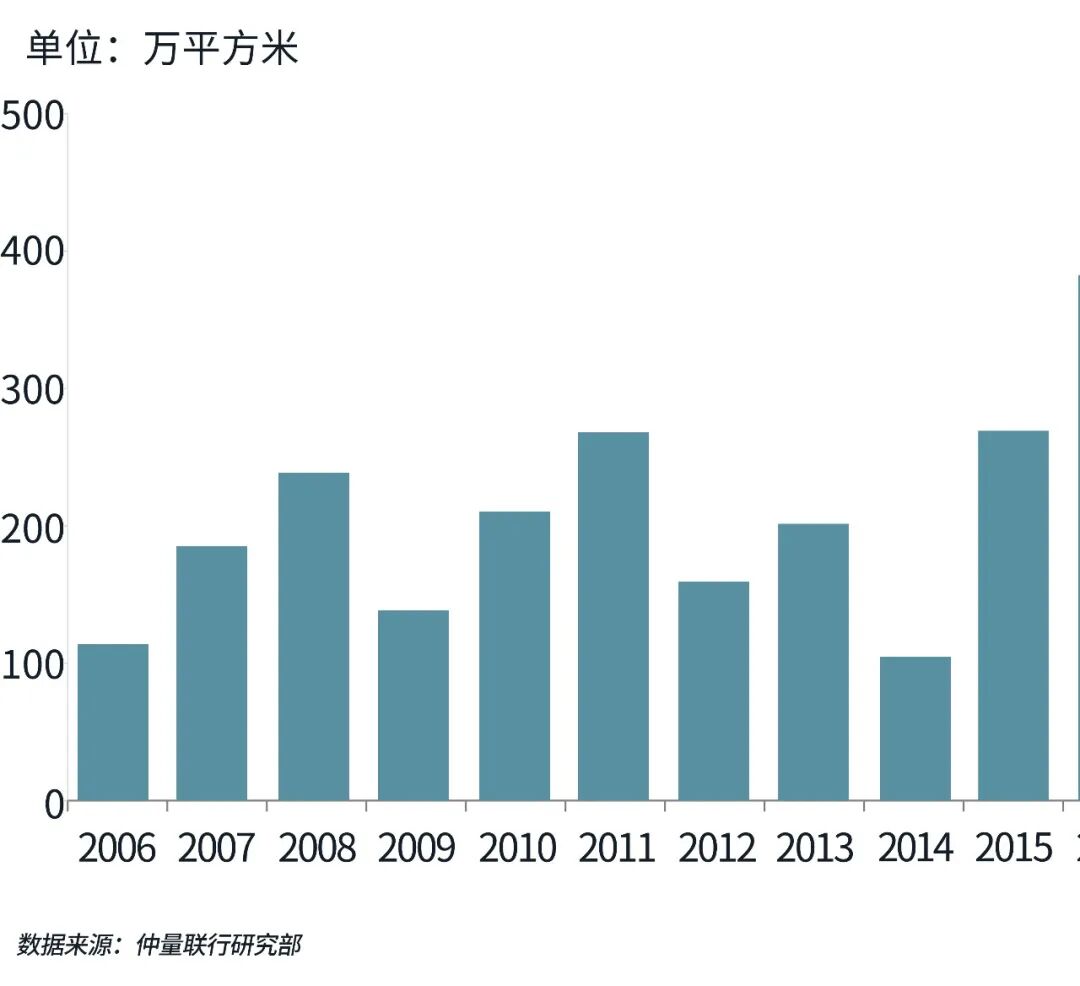
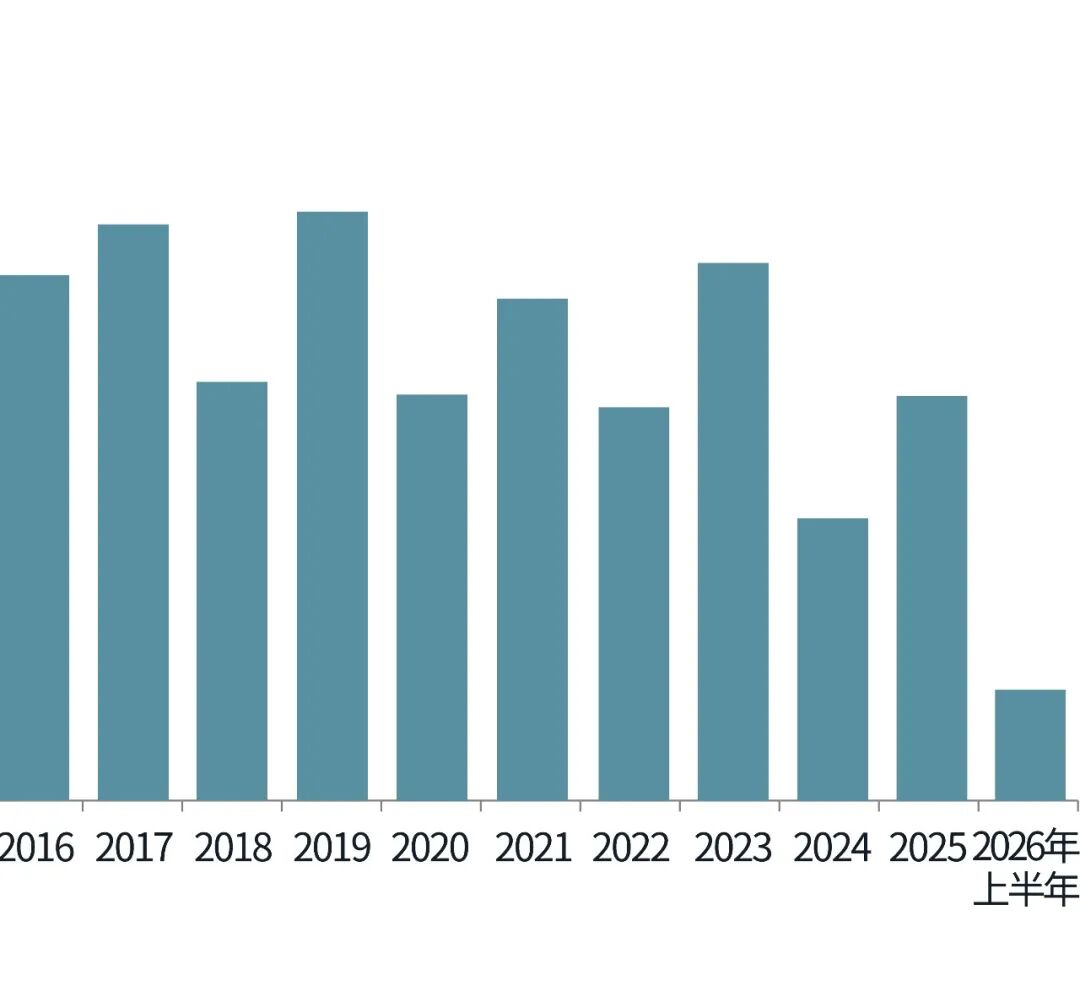
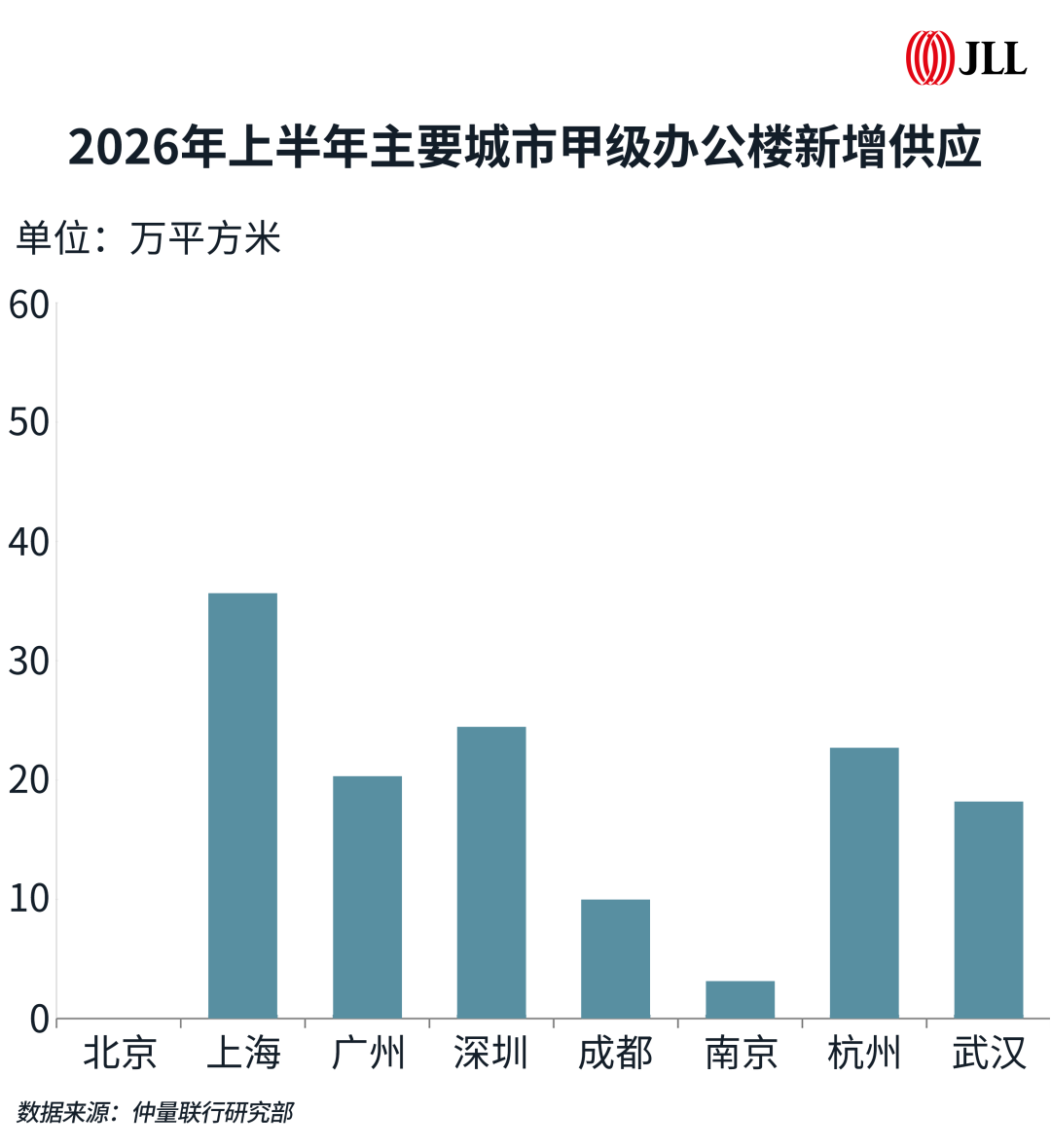
By city, in Beijing, although no new projects were completed in the first half of the year, future market entry projects will put some competitive pressure on some existing surrounding projects. The market is expected to enter the market with an additional area of about 700,000 square meters in the second half of the year. New projects that are about to be completed and entered into the market have actively begun pre-leasing investment work, putting direct competitive pressure on some of the existing buildings. The pace of new supply entry into the market in Shanghai, Shenzhen, and Guangzhou slowed in the first half of the year, which also supported the market vacancy rate in all three cities to narrow to varying degrees, and the market showed a phased recovery trend. However, with the concentrated implementation of a large number of new supplies in the second half of the year, the market will once again face an incremental shock, and the vacancy rate is likely to return to an upward pressure trend in the next six months.
Compared with the overall stabilization and phased restoration characteristics of first-tier cities, the new supply of office buildings in Tier 1.5 and Tier 2 cities in the first half of the year showed a fragmented pattern. In Chengdu, in the first half of the year, several Grade A office building projects were completed and delivered, adding a total construction area of 99,000 square meters. Only one new Grade A project entered the market in the Nanjing market in half a year. The supply pressure eased significantly over the same period last year, driving the vacancy rate to continue to decline. However, due to the impact of the new supply volume last year, combined with expectations that a large number of new projects will enter the market in the second half of the year, competition on the owners' side is still fierce. In half a year, the Hangzhou market ushered in the concentrated entry of new supply into the market, increasing competitive pressure on the market in the short term, but the entry of high-quality projects has also effectively stimulated the upgrading and relocation needs of enterprises in the stock market. The pace of supply in the Wuhan market has been relatively stable in half a year, with a cumulative total of nearly 200,000 square meters of new supply. It is expected that 210,000 square meters will still be added in the second half of the year. The new supply throughout the year was distributed across four different sectors, and the overall market is still under pressure to eliminate.
Rental performance: The decline continues to narrow, and structural differentiation continues
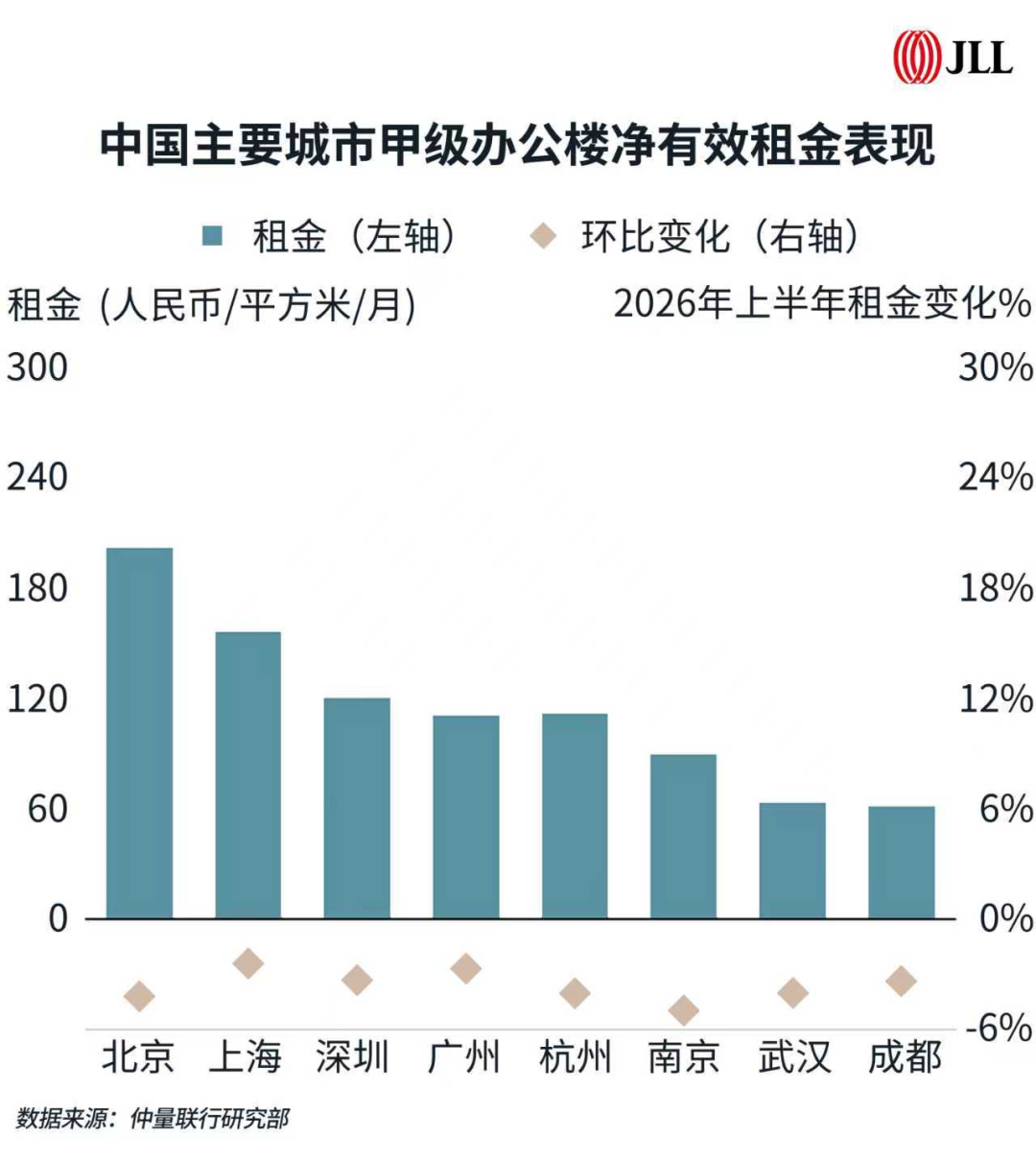
At the rent level, rents for Grade A office buildings in major Chinese cities are still in a structural downward cycle. The overall average rent decline in cities such as Shanghai, Guangzhou, Shenzhen, Chengdu, Wuhan, and Hangzhou remained in the 2%-4% range in the first half of the year; the rent adjustments in Nanjing and Beijing were relatively large, with cumulative declines of 5.0% and 4.2% respectively in the first half of the year.
It is worth noting that signs of marginal restoration in the market have begun to appear. The month-on-month decline in rents in most cities continues to narrow, and some mature core sectors have taken the lead in stabilizing rents month-on-month. At the same time, for benchmark buildings located in the core area of the city, with high-quality operating capabilities and a high occupancy rate, market bargaining power has gradually steadily rebounded, and the flexibility of lease adjustments has also been significantly tightened. The scarcity value of high-quality assets is once again highlighted, and the market has evolved from a period of deep adjustment of unilateral concessions to a rebalance between supply and demand.
Looking ahead to the second half of 2026, the domestic core city Class A office building market will continue the K-type structural restoration pattern, that is, the market shows a polarized evolutionary path: one end is a benchmark project with core location, high quality, and strong operation, which takes the lead in stabilizing or even recovering moderately with scarcity and differentiated competitiveness; the other end is non-core regions or general assets, which will continue to be pressured by supply pressure and demand screening.
From the demand side, the new economic circuit is still the core incremental source of the market. Emerging fields such as artificial intelligence integration applications, corporate overseas travel, games, new retail, and smart hardware will continue to drive the expansion of rental demand. However, on the supply side, due to the continued entry of new supply into the market, overall market rents will continue to be pressured downward, and the trend of structural differentiation between sectors and projects is expected to further intensify.