


ITC Stock Tops 3 Indian Picks Linked To Lower Crude And Consumer Demand
Indian investors are watching an interesting mix of falling crude prices, strong U.S. futures and stock specific news such as ITC’s recent cigarette revenue performance and Q1 commentary. Lower fuel costs can ease pressure on companies that spend heavily on energy or transport, while healthier disposable incomes can support consumer focused businesses. At the same time, indices have moved past key resistance levels, which can feed into short term sentiment. This article looks at 3 stocks from the Indian Market Beneficiaries of Lower Crude and Consumer Tailwinds screener that are directly exposed to these shifting conditions.
ITC (NSEI:ITC)
Overview: ITC is a Kolkata headquartered conglomerate with a core in cigarettes and a broad fast moving consumer goods portfolio across foods, personal care, stationery and other daily use products, alongside hotels, agri trading, paperboards, packaging and IT services in India and abroad.
Operations: ITC generates most of its revenue from FMCG Cigarettes at about ₹476.4b, followed by FMCG Others at about ₹252.1b, the Agri Business at about ₹192.0b and Paperboards, Paper and Packaging at about ₹89.6b, with smaller contributions from other activities and inter segment adjustments.
Market Cap: ₹3,596.0b
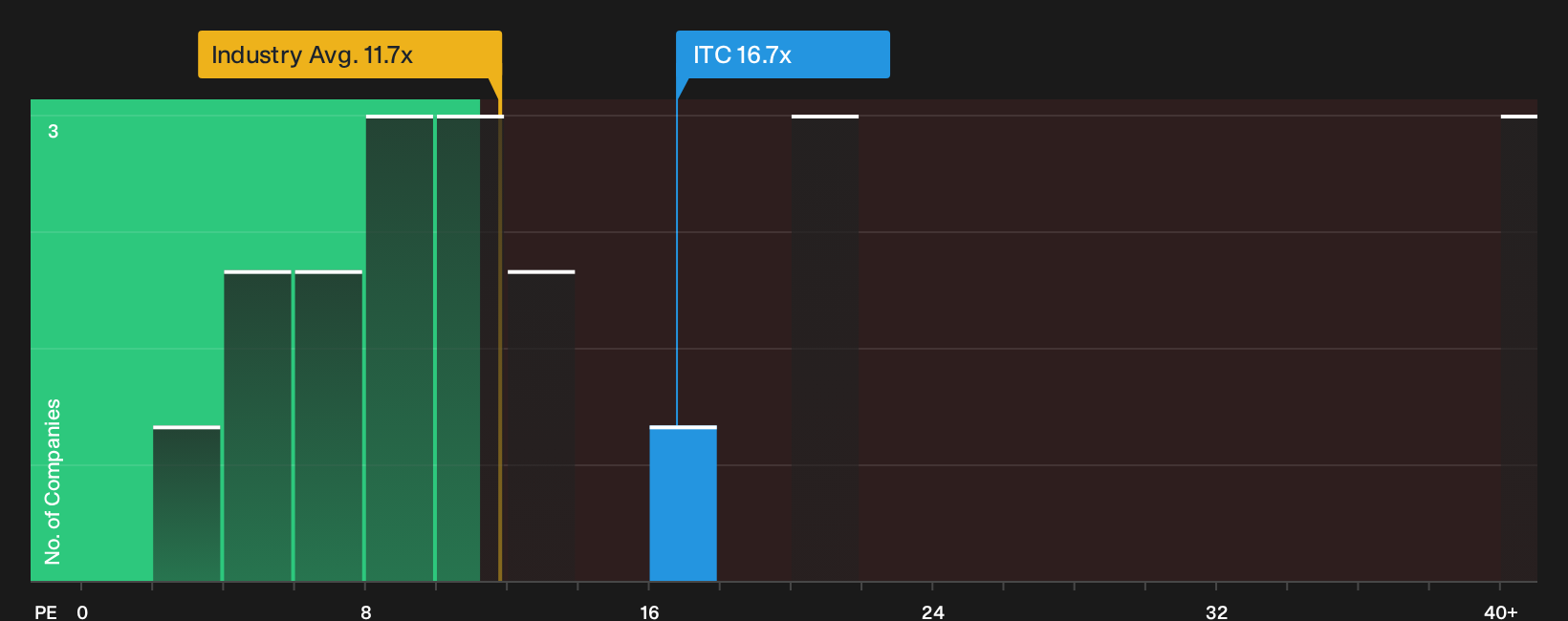
ITC sits at the crossroads of two big themes in this screener: lower crude and stronger consumer demand. It is also seeing fresh enthusiasm after strong June quarter cigarette revenue and upbeat brokerage commentary. The stock trades on a P/E below the Indian market average even though profitability is robust, with a net margin of 25.9% and ROE of 27.7%. Investors also get a dividend yield of about 5.05%, although payouts are not fully covered by free cash flow. Slower forecast growth and recent declines in annual earnings add to the risks, particularly for a tobacco exposed group facing regulatory sensitivity. These factors together help explain why ITC is attracting attention again and what could influence sentiment from here.
ITC’s mix of solid margins, a below market P/E, and fresh tobacco scrutiny has many investors sensing something is mispriced. Get the full story in the 1 key reward and 1 important warning sign
InterGlobe Aviation (NSEI:INDIGO)
Overview: InterGlobe Aviation operates IndiGo, India's largest airline, flying passengers and cargo across domestic and international routes, and offering extras such as charter services, in flight sales and hotel booking through its website and app.
Operations: InterGlobe Aviation generates essentially all of its revenue from Air Transportation Services at about ₹890.5b.
Market Cap: ₹2,088.0b
InterGlobe Aviation sits squarely in the lower crude theme because aviation fuel is its single biggest cost line and recent commentary highlighted how elevated fuel prices and aircraft groundings pushed the airline into a loss of about ₹2.4b in Q1 FY2027. Lower crude prices can relieve some of that pressure at a time when IndiGo is working on higher yielding business class, an expanded international network and a large new engine MoU to support a 441 strong and growing fleet. The stock still carries risks from external borrowing, intense competition and operational constraints. Investors who understand how fuel trends, pricing power and leadership changes, including a new CEO with deep global airline experience, fit together may see more in the story than the recent loss headline suggests.
InterGlobe Aviation’s loss headline may be masking a turning point as fuel pressures ease and its plan for a 441-strong fleet kicks in. Get the full context in the analysis report for InterGlobe Aviation

Hindustan Unilever (BSE:500696)
Overview: Hindustan Unilever is a Mumbai based consumer goods company that sells everyday essentials such as detergents, soaps, shampoos, tea, coffee and nutrition products to households in India and overseas, and also operates in areas like beauty salons and real estate related activities.
Operations: Hindustan Unilever generates most of its revenue from Home Care at about ₹244.5b, followed by Beauty & Wellbeing at about ₹154.4b, Foods at about ₹142.8b, Personal Care Business at about ₹96.5b and around ₹22.3b from other activities including exports and consignment.
Market Cap: ₹5,023.4b
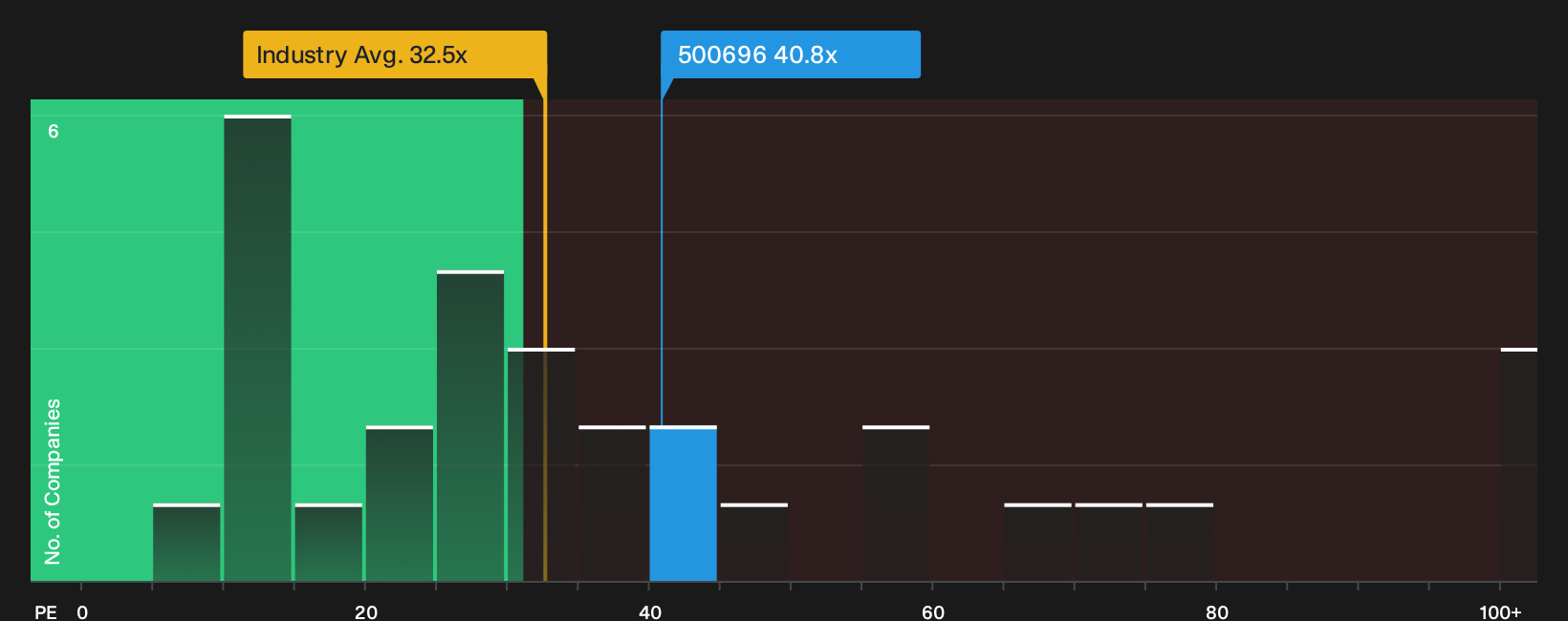
Hindustan Unilever gives you exposure to the consumer side of lower crude, where easing input and transport costs can support margins for a portfolio that already reaches 9 out of 10 Indian consumers. Management is leaning into premium personal care, nutrition and rural distribution, which ties into themes of rising incomes and improving sentiment, even though revenue growth is forecast to move more slowly than the wider Indian market. There are trade offs. The stock carries a premium valuation, dividend coverage is stretched and margins have seen some pressure. For investors who can balance those risks against its brand strength, earnings quality and focus on health and wellbeing categories, Hindustan Unilever is a stock that may merit closer attention.
Hindustan Unilever’s premium push and near universal reach could be masking a more subtle trade off between quality and price. See how the balance of brand strength, margins and valuation really stacks up in the analysis report for Hindustan Unilever
Take Control of Your Investment Journey
If Hindustan Unilever or any of these companies sound like a great opportunity, register for FREE with Simply Wall St and add your companies to a Watchlist to monitor the share price against the fair value the ideal entry point. Once you've made your move, manage your holdings with our Portfolio Command Center that filters out the noise to deliver only the most critical, actionable updates. Throughout your journey, our Community allows you to filter the best ideas from thousands of investor perspectives. By uncovering hidden catalysts and risks early, you'll accelerate your decision-making and stay one step ahead of the market.
Seeking Fresh Alternatives Beyond Today
Some of the next breakout stories may already be gaining momentum while the crowd stays focused elsewhere. Consider these fresh stock ideas while they may still offer an informational edge and are not widely followed.
- Identify resilient cash generators early by scanning companies in the list of solid balance sheet and fundamentals (413 results) before they attract broader attention.
- Follow the next wave of AI demand by tracking infrastructure providers in the curated 55 AI infrastructure stocks while they remain less widely discussed.
- Prepare for potential energy shifts by reviewing the hand picked 88 nuclear energy infrastructure stocks before interest in the theme becomes more widespread.
This article by Simply Wall St is general in nature. We provide commentary based on historical data and analyst forecasts only using an unbiased methodology and our articles are not intended to be financial advice. It does not constitute a recommendation to buy or sell any stock, and does not take account of your objectives, or your financial situation. We aim to bring you long-term focused analysis driven by fundamental data. Note that our analysis may not factor in the latest price-sensitive company announcements or qualitative material. Simply Wall St has no position in any stocks mentioned.
Have feedback on this article? Concerned about the content? Get in touch with us directly. Alternatively, email editorial-team@simplywallst.com