


GATX (NYSE:GATX) Misses Q2 CY2026 Revenue Estimates

Leasing services company GATX (NYSE:GATX) missed Wall Street’s revenue expectations in Q2 CY2026, but sales rose 34.8% year on year to $580.1 million. Its GAAP profit of $2.84 per share was 15.9% above analysts’ consensus estimates.
Is now the time to buy GATX? Find out by accessing our full research report, it’s free.
GATX (GATX) Q2 CY2026 Highlights:
- Revenue: $580.1 million vs analyst estimates of $598.8 million (34.8% year-on-year growth, 3.1% miss)
- EPS (GAAP): $2.84 vs analyst estimates of $2.45 (15.9% beat)
- EPS (GAAP) guidance for the full year is $10.10 at the midpoint, roughly in line with what analysts were expecting
- Operating Margin: -27.2%, down from 32.1% in the same quarter last year
- Active Railcars: up 88,270 year on year
- Market Capitalization: $6.45 billion
Company Overview
Originally founded to ship beer, GATX (NYSE:GATX) provides leasing and management services for railcars and other transportation assets globally.
Revenue Growth
A company’s long-term sales performance can indicate its overall quality. Any business can experience short-term success, but top-performing ones enjoy sustained growth for years. Luckily, GATX’s sales grew at an impressive 10.7% compounded annual growth rate over the last five years. Its growth beat the average industrials company and shows its offerings resonate with customers.
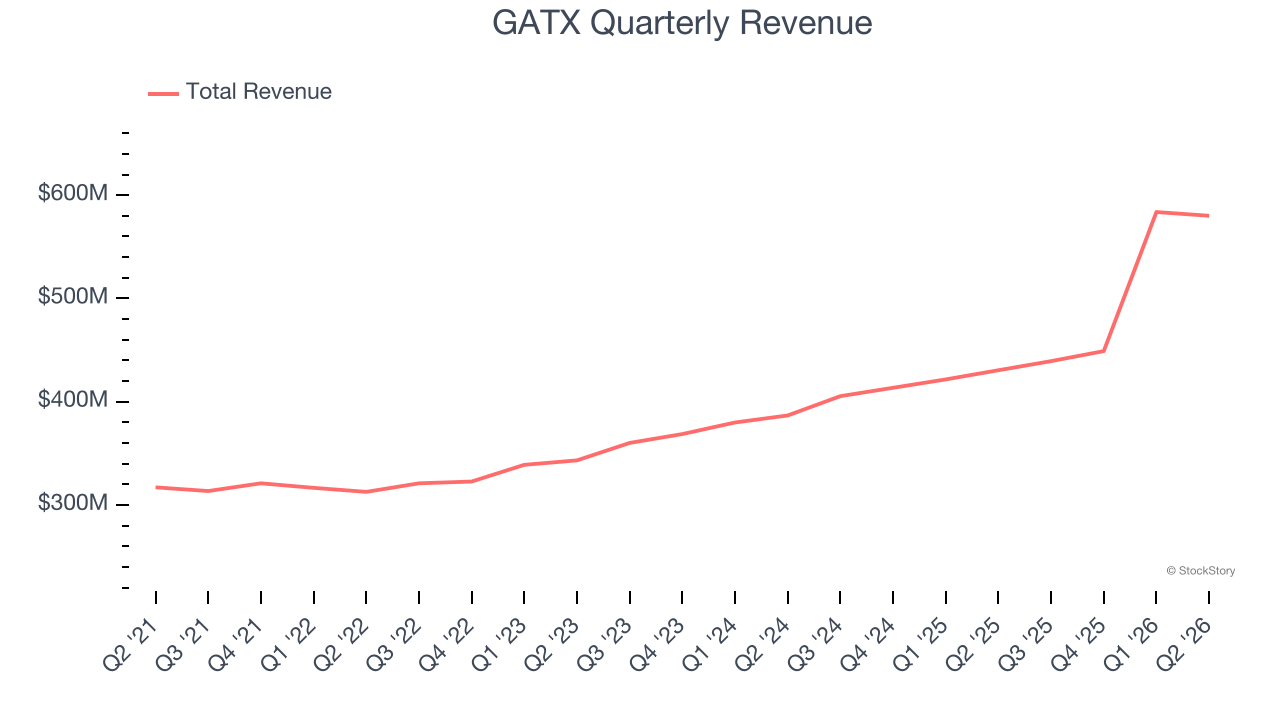
Long-term growth is the most important, but within industrials, a half-decade historical view may miss new industry trends or demand cycles. GATX’s annualized revenue growth of 17.1% over the last two years is above its five-year trend, suggesting its demand was strong and recently accelerated. 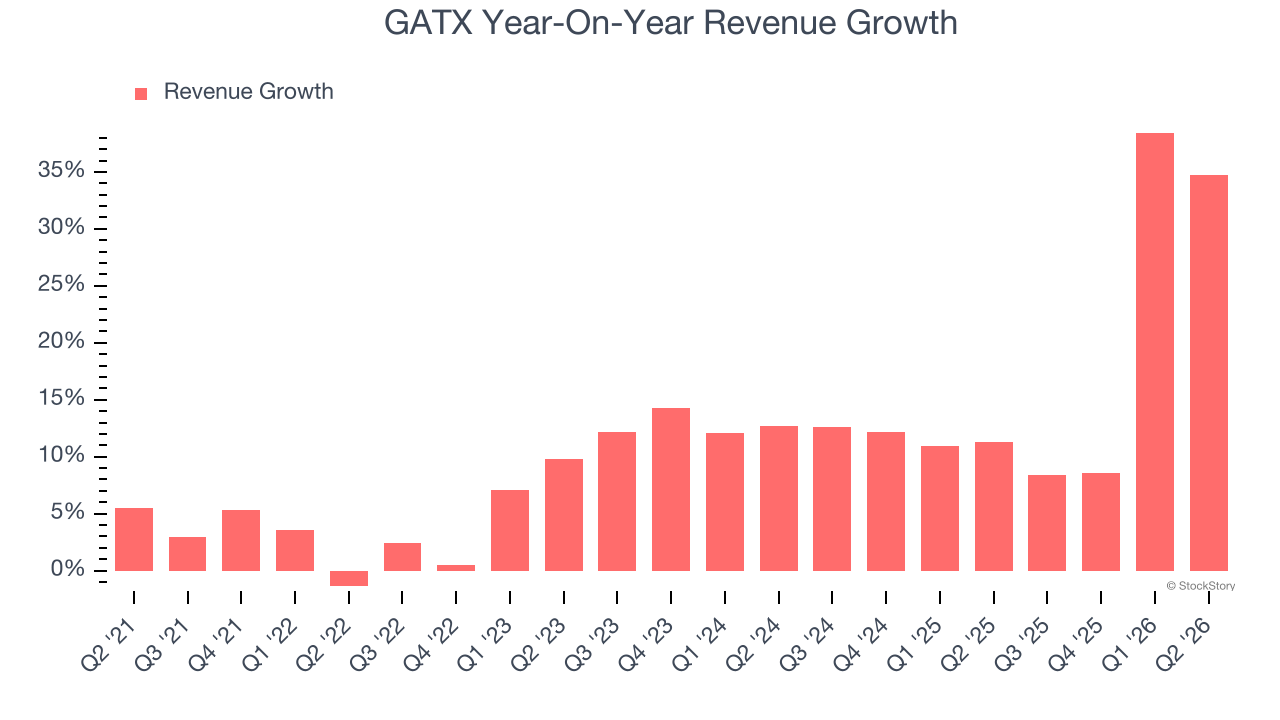
We can dig further into the company’s revenue dynamics by analyzing its number of active railcars, which reached 190,587 in the latest quarter. Over the last two years, GATX’s active railcars averaged 24.7% year-on-year growth. Because this number is higher than its revenue growth during the same period, we can see the company’s monetization has fallen. 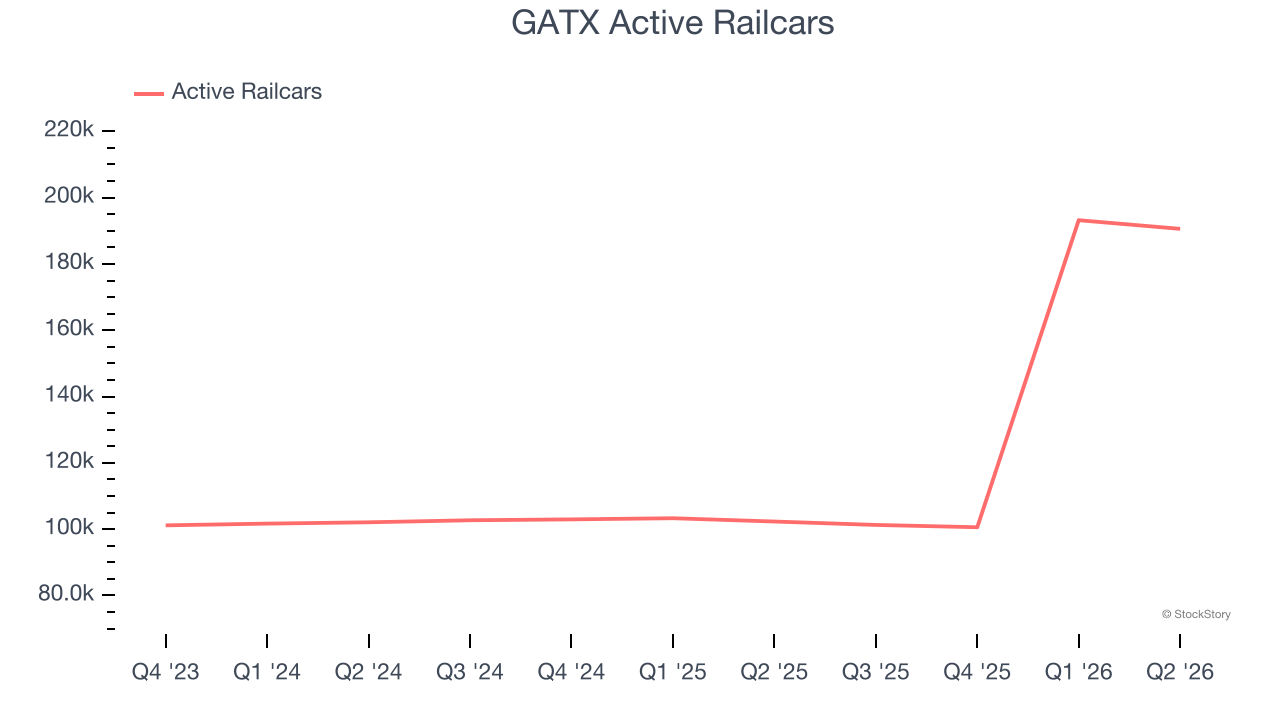
This quarter, GATX pulled off a wonderful 34.8% year-on-year revenue growth rate, but its $580.1 million of revenue fell short of Wall Street’s rosy estimates.
Looking ahead, sell-side analysts expect revenue to grow 18.3% over the next 12 months, similar to its two-year rate. This projection is eye-popping and suggests its newer products and services will catalyze better top-line performance.
ONE MORE THING: 3 Hidden Platforms Growing 3X Faster than Amazon, Google, and PayPal. Amazon, Google, and Meta all followed the same playbook: Dominate an ignored market. Build an unbeatable moat. Scale until you’re unstoppable.
These three platforms are running that exact playbook right now. The early investors in Amazon made fortunes. The early investors in these could do the same. Get All 3 Stocks Here for FREE.
Operating Margin
GATX has been a well-oiled machine over the last five years. It demonstrated elite profitability for an industrials business, boasting an average operating margin of 24.4%. This result isn’t surprising as its high gross margin gives it a favorable starting point.
Looking at the trend in its profitability, GATX’s operating margin decreased by 10.5 percentage points over the last five years. This raises questions about the company’s expense base because its revenue growth should have given it leverage on its fixed costs, resulting in better economies of scale and profitability.
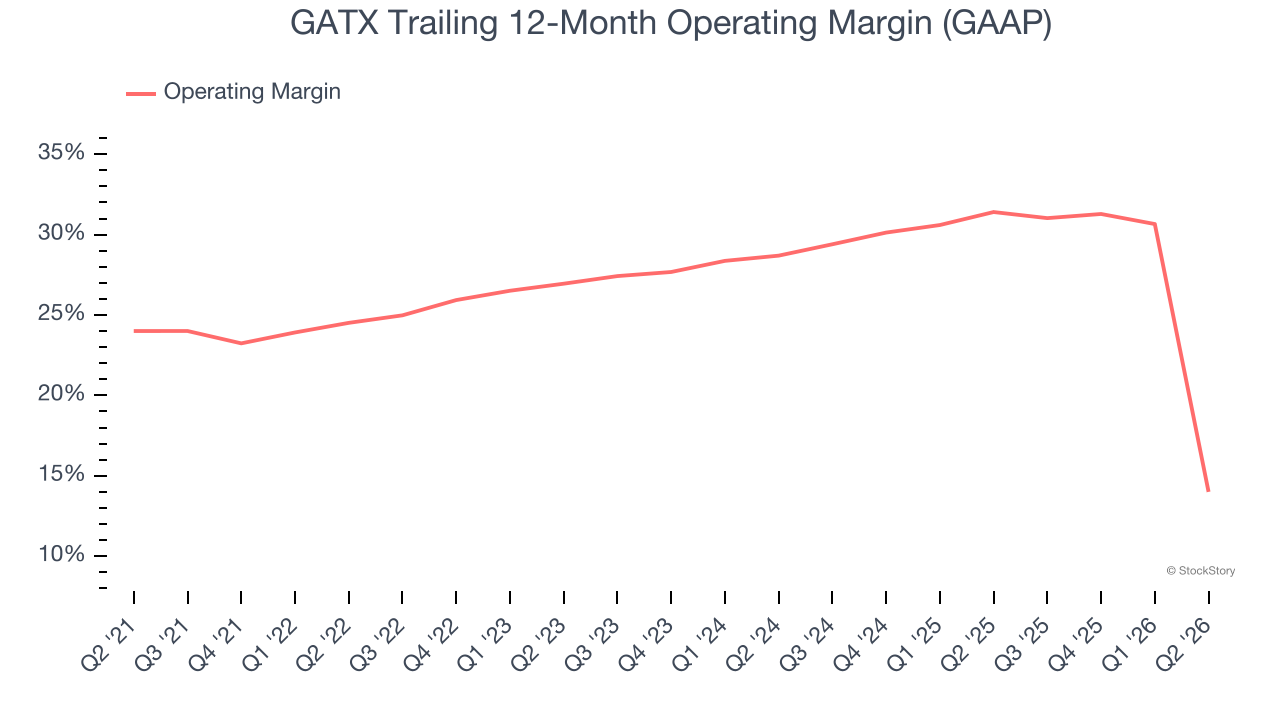
In Q2, GATX generated an operating margin profit margin of negative 27.2%, down 59.3 percentage points year on year. Since GATX’s operating margin decreased more than its gross margin, we can assume it was less efficient because expenses such as marketing, R&D, and administrative overhead increased.
Earnings Per Share
We track the long-term change in earnings per share (EPS) for the same reason as long-term revenue growth. Compared to revenue, however, EPS highlights whether a company’s growth is profitable.
GATX’s EPS grew at 27.3% compounded annual growth rate over the last five years, higher than its 10.7% annualized revenue growth. However, we take this with a grain of salt because its operating margin didn’t improve and it didn’t repurchase its shares, meaning the delta came from reduced interest expenses or taxes.
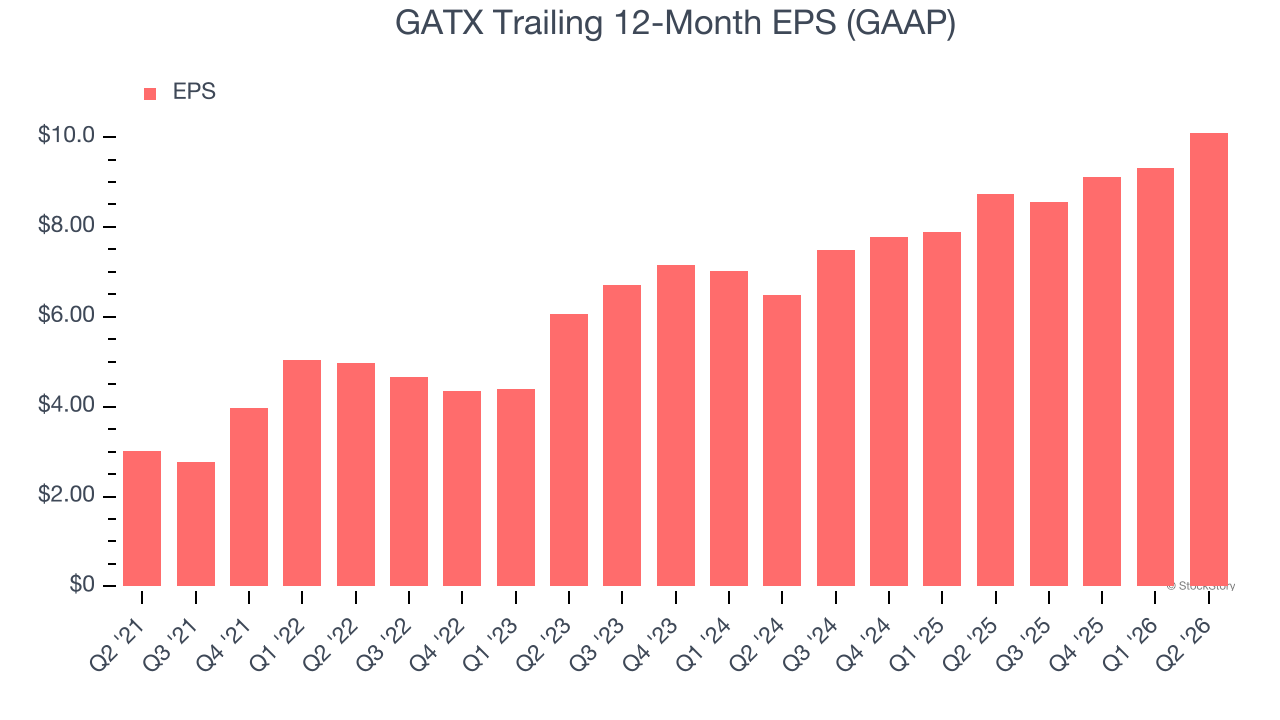
Like with revenue, we analyze EPS over a more recent period because it can provide insight into an emerging theme or development for the business.
For GATX, its two-year annual EPS growth of 24.7% was lower than its five-year trend. We still think its growth was good and hope it can accelerate in the future.
In Q2, GATX reported EPS of $2.84, up from $2.06 in the same quarter last year. This print easily cleared analysts’ estimates, and shareholders should be content with the results. Over the next 12 months, Wall Street expects GATX’s full-year EPS to grow 3% from $10.10 to $10.41.
Key Takeaways from GATX’s Q2 Results
It was good to see GATX beat analysts’ EPS expectations this quarter. We were also glad its full-year EPS guidance slightly exceeded Wall Street’s estimates. On the other hand, its revenue missed. Overall, this was a weaker quarter. The stock remained flat at $181.62 immediately following the results.
Should you buy the stock or not? If you’re making that decision, you should consider the bigger picture of valuation, business qualities, as well as the latest earnings. We cover that in our actionable full research report which you can read here (it’s free).