


Neocloud Stocks vs. the Hyperscalers -- Who Actually Wins AI Capex Boom?
Key Points
The AI boom has formed two groups of data center companies: big-tech hyperscalers and the newer neocloud stocks.
Neocloud companies, like CoreWeave and Nebius, are multiplying their revenue by taking on tons of debt.
Hyperscalers typically have profitable business segments that complement and help fund their capex.
These are unprecedented times, with companies pumping hundreds of billions of dollars into capital expenditures -- data centers, GPUs, and other infrastructure for artificial intelligence (AI). It's an arms race of sorts, and companies are spending first and asking questions later in fear of missing out on their share of AI adoption.
Two groups of AI stocks have formed within this capex boom. On one side are the AI hyperscalers, big tech companies like Microsoft, Amazon, Meta Platforms, and Alphabet. On the other side are neoclouds, companies such as CoreWeave (NASDAQ: CRWV) and Nebius Group (NASDAQ: NBIS), that build specialized GPU data centers and sell the computing power.
Missed Nvidia in 2009? This Rare Signal Is Flashing Again. In 2009, a "Double Down" signal flashed for a little-known chipmaker called Nvidia. For the first time in years, that same "Total Conviction" signal is flashing for a company 1/100th the size of Nvidia. Continue »
Knowing which group actually wins in the big picture is crucial to deciding where to invest your dollars.
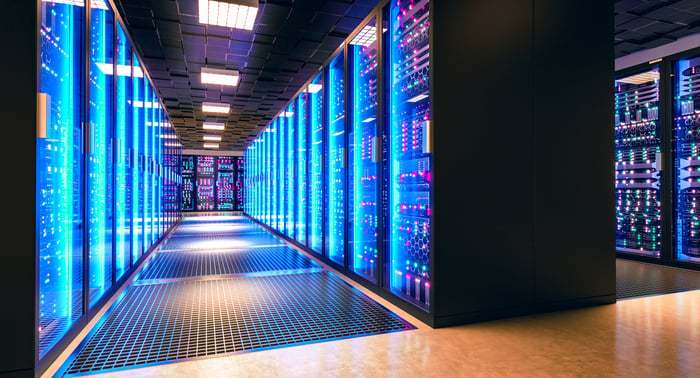
Image source: Getty Images.
Neoclouds are putting up explosive growth
Neocloud companies build specialized GPU data centers, engineered from the ground up for AI workloads. That specialization gives them cost advantages over hyperscalers building more generalized data centers for a broader range of applications. The rampant demand for AI compute is fueling blistering growth at neocloud companies such as CoreWeave and Nebius, where analysts expect revenue to multiply over the next couple of years.

Data by YCharts.
But data centers and GPUs are very expensive, and neocloud companies are borrowing to fund all this growth. CoreWeave has already racked up $34.66 billion in long-term debt, while Nebius has borrowed $9.47 billion. All this debt creates interest expenses that could strain these companies if the AI boom slows before they are profitable.
Why hyperscalers are the better investment, and it's not really close
AI hyperscalers are primarily big tech companies investing from a position of strength. For example, Microsoft, Alphabet, and Amazon dominate the global cloud services industry, and AI will continue to funnel traffic to their cloud businesses. Outside of OpenAI and Anthropic, hyperscalers typically boast highly profitable businesses that have helped fund all of this capex with cash flows. As a result, the hyperscalers haven't had to borrow nearly as much as the neocloud companies have.
Additionally, many hyperscalers are now developing custom AI chips to reduce reliance on Nvidia's GPUs for training and operating their AI models. If hyperscalers can begin to meaningfully cut their GPU spending, that could make it much easier to monetize all of this capex through cloud services.
The neocloud companies are posting eye-popping growth as pure-play bets on this cycle, but as with all big booms, growth will probably slow at some point. It's still unclear how well the neocloud companies will recoup their investments while servicing their debt, let alone turning a profit for shareholders. That's why the hyperscalers with complementary businesses and a more direct path to monetizing AI are the clear choice for investors.
Justin Pope has positions in Alphabet, Meta Platforms, and Microsoft. The Motley Fool has positions in and recommends Alphabet, Amazon, Meta Platforms, Microsoft, and Nvidia. The Motley Fool has a disclosure policy.