


Americans Disagree on How to Save Social Security Before 2032, Polls Find
Key Points
If there’s one thing survey respondents agreed upon, it’s that something must be done to prevent cuts to retiree benefits.
In one survey, 96% of respondents said Senate candidates must explain their plans to prevent Social Security cuts.
Cutting benefits, raising taxes, and raising the retirement age all failed to find support among those polled.
Americans overwhelmingly want Social Security preserved before projected benefit cuts take effect in 2032. However, a new Reagan National Economic Survey indicates significant disagreement over the best way to prevent cuts.
There are differences of opinion on whether to lift the Social Security wage cap, raise taxes, cut benefits by 22%, or pursue more creative fixes. Like those polled by the Ronald Reagan Institute, divides exist between the lawmakers in charge of finding solutions and writing them into law.
Where to invest $1,000 right now? Our analyst team just revealed what they believe are the 10 best stocks to buy right now, when you join Stock Advisor. See the stocks »
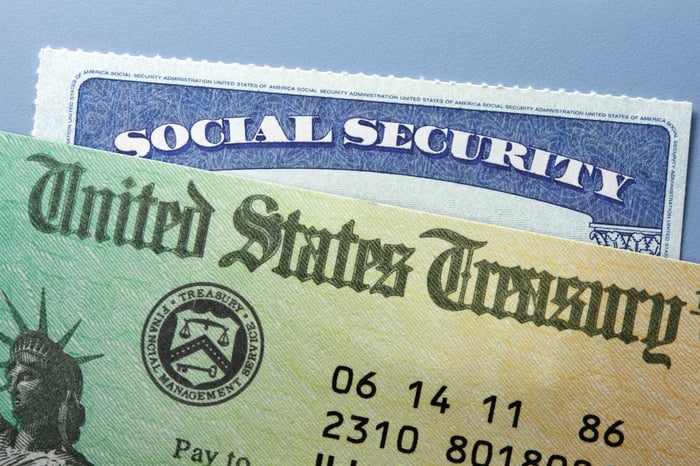
Image source: Getty Images.
One thing nearly everyone agrees on
In a poll by the Peter G. Peterson Foundation, 96% of voters said that Senate candidates must explain their plans to prevent looming Social Security cuts. This demand effectively creates a mandate for action in 2026 and future elections.
The broad consensus is that a crisis is coming, and Congress must take steps to prevent it.
Sharp divisions regarding what needs to be done
The Reagan National Economic Survey asked registered voters about four different options for dealing with Social Security's $250 billion shortfall -- reducing benefits, raising taxes on workers, raising the full retirement age, and simply adding to the national debt. Reaction to each of these suggestions was lukewarm. Even the most popular option -- raising the retirement age -- received only 26% support.
Survey respondents overwhelmingly rejected the four options presented, with many selecting "other" as their preferred approach to the issue expected to affect more than 70 million Americans.
"Other" suggestions
Of those who preferred to add their own ideas to the survey, 40% suggested increasing taxes on the wealthy or corporations, or lifting the Social Security tax cap. Currently, only the first $184,500 of an individual's wages are subject to Social Security taxes, and these 40% would like to see that cap increased or removed.
Given that the U.S. spent $954 billion in 2025 alone, 13% of respondents would like to see the U.S. reduce spending on national security and defense priorities.
Offered specific options
The survey asked respondents to choose between the following three options:
- Increase your taxes by $1,500
- Cut existing retiree benefits by $5,000
- Cut benefits to moderately high-net-worth retirees by $15,000
An overwhelming 71% chose the last option, preferring to trim Social Security benefits to households that may not be counting on them as they plan for retirement. This option was chosen by 75% of Democrats, 72% of Independents, and 66% of Republicans. It was even endorsed by 60% of those currently earning more than $200,000 annually.
If anything, the survey revealed how strongly Americans feel about preserving the Social Security system. It also serves as a reminder of the many ways Congress may be able to shore up the program before it falls over the 2032 fiscal cliff.
The Motley Fool has a disclosure policy.